












Electrolytes on Low-Carb and Keto: What to Replace and Why
Low-carb eating changes how your body handles sodium, and that is the whole reason electrolytes matter more on keto. Lower insulin tells the kidneys to excrete more sodium, and water follows it out. Most of what people call keto flu is that, not ketones. This guide covers what to replace, how much, and who should be careful.

Why low-carb changes everything
Carbohydrate intake drives insulin. Insulin, among many other jobs, tells the kidneys to hold on to sodium. Cut the carbohydrate and insulin falls, so the kidneys let more sodium go, and water leaves with it.
That single mechanism explains most of the first-week experience of low-carb eating: the dramatic scale drop that is mostly water, the light-headedness on standing, the headache, and the muscle cramps. It is not a detox and it is not ketones. It is sodium and fluid.
What keto flu actually is
Headache, fatigue, irritability, light-headedness and cramping in the first days of a low-carb diet. It is common, it is unpleasant, and it is largely avoidable. In most people it improves within a day or two of replacing sodium adequately, which is a useful diagnostic in itself: if salt fixes it, it was salt.

What the first week usually looks like
| Day | What is happening | What helps |
|---|---|---|
| 1 to 2 | Glycogen and its bound water start to go. Scale drops fast. | Start replacing sodium immediately rather than waiting for symptoms |
| 3 to 5 | Peak of headaches, fatigue and light-headedness for most people | This is the window where sodium makes the biggest difference |
| 5 to 7 | Symptoms usually ease as the body adapts | Keep replacement going; do not stop the day you feel better |
| Week 2 onward | Needs settle but stay above your previous baseline | Ongoing daily replacement rather than a one-week fix |
The scale drop in the first days is mostly water, not fat. Knowing that in advance prevents the second, more discouraging surprise: the plateau in week two when the water is gone and real fat loss proceeds at its normal, slower pace.
What to replace, and roughly how much
| Electrolyte | Why it matters on low-carb | Where to get it |
|---|---|---|
| Sodium | The one that is actively excreted when insulin drops. The main driver of keto flu. | Salt your food properly, broth, or an electrolyte drink |
| Potassium | Losses follow sodium losses; low levels contribute to fatigue and cramping. | Avocado, leafy greens, dairy, or an electrolyte drink |
| Magnesium | Commonly low regardless of diet; associated with cramps and poor sleep. | Nuts, seeds, dark leafy greens, or a separate magnesium supplement |
Guidance for sodium on low-carb is commonly higher than standard recommendations, often cited in the 3,000 to 5,000 mg per day range from all sources during adaptation. That is a large number relative to general public health advice, which is precisely why it is worth discussing with your doctor rather than assuming it applies to you.
Where MOTUS LYTE fits
One packet provides 500 mg of sodium and 400 mg of potassium, which covers part of a day's replacement rather than all of it. It does not contain magnesium, so that would come from food or a separate supplement.
It also carries the same five actives as MOTUS: berberine, milk thistle, taurine, alpha-lipoic acid and vitamin B3. The 4 g of added sugar as dextrose is deliberate, since a small amount of glucose helps sodium and water absorb, but it is worth knowing if you are tracking carbohydrate closely: 5 g total carbohydrate per packet.
| Per packet (10.3 g) | Amount |
|---|---|
| Sodium | 500 mg (22% DV) |
| Potassium | 400 mg (11% DV) |
| Vitamin B3 (as niacinamide) | 850 mg NE |
| Taurine | 625 mg |
| Siliphos® silybin phospholipid (milk thistle) | 550 mg |
| Berbevis® berberine phospholipid | 500 mg |
| Alpha-lipoic acid | 300 mg |
| Calories / total carbohydrate / total sugar | 20 kcal / 5 g / 4 g (added) |
Other ingredients: dextrose, citric acid, natural flavors, malic acid, sodium gluconate, silicon dioxide. Siliphos® and Berbevis® are registered trademarks of Indena USA. One packet per 8 to 10 oz of water.
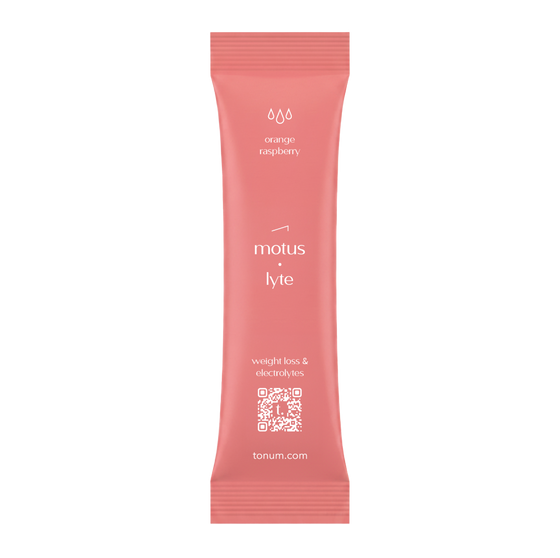
MOTUS LYTE, electrolytes plus the MOTUS actives
- 500 mg sodium and 400 mg potassium per packet
- The same five actives as MOTUS, in a drink mix
- Three flavors, 20 calories, no stimulants
$46 for a 14-pack · $49.50 multi-flavor 15-pack

Who should be careful
Increasing sodium is not neutral advice. If you have high blood pressure, kidney disease or heart failure, or take ACE inhibitors, ARBs or potassium-sparing diuretics, speak to your doctor before increasing sodium or potassium. If you already take MOTUS, both products contain the same actives, so check the combined daily totals.
Frequently asked questions
Why do you need more electrolytes on keto?
When carbohydrate intake drops, insulin falls with it, and lower insulin signals the kidneys to excrete more sodium. Water follows the sodium out. That is why the first week of low-carb eating brings rapid scale movement and, often, headaches and fatigue.
What is keto flu really?
Largely sodium and fluid depletion rather than anything to do with ketones. The headache, fatigue, light-headedness and cramping of the first week usually improve within a day or two of replacing sodium properly.
How much sodium do you need on keto?
Commonly cited guidance is meaningfully more than the standard recommendation, often in the range of 3,000 to 5,000 mg per day from all sources during adaptation. This is exactly the point to discuss with a doctor if you have high blood pressure or kidney disease.
Do you need magnesium on keto?
Magnesium is frequently low in the general population and low levels are associated with cramping and poor sleep. MOTUS LYTE does not contain magnesium, so if that is your priority you would take it separately.
Can electrolytes break a fast?
MOTUS LYTE contains 20 calories and 4 g of added sugar per packet, so strictly speaking it is not calorie-free. For most people fasting for general health that is negligible; for a strict protocol it is not zero.
Keep reading
These statements have not been evaluated by the Food and Drug Administration. This product is not intended to diagnose, treat, cure, or prevent any disease. If you have high blood pressure, kidney disease or heart failure, or take medication affecting sodium or potassium, speak to your doctor before using an electrolyte supplement.