












How to Choose an Electrolyte Supplement: The Four Numbers That Matter
Most electrolyte products are judged on the wrong things. The flavour and the marketing are easy to compare; the four numbers that actually decide whether a product does anything are sodium, potassium, sugar and whether the amounts are disclosed at all. This guide shows what to look for, what the different product types are built for, and exactly what is in ours.

The four numbers that matter
- Sodium, in milligrams. The electrolyte that governs fluid balance and the one most people under-replace. Everyday hydration sits comfortably at 200 to 500 mg per serving; heavy sweating or low-carb eating justifies more.
- Potassium, in milligrams. Works alongside sodium. Many products carry a token amount so it can appear on the label.
- Sugar, in grams. A few grams of glucose genuinely helps sodium and water absorb, which is how oral rehydration solutions work. Thirty grams is a soft drink with minerals in it.
- Whether the amounts are disclosed at all. If a label says "electrolyte blend" without milligrams, you cannot compare it to anything. That is usually the point.
The product types compared
| Type | Built for | Honest assessment |
|---|---|---|
| High-sodium hydration packets | Heavy sweating, endurance, low-carb eating | The most useful category if you genuinely lose a lot of sodium. Overkill for a desk day. |
| Everyday effervescent tablets | General daily hydration | Convenient and cheap, usually modest amounts of everything. Fine as a habit, not a fix for real depletion. |
| Sports drinks | Endurance exercise where carbohydrate is the point | The sugar is the feature, not a flaw, mid-race. Poorly matched to sedentary daily use. |
| Oral rehydration solutions | Illness with fluid loss | The best-evidenced category of all, formulated to a clinical ratio. Not designed to taste good. |
| Electrolyte plus actives | People who want hydration and a metabolic formula in one drink | Where MOTUS LYTE sits. Judge it on both halves: the electrolyte amounts and the actives. |
Who actually needs one
Most people eating a normal mixed diet get enough electrolytes from food and do not need a supplement. The situations where replacement genuinely matters:
- Heavy or prolonged sweating, particularly in heat
- Low-carbohydrate or ketogenic eating, which increases sodium and water excretion
- Illness involving vomiting or diarrhoea
- Night sweats, including during menopause
- Long working days where you drink a lot of plain water and still feel foggy
What is in MOTUS LYTE
Every amount is on the label, so here it is in full rather than in adjectives:
| Per packet (10.3 g) | Amount |
|---|---|
| Sodium | 500 mg (22% DV) |
| Potassium | 400 mg (11% DV) |
| Vitamin B3 (as niacinamide) | 850 mg NE |
| Taurine | 625 mg |
| Siliphos® silybin phospholipid (milk thistle) | 550 mg |
| Berbevis® berberine phospholipid | 500 mg |
| Alpha-lipoic acid | 300 mg |
| Calories / total carbohydrate / total sugar | 20 kcal / 5 g / 4 g (added) |
Other ingredients: dextrose, citric acid, natural flavors, malic acid, sodium gluconate, silicon dioxide. Siliphos® and Berbevis® are registered trademarks of Indena USA. One packet per 8 to 10 oz of water.
Two things worth being straight about. First, MOTUS LYTE contains no magnesium. Sodium and potassium do the fluid-balance work, but if magnesium is specifically what you are after, this is not the product for it. Second, it contains 4 g of added sugar as dextrose. That is deliberate, because a small amount of glucose aids sodium and water absorption, but if you want a zero-sugar product, that is a real difference.
What makes it unusual is the second half of the label. Alongside the electrolytes it carries the same five actives as MOTUS: berberine, milk thistle, taurine, alpha-lipoic acid and vitamin B3. So it is less an electrolyte drink with extras and more the MOTUS formula delivered as a drink, with sodium and potassium added. Whether that is what you want depends on whether you are after hydration alone or hydration plus metabolic support.
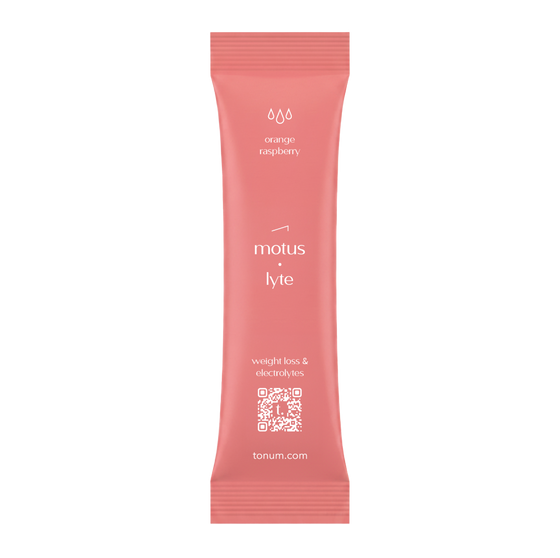
MOTUS LYTE, electrolytes plus the MOTUS actives
- 500 mg sodium and 400 mg potassium per packet
- The same five actives as MOTUS, in a drink mix
- Three flavors, 20 calories, no stimulants
$46 for a 14-pack · $49.50 multi-flavor 15-pack

How much do you actually need?
There is no single answer, because losses vary enormously. Rather than a number, here is a way to place yourself:
| Your situation | Rough sodium target per day, all sources | Practical approach |
|---|---|---|
| Sedentary, normal mixed diet | Standard dietary guidance is enough | You probably do not need a supplement at all |
| Regular exercise, moderate sweating | Modestly above standard | Salt food properly; a packet on heavy days |
| Low-carb or ketogenic eating | Meaningfully higher during adaptation | Deliberate daily replacement, especially in week one |
| Endurance training or heat | Highest of these groups | Replace during and after, not only after |
| Illness with fluid loss | Clinical oral rehydration ratios | Use an ORS, not a lifestyle drink |
A useful rule: if you drink plenty of plain water and still get headaches, light-headedness on standing, or afternoon fog that lifts after a salty meal, you are more likely short on sodium than on water.

Five mistakes people make
- Drinking more water when the problem is sodium. Adding volume to a low-sodium state dilutes it further and can make the fog worse.
- Buying on flavour alone. Flavour is the easiest thing to get right and tells you nothing about whether the product does anything.
- Accepting an undisclosed "electrolyte blend." If there are no milligrams, there is no comparison, and that is usually deliberate.
- Treating a sports drink as a daily hydration product. The carbohydrate is there to fuel endurance work, not a desk day.
- Assuming more is better. Sodium and potassium are not risk-free, especially with blood pressure or kidney conditions or certain medications.
When to take it
For everyday hydration, timing matters less than consistency. Three cases where it does matter:
- Before rather than after a long session in heat, so you start topped up rather than chasing losses.
- Earlier in the day if you are prone to night waking, since a large evening fluid load has an obvious consequence.
- In the first week of low-carb eating, when losses are highest and the symptoms are most noticeable.

Who should be careful
Sodium and potassium are not neutral for everyone. Speak to your doctor first if you have high blood pressure, kidney disease or heart failure, or if you take ACE inhibitors, ARBs or potassium-sparing diuretics. If you already take MOTUS, note that both products contain the same actives, so check the combined daily amounts with your doctor or pharmacist.
Frequently asked questions
How much sodium should an electrolyte drink have?
It depends on why you are taking it. For everyday hydration, 200 to 500 mg per serving is reasonable. For heavy sweating, endurance work or low-carb eating, products in the 500 to 1,000 mg range make more sense. Sodium is the electrolyte most people under-replace.
Do electrolyte drinks need magnesium?
Magnesium is genuinely useful for many people, and low intake is common, but it is not required for fluid balance itself. Sodium and potassium do that work. If you want magnesium, check whether your product contains it and how much, because many list it in token amounts.
Are sugar-free electrolytes better?
Not automatically. A small amount of glucose actually aids sodium and water absorption in the gut, which is the principle behind oral rehydration solutions. What matters is whether the sugar is a few grams for absorption or thirty grams as a soft drink.
How much does MOTUS LYTE contain?
Per packet: 500 mg sodium, 400 mg potassium, plus 850 mg NE vitamin B3, 625 mg taurine, 550 mg Siliphos milk thistle, 500 mg Berbevis berberine and 300 mg alpha-lipoic acid. 20 calories with 4 g of added sugar. It does not contain magnesium.
Can you take an electrolyte supplement every day?
For most healthy adults, yes. The exceptions matter: if you have high blood pressure, kidney disease or heart failure, or take medication affecting potassium such as ACE inhibitors or potassium-sparing diuretics, check with your doctor first.
Keep reading
These statements have not been evaluated by the Food and Drug Administration. This product is not intended to diagnose, treat, cure, or prevent any disease. If you have high blood pressure, kidney disease or heart failure, or take medication affecting sodium or potassium, speak to your doctor before using an electrolyte supplement.