










What can I take to speed up my metabolism as a female? Practical, evidence-first options for women over 40

Quick answer: what works best to boost metabolism after 40
One-sentence practical takeaway, best metabolism booster for women over 40
The most reliable way to support resting metabolic rate after 40 is to preserve or build fat-free mass through regular resistance training while prioritizing adequate protein intake; single-ingredient supplements can add modest support but are secondary to muscle, training, sleep, and activity choices.
Review Tonum's clinical research and formulation rationale
Keep reading for clear, evidence-based steps you can use this week to prioritize muscle and protein without chasing unproven fixes.
For many women, practical first steps are simple: add two to four structured resistance sessions per week, aim for roughly 1.2 to 1.5 g/kg/day of protein spaced across meals, and view supplements as targeted tools rather than primary solutions. This approach aligns training and nutrition to support metabolic health and functional strength rather than relying on a single pill.
Understanding metabolism: definitions and what changes after 40
What resting metabolic rate (RMR) and total energy expenditure mean
Resting metabolic rate, often abbreviated RMR, is the energy your body uses at rest to fuel basic functions such as breathing, circulation, and cell maintenance; total energy expenditure adds the calories you burn with physical activity and digestion.
When people ask how to increase resting metabolic rate women over 40, the core idea is that raising or maintaining the metabolically active tissue in the body, primarily muscle, offers the clearest path to higher baseline energy use.

How muscle mass, hormones, and activity interact
Age-related declines in fat-free mass are a major driver of lower RMR in midlife, so strategies that preserve or increase muscle typically have the largest, most predictable effects on resting calorie needs, especially during and after the menopausal transition National Institute on Aging.
Hormonal shifts around perimenopause and menopause influence fat distribution, appetite, and energy, and they interact with activity levels; however, within this web of changes, the loss of muscle mass is consistently identified as the dominant contributor to reduced resting metabolic rate, which is why muscle-focused approaches are central.
Why metabolism slows for many women after 40
Muscle loss: scale, timing, and impact on energy needs
Sarcopenia, the gradual loss of muscle that can begin in midlife, reduces the amount of metabolically active tissue, lowering resting energy requirements unless countered by resistance training or other interventions; preserving lean mass is therefore a priority for maintaining RMR.
Reduced habitual activity, changes in sleep, and shifts in stress reactivity can accelerate metabolic slowdown by making it harder to sustain muscle and by altering appetite and recovery.
Preserve and build fat-free mass through resistance training and sufficient protein intake; consider evidence-backed adjuncts like creatine when training consistently, and evaluate other supplements only after a safety review with a clinician.
Many lifestyle factors compound the effect of muscle loss: declines in daily movement, poorer sleep quality, and higher chronic stress all contribute to energy balance changes and can make weight and metabolic goals harder to reach unless addressed alongside exercise and nutrition.
Core framework: prioritize resistance training to preserve and build muscle
Why resistance training raises RMR indirectly
Resistance training does not magically change RMR overnight, but by preserving or increasing fat-free mass it raises the body's baseline calorie needs and improves functional capacity; human-focused guidelines consistently recommend strength training as the primary strategy to support metabolic health in middle age National Institute on Aging.
Additional benefits include improved glucose regulation, greater capacity for higher-intensity work, and better long-term maintenance of body composition when combined with adequate protein and recovery.
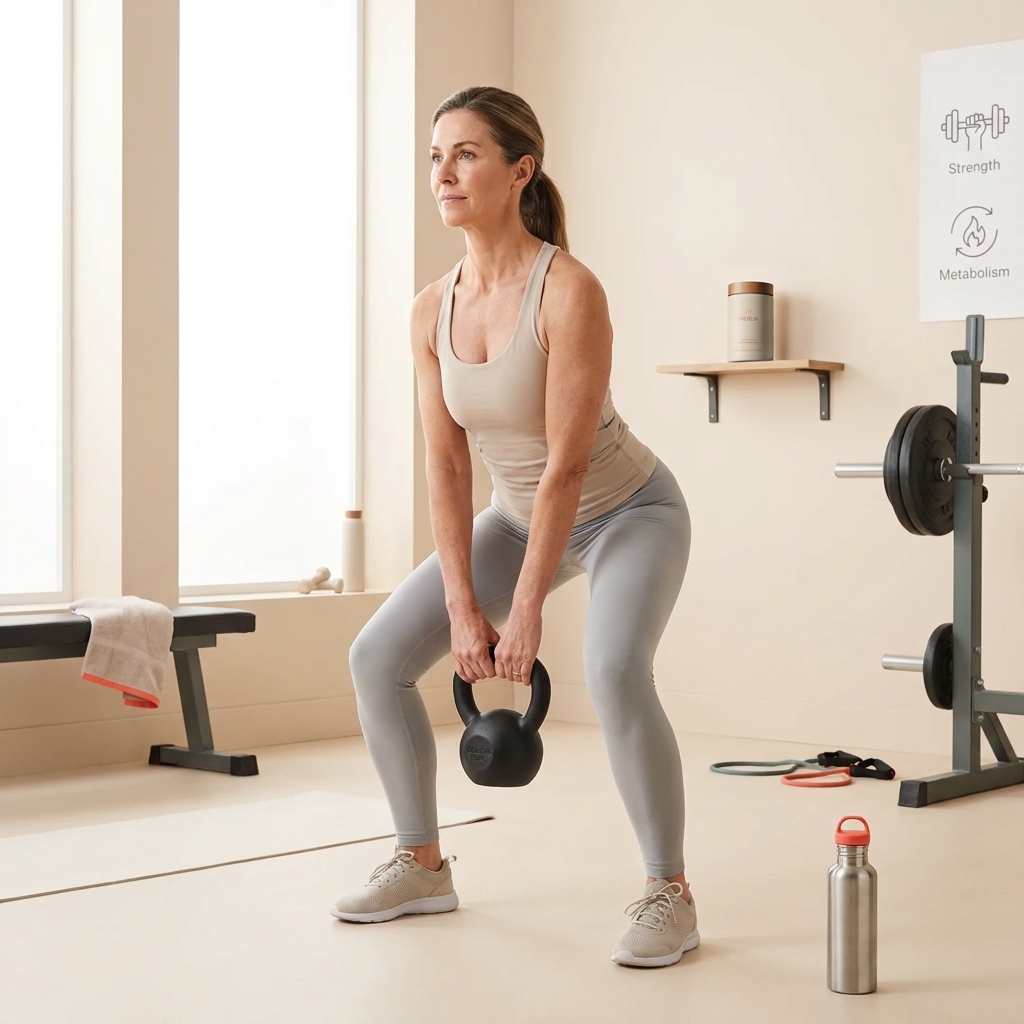
Begin with 2 sessions per week of full-body resistance training and progress toward 3 to 4 sessions as you adapt. Focus on compound movements that use multiple joints-squat variations, deadlift or hip hinge patterns, pushing and pulling motions, and loaded carries-because they produce the most systemic stimulus per session.

Program basics: aim for 8 to 12 controlled repetitions for hypertrophy-focused sets, use progressive overload (gradually add load or reps), prioritize form and balanced movement patterns, and schedule rest days for recovery. If you are new to structured strength training, consider an initial session with a qualified trainer or a guided program to reduce injury risk and build confidence Physical Activity Guidelines for Americans. You can also review evidence on protein supplementation trials protein supplementation trials.
Protein: how much, when, and why it matters after 40
Recommended intake ranges and per-meal distribution
Evidence-based guidance for many older adults suggests roughly 1.2 to 1.5 g/kg/day of protein to support muscle maintenance and function; distributing that protein relatively evenly across meals helps stimulate muscle protein synthesis more consistently across the day PROT-AGE Study Group review. Additional review: Systematic review.
For a convenient example, a woman weighing 70 kg (about 154 lb) aiming for 1.2 g/kg would target roughly 84 g of protein per day, which can be split into three meals of about 25 to 30 g each plus a small protein-rich snack as needed.
Tips to reach targets with a food-first approach
Prioritize high-quality, easy-to-prepare protein sources: eggs, dairy or fortified plant alternatives, lean poultry and fish, legumes, tofu, tempeh, and sensible portions of nuts and seeds. Start the day with a protein-containing breakfast rather than saving the bulk of protein for the evening meal. See additional research resources research.
Practical portion cues: a palm-sized portion of cooked lean protein (roughly 20 to 30 g of protein depending on the item) at each meal, a cup of Greek yogurt or cottage cheese, or a double-egg omelet with added cheese and vegetables are simple ways to boost daily totals without complex tracking.
Creatine for middle-aged women: evidence and practical dosing
What the trials show about creatine with resistance training
Randomized and controlled studies indicate that creatine, when combined with resistance training, increases muscle mass and strength in middle-aged and older women more than training alone, which indirectly supports higher resting energy needs through preserved or increased fat-free mass PROT-AGE Study Group review.
The effect is not instantaneous, and creatine works best as an adjunct to a structured strength program rather than as a standalone metabolic booster.
Suggested dosing, precautions, and who benefits most
Commonly studied dosing ranges for creatine in adults are about 3 to 5 g per day after any initial loading phase; many trials in middle-aged populations use daily maintenance doses in that range. People with known kidney disease or on medications that affect renal function should get medical clearance before starting creatine.
Those most likely to benefit are individuals who are consistently doing resistance training and who want to improve strength, preserve muscle mass, and support functional performance; creatine is inexpensive, well-studied, and generally well tolerated in healthy adults when used responsibly.
Caffeine, green-tea catechins, and berberine: what the evidence says
Short-term effects on energy expenditure and fat oxidation
Meta-analyses show that caffeine and green-tea catechins (EGCG) can create small, short-term increases in energy expenditure and fat oxidation, but individual responses vary and the overall effect sizes are modest, so they should be viewed as minor adjuncts rather than primary strategies for metabolic change Obesity Reviews meta-analysis.
Because catechin-containing extracts and high doses of green tea components have been associated with rare but serious liver or cardiovascular concerns in some cases, dose and product quality matter and medical advice is prudent when using them regularly.
Safety checklist for considering caffeine, EGCG, or berberine
Review before starting supplements
Berberine clinical findings and safety considerations
Berberine has randomized-study evidence showing improvements in glucose regulation and some metabolic markers, which suggests it may support metabolic health after 40, but it is not risk free and requires medical supervision because of drug interactions and dosing considerations Journal of Clinical Endocrinology & Metabolism meta-analysis. For practical guidance on dosing and monitoring, see Tonum's overview on how to take berberine for weight loss how to take berberine for weight loss.
If berberine is being considered, clinicians usually review current medications, liver and kidney status, and the risk-benefit profile for the individual; typical trial dosing is often around 500 mg twice daily but a medical review should precede use.
Putting it together: a weekly exercise and nutrition template
Sample week combining resistance and aerobic sessions
A practical weekly plan for many women includes 2 to 4 resistance sessions plus 2 shorter aerobic or conditioning sessions. For example: Monday full-body resistance, Tuesday easy walk or mobility work, Wednesday resistance, Friday resistance or higher-intensity conditioning, and one or two rest or active-recovery days with walking or light cycling.
This template balances stimulus and recovery; progressively increase load or volume across 4 to 12 weeks while keeping at least one full rest day per week and adjusting intensity when life stress or sleep quality dips Physical Activity Guidelines for Americans.
Meal timing and protein distribution example day
Example day to reach a 1.2 to 1.5 g/kg target: Breakfast: 2 eggs plus Greek yogurt and berries (20 to 30 g protein). Lunch: salad with 4 to 6 oz grilled chicken or firm tofu and a grain or legume (25 to 35 g). Snack: cottage cheese or a protein-rich snack (10 to 15 g). Dinner: salmon or lean beef with vegetables and a cup of lentils or beans (25 to 35 g).
Spacing protein evenly and pairing it with vegetables and whole-food carbohydrates supports muscle synthesis, satiety, and recovery from resistance sessions, while keeping meals practical and adaptable to personal preferences.
Lifestyle levers: sleep, stress, and daily activity
How sleep quality affects weight and metabolism
Poor or insufficient sleep changes appetite-regulating hormones, reduces recovery capacity, and is associated with weight gain risk; improving sleep duration and quality is a foundational metabolic strategy and can make training and nutrition more effective CDC guidance on sleep and weight.
Small, consistent improvements-regular bedtimes, limiting evening screens, and addressing sleep-disrupting conditions-often yield measurable benefits for energy and appetite control.
Stress management and non-exercise activity thermogenesis (NEAT)
Chronic stress can elevate cortisol and change behavior patterns that undermine metabolic goals; simple practices like brief breathing breaks, short walks, and structured scheduling can lower daily stress and help preserve recovery.
NEAT, or the calories burned through everyday movement, is an often-overlooked lever: standing more, taking short walking breaks, and using stairs add up across the week and support overall energy expenditure without formal exercise.
How to decide which supplements (if any) to try
Matching goals to likely benefits
Use a decision framework: first identify whether your goal is improving strength, preserving muscle, or changing biochemical markers like fasting glucose; second, prioritize the interventions with the strongest evidence for that goal-typically training and protein for muscle, creatine as an adjunct, and targeted supplements for specific metabolic markers.
Think of supplements as complementary tools: creatine best supports strength and muscle when training, caffeine or EGCG may provide small acute boosts in energy use, and berberine targets glucose-related outcomes under medical supervision PROT-AGE Study Group review. Evidence also highlights synergy between protein intake and resistance training Synergistic Effect study.
Safety checklist and when to stop
Before starting any new supplement, check current medications, pregnancy or planning status, liver or kidney disease history, and get clinician clearance for higher-risk options like berberine; stop and consult a clinician if you experience new adverse symptoms or if lab monitoring shows concerning changes.
Prioritize resistance training and protein before relying on supplements, and reassess after a defined trial period so you can judge whether the supplement delivered meaningful, tolerable benefits.
Common mistakes and pitfalls to avoid
Over-relying on single supplements without a training or protein plan
A frequent error is expecting a pill to offset low activity or inadequate protein; single-ingredient supplements typically have modest effects and usually work best when the person is already following a consistent training and nutrition plan Obesity Reviews meta-analysis.
Other mistakes include using high doses without medical oversight and skipping interaction checks for people on multiple medications; set realistic expectations and consult a clinician when in doubt.
Practical scenarios: three realistic examples for women over 40
Case A: beginner with limited time
Plan: two 30- to 40-minute full-body resistance sessions per week focusing on compound moves, two short daily walks for NEAT, and a protein-focused breakfast and dinner to begin approaching 1.2 g/kg/day.
Rationale: this minimal but consistent approach preserves muscle and builds habit without overwhelming time demands, and it is the simplest path to begin increasing resting metabolic rate.
Case B: active exerciser wanting faster progress
Plan: three to four resistance sessions per week with progressive overload, add creatine 3 to 5 g/day as an evidence-backed adjunct, and raise daily protein toward 1.4 to 1.5 g/kg with even meal distribution to support hypertrophy and strength gains.
Rationale: combining training, protein, and creatine yields the most consistent increases in muscle and strength in middle-aged women when safety screening is clear and training is progressive PROT-AGE Study Group review.
Case C: on multiple medications, safety-first plan
Plan: prioritize resistance training and protein first; delay initiation of berberine or other interacting supplements until after clinician review and, if approved, baseline labs and monitoring are arranged.
Rationale: some supplements, notably berberine, can interact with common medications and require medical supervision; when on multiple drugs, the safest route is clinician-guided evaluation before adding targeted metabolic supplements Journal of Clinical Endocrinology & Metabolism meta-analysis.
How to track progress and set realistic goals
Which metrics matter: strength, body composition, energy and function
Track strength improvements (e.g., increases in working sets or reps on core lifts), changes in body composition when available, and day-to-day energy and functional markers like how stairs feel or ease of daily tasks; these are more informative than scale-only changes.
Expect meaningful change over weeks to months: strength often improves within 4 to 8 weeks, while visible composition shifts typically require consistent training and nutrition over several months. Use a simple training log, tape measure, and periodic strength tests to monitor progress.
Closing summary and next steps you can take this week
Three practical actions to start now
Start with these three priorities: begin or increase resistance training to at least two sessions per week, move daily toward a 1.2 to 1.5 g/kg/day protein target spread across meals, and improve sleep and daily movement habits to support recovery and energy.
When to seek professional input: consult a clinician before starting berberine or if you have kidney, liver, or multiple medication concerns; consider a trainer or coach for initial resistance programming if you are unfamiliar with structured strength work PROT-AGE Study Group review.
Yes; with proper instruction, gradual progression, and attention to form, resistance training is generally safe and effective. Start with guided sessions and screen for medical issues if needed.
Creatine can increase water retention in muscle and support muscle mass gains when combined with training; weight changes often reflect increased strength and lean mass rather than fat gain.
No; those supplements may offer modest benefits but work best as adjuncts to resistance training, sufficient protein, good sleep, and regular activity, and some require medical supervision.
References
- https://www.nia.nih.gov/health/strength-training
- https://health.gov/sites/default/files/2019-09/Physical_Activity_Guidelines_2nd_edition.pdf
- https://www.ncbi.nlm.nih.gov/pmc/articles/PMC4213379/
- https://pmc.ncbi.nlm.nih.gov/articles/PMC8978023/
- https://www.sciencedirect.com/science/article/pii/S0002916522006475
- https://tonum.com/pages/research
- https://tonum.com/blogs/news/how-to-lose-weight-and-gain-muscle
- https://onlinelibrary.wiley.com/doi/10.1111/obr.13500
- https://academic.oup.com/jcem/article/107/9/2540
- https://tonum.com/blogs/news/how-to-take-berberine-for-weight-loss
- https://link.springer.com/article/10.1186/s40798-022-00508-w
- https://www.cdc.gov/sleep/about_sleep/how_sleep_affects_weight.html


