











Natural GLP-1 and Ozempic Alternatives
No supplement replicates a prescription GLP-1 medication like semaglutide, and any product that claims otherwise is overselling. What some natural options may do is support the body's own GLP-1 response and appetite regulation through fiber, protein, berberine and daily habits. This guide compares those options honestly, including where MOTUS fits.
First, the honest answer
GLP-1 (glucagon-like peptide-1) is a hormone your gut releases after you eat. It helps signal fullness, slows how quickly the stomach empties, and supports healthy blood-sugar handling. Prescription GLP-1 medications work by mimicking that hormone at pharmacological doses, which is why they are powerful and why they require a doctor.
A supplement cannot do that. No berberine capsule, fiber powder or herbal blend delivers a GLP-1 drug or matches its effect. What the research points to is more modest: certain nutrients and habits may support your body's own appetite and metabolic signaling. That is a real and worthwhile goal, but it is a different one from taking a medication, and it is honest to keep the two separate.
What "natural" options actually exist
Below is a plain comparison of the options people most often ask about, with honest notes on what the evidence supports. None of these is a drug or a drug substitute.
| Natural option | How it may help | Honest evidence note |
|---|---|---|
| Berberine (plant compound) | May support healthy blood-sugar handling and metabolic function; often studied for glucose metabolism | Real but modest human evidence for metabolic markers; poorly absorbed in standard form, which is why absorption matters |
| Soluble fiber (psyllium, glucomannan) | Slows digestion and promotes fullness, which can naturally curb appetite | Reasonable evidence for satiety and appetite; effect is gentle, not dramatic |
| Protein (dietary, per meal) | Increases satiety hormones and preserves muscle, which supports metabolism | Well supported for fullness and muscle maintenance; a food strategy, not a pill |
| Green tea / EGCG | May offer mild support for metabolism | Small, inconsistent effects in studies; not a standout |
| Lifestyle (sleep, strength training, protein-forward meals) | Improves insulin sensitivity and appetite regulation over time | The strongest, most durable lever; underrated and free |
Notice what the "evidence" column does not say. It does not promise a percentage of weight loss, and it does not compare any option to a medication. That is deliberate. The honest framing is that these support the body's own systems; they do not override them the way a prescribed drug does.
Supplements are not a substitute for prescribed medication. If you take, or are considering, a GLP-1 medication (such as semaglutide) or any blood-sugar medication, talk to your doctor before starting or changing anything. Do not stop a prescribed medication to take a supplement. Berberine in particular can interact with blood-sugar and other medications and can cause digestive upset in some people. It is not for people who are pregnant or nursing. This page is educational and is not medical advice.
About "nature's Ozempic"
You have probably seen berberine called "nature's Ozempic" across social media and in headlines. It is a catchy media nickname, and it is an exaggeration. Berberine and semaglutide are not the same class of thing, they do not work the same way, and they are not interchangeable. Berberine is a plant compound studied for metabolic support; a GLP-1 medication is a prescription drug. Using the nickname as if it were a scientific equivalence is where people get misled.
Where MOTUS fits
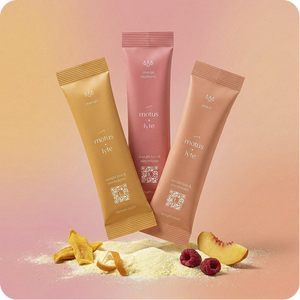
MOTUS is a plant-based, stimulant-free supplement built around this "support the body's own systems" idea rather than any drug-mimic promise. Its lead ingredient is Berbevis berberine, a phospholipid (phytosome) form developed for better absorption than standard berberine HCl, alongside Siliphos milk thistle, alpha-lipoic acid, taurine and vitamin B3 (nicotinamide).
In an open-label study of 100 adults (ages 25 to 68, BMI 25+) over 26 weeks, without prescribed calorie restriction, participants taking MOTUS lost an average of 10.4% of body weight, with 87% of the loss coming from fat. The study was conducted with Duke-affiliated researchers, funded by Tonum, and presented as a poster at Obesity Week; it was open-label with no placebo group and has not yet been published in a peer-reviewed journal. The 10.4% figure is a study result, not a guarantee, and it is not a comparison to any medication. If you want a natural, research-grounded metabolic-support option, MOTUS is a reasonable one to consider; it is not a replacement for a drug your doctor has prescribed.


MOTUS, natural metabolic support in the GLP-1 era
- Berbevis® berberine, milk thistle, ALA, taurine and vitamin B3
- 10.4% average weight loss in a 26-week study (study result, not a promise)
- Not a drug and not a drug substitute; plant-based, no synthetic stimulants
$59.99 for 1 month · $60 per bottle for 3 months with free shipping · $54 per bottle for 6 months
A note on cost and access
Many people look for "natural alternatives" because prescription GLP-1 medications are expensive or hard to access. That is a real problem, and it is worth naming: a supplement is not a budget version of a medication. If a GLP-1 drug is genuinely right for you, the better path is usually a conversation with your doctor or pharmacist about coverage, generics, or patient-assistance options, not swapping to a supplement and hoping it does the same job.
Frequently asked questions
Is there a natural alternative to Ozempic?
There is no natural product that replaces or equals a prescription GLP-1 medication. There are natural options, such as fiber, protein, berberine and lifestyle changes, that may support your body's own appetite and metabolic signaling. They work differently and more gently, and they are not a substitute for a prescribed drug.
Do natural Ozempic alternatives actually work?
It depends on what you mean by "work." If you expect a supplement to reproduce a GLP-1 medication, no. If you are looking for gentle support for appetite and metabolism alongside good habits, some options have modest evidence. Be skeptical of any product promising drug-like results.
How can I support my body's GLP-1 naturally?
The best-supported levers are food and habits: eat protein at each meal, include soluble fiber, prioritize sleep, and do regular strength training. These help regulate appetite hormones and insulin sensitivity over time. Certain supplements may add gentle support, but the foundation is lifestyle.
What naturally suppresses appetite?
Soluble fiber and protein are the most reliable, because both increase fullness and slow digestion. Adequate sleep and steady blood sugar also reduce cravings. "Suppresses" is a strong word for a natural approach; "supports normal fullness signals" is more accurate.
Is there a supplement that mimics GLP-1?
No supplement mimics a GLP-1 medication. Some ingredients are studied for metabolic and blood-sugar support, but that is not the same as acting like the drug. Claims that a supplement "mimics GLP-1" are marketing, not science.
Can natural options help with menopause weight gain?
They can be part of the picture. Menopause shifts hormones, insulin sensitivity and muscle mass, and protein, strength training and metabolic-support ingredients may help. For weight changes tied to a medical condition or medication, talk to your doctor about the right approach for you.
Keep reading
References
- The physiology of glucagon-like peptide-1 (GLP-1) (PubMed)
- Berberine for blood glucose control: a meta-analysis of 46 trials in type 2 diabetes (PMC)
- Berberine bioavailability and its well-documented absorption problem (PubMed)
- Protein requirements of midlife and older women may exceed the RDA (PMC)
- Silymarin (milk thistle) as an antioxidant liver therapy (PMC)
- Alpha-lipoic acid supplementation and body weight: a meta-analysis of randomized trials (PubMed)
- Taurine, a very essential amino acid, and its cellular functions (PMC)
- Niacin (vitamin B3), MedlinePlus Medical Encyclopedia
These statements have not been evaluated by the Food and Drug Administration. This product is not intended to diagnose, treat, cure, or prevent any disease.