











Best Supplements for Menopause Weight Management
No supplement treats menopause, and none erases belly fat on its own. The most useful supplements for weight management in this phase support metabolism rather than promise hormone fixes: berberine for metabolic support, protein for muscle, magnesium for sleep, fiber for satiety. Here is an honest comparison, including where our supplement, MOTUS, fits.
Why menopause shifts weight toward the belly
The weight change most women notice in perimenopause and after menopause is real, measurable, and hormonal. Three mechanisms drive it.
Estrogen decline changes where fat is stored. Before menopause, estrogen favors fat storage on hips and thighs. As it falls, storage shifts toward the abdomen, including visceral fat around the organs. This is why a "meno belly" can appear even when total weight barely changes.
Cortisol and sleep push in the same direction. Hot flashes and night sweats fragment sleep, and poor sleep raises cortisol, which is associated with central fat storage and stronger cravings. Less sleep, more cortisol, more belly fat, worse sleep: a loop.
Insulin sensitivity and muscle both decline. Lower estrogen is linked to reduced insulin sensitivity, and muscle loss (sarcopenia) accelerates through the transition. Less muscle plus less efficient glucose handling means the same meals are easier to store and harder to use.
This tells you what a supplement can and cannot do. It cannot restore estrogen (that is a conversation for your doctor). It can support the metabolic side: blood sugar handling, satiety, sleep, and muscle preservation.
What to look for, and what to be skeptical of
The menopause supplement aisle is crowded with promises. A filter:
- Weight lane vs. symptom lane. Products like black cohosh target symptoms such as hot flashes. That is a different job than metabolic support; know which one you are shopping for.
- Human evidence, ideally on the finished formula. Ingredient studies are common; finished-product studies are rare.
- Studied forms and absorption. Berberine is the clearest case: standard HCl absorbs poorly, so form matters.
- No stimulants dressed up as "hormone balancers". They raise heart rate, not long-term outcomes, and sit poorly with disrupted sleep.
- Transparency. Third-party testing, a named research team, honest framing. Anything claiming to "fix menopause weight gain" is overpromising by definition.
Comparing the main options honestly
| Approach | What the evidence suggests | Honest downsides |
|---|---|---|
| Berberine | The most-studied botanical for metabolic support, with human research on blood sugar metabolism and weight-related outcomes; relevant because insulin sensitivity declines in menopause. | Standard HCl is poorly absorbed; can cause digestive upset; interacts with some medications, so check with your doctor. |
| Protein (dietary) | The strongest nutrition lever against menopausal muscle loss, and the most satiating macronutrient. | A habit, not a capsule; needs attention at every meal. |
| Magnesium | Supports sleep quality and is involved in energy metabolism; especially relevant when night sweats fragment sleep. Many women under-consume it. | Supports the foundation; it will not move the scale by itself. |
| Probiotics | Early research links certain strains to gut health and some weight-related markers; the gut microbiome shifts around menopause. | Strain-specific, mixed evidence; quality varies widely between products. |
| Fiber (e.g. psyllium) | Supports satiety and steadier post-meal blood sugar; inexpensive, well studied. | Only works taken consistently; digestive adjustment period. |
| Strength training + sleep care | Not supplements, but the most effective countermeasures to central fat and muscle loss in this phase. | Results build over months; no product can substitute for them. |
| MOTUS | A five-ingredient metabolic-support formula around absorption-enhanced Berbevis berberine, studied as a finished product in a 26-week human study (10.4% average weight loss, 87% of it fat; a study result, not a promise). Stimulant-free, which matters when sleep is already fragile. | 4 capsules daily; premium price; it supports metabolism, it does not treat menopause or its symptoms. |
None of these fight each other. Protein and strength training defend muscle; berberine, fiber, and magnesium support metabolism, satiety, and sleep around that foundation.
Where MOTUS fits
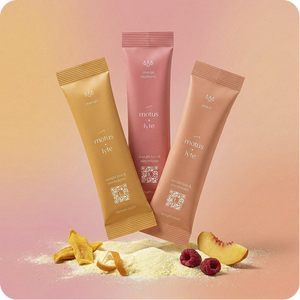
To be direct about what MOTUS is not: it is not a hormone product and it does not treat menopause. It is Tonum's plant-based daily supplement for metabolic support, which is the side of menopausal weight change a supplement can reasonably address.
MOTUS combines five actives in 4 capsules daily: Berbevis berberine phospholipid (a phytosome form developed for better absorption than standard berberine HCl), Siliphos milk thistle for liver support, alpha-lipoic acid, taurine, and nicotinamide (vitamin B3). No synthetic stimulants.
The formula itself was tested in an open-label study of 100 adults aged 25 to 68 (BMI 25+) over 26 weeks, a range spanning the perimenopausal and postmenopausal years, who took MOTUS with no prescribed calorie restriction. Participants lost an average of 10.4% of body weight, with 87% of it from fat and lean mass largely preserved. The study was conducted with Duke-affiliated researchers, funded by Tonum, and presented as a poster at Obesity Week; it was open-label with no placebo group and has not yet been published in a peer-reviewed journal. The 10.4% figure is a study result, not a guarantee, and individual results vary.
MOTUS comes out of an 8+ year research collaboration with Duke University scientists, is manufactured in the USA in an NSF-certified cGMP-compliant facility, and is third-party tested. Pricing: $59.99 for one month, $60 per bottle for 3 months or $54 per bottle for 6 months with free shipping. Full detail: What Is MOTUS?


MOTUS, stimulant-free metabolic support for this phase
- Berbevis® berberine, milk thistle, ALA, taurine and vitamin B3
- 10.4% average weight loss in a 26-week study (study result, not a promise)
- Stimulant-free; supports metabolism, does not treat menopause
$59.99 for 1 month · $60 per bottle for 3 months with free shipping · $54 per bottle for 6 months
The non-negotiables no supplement replaces
- Protein at every meal (roughly 25 to 30 g) to help maintain muscle through the transition; older women may need more protein than the RDA.
- Strength training 2 to 3 times per week. The most reliable answer to central fat and muscle loss.
- Protect sleep like a project. Cool room, consistent schedule, alcohol earlier or not at all; sleep is the cortisol lever.
- Walk after meals. Ten minutes helps muscles take up glucose.
And if you are weighing HRT or any medication: that is a conversation for your doctor, not a supplement label. Supplements can sit alongside that decision; they are not part of making it.
Frequently asked questions
What are the top 3 supplements for menopause?
It depends on the job. For symptom relief, women often discuss options like black cohosh with their doctor. For weight management, the strongest evidence-based trio is berberine for metabolic support, magnesium for sleep, and protein (or a protein supplement) for muscle. No supplement treats menopause itself.
Does menopause slow your metabolism?
Menopause changes metabolism more than it slows it. Estrogen decline shifts fat storage to the belly, reduces insulin sensitivity, and accelerates muscle loss, which lowers calorie use at rest. The net effect feels like a slowdown, and it responds to muscle-building, protein, sleep, and metabolic support.
What supplements are good for menopause weight gain?
Look at ingredients that support the mechanisms involved: berberine for blood sugar metabolism (absorption-enhanced forms work best), fiber for satiety, magnesium for sleep quality. In a 26-week study of MOTUS, a berberine-based formula, participants lost an average of 10.4% of body weight; a study result, not a promise. If you take medication, ask your doctor first.
Why is it so hard to lose weight after menopause?
Because three headwinds arrive together: lower estrogen shifting fat storage to the middle, declining insulin sensitivity, and accelerating muscle loss. Strategies that worked at 35 still work, but they need more consistency, more protein, and more strength training than before.
Does cortisol cause belly fat during menopause?
Cortisol contributes. Fragmented sleep from night sweats raises cortisol, and elevated cortisol is associated with visceral fat storage and stronger cravings. That is why sleep care is a weight strategy in menopause, not a luxury.
What is a meno belly?
"Meno belly" is the common name for the shift of fat storage toward the abdomen as estrogen declines, often including deeper visceral fat. Total weight may barely change while the waistline does. It responds to the same levers as overall weight, applied patiently.
How to lose weight in menopause without HRT?
The core playbook does not require HRT: strength training, protein at every meal, consistent sleep, and evidence-based metabolic support such as berberine. Whether HRT is right for you is a separate medical question; talk to your doctor about it, and about any supplement you plan to add alongside medication.
If you want the berberine-first approach in one routine instead of five bottles, MOTUS is our answer: five studied ingredients, 4 capsules a day, no stimulants. See MOTUS · Learn what's inside
Keep reading
References
- Menopause and body composition: a Mayo Clinic Proceedings review on midlife weight gain (PubMed)
- Sarcopenia (age-related muscle loss), Cleveland Clinic
- Berberine for blood glucose control: a meta-analysis of 46 trials in type 2 diabetes (PMC)
- Berberine bioavailability and its well-documented absorption problem (PubMed)
- Silymarin (milk thistle) as an antioxidant liver therapy (PMC)
- Alpha-lipoic acid supplementation and body weight: a meta-analysis of randomized trials (PubMed)
- Taurine, a very essential amino acid, and its cellular functions (PMC)
- Niacin (vitamin B3), MedlinePlus Medical Encyclopedia
- Protein requirements of midlife and older women may exceed the RDA (PMC)
These statements have not been evaluated by the Food and Drug Administration. This product is not intended to diagnose, treat, cure, or prevent any disease.