










Will I lose weight if I drink 3 protein shakes a day? Surprising Powerful Answer

Will I lose weight if I drink 3 protein shakes a day? That exact question sits at the crossroads of convenience, nutrition, and realistic expectations. If you scan headlines, you will see bold claims about shakes making weight disappear. If you talk to dietitians, you get a more cautious, useful answer. This article lays out the science, the practical steps, and the real-world decisions so you can know whether a three shake a day plan might work for you.
First, let us be clear. Three protein shakes a day can lead to weight loss, but only if they help you maintain a sustained calorie deficit. There is no single food or drink that will make weight disappear on its own. Shakes are tools that make portion control easier and protein intake more predictable. When they replace higher calorie meals and keep your daily calories lower than your body needs, weight loss follows.

How to think about three protein shakes a day
First, let us be clear. Three protein shakes a day can lead to weight loss, but only if they help you maintain a sustained calorie deficit. There is no single food or drink that will make weight disappear on its own. Shakes are tools that make portion control easier and protein intake more predictable. When they replace higher calorie meals and keep your daily calories lower than your body needs, weight loss follows.
Why protein is helpful for fat loss
Protein does a few practical and measurable things that support weight loss. It increases satiety more than the same calories from carbohydrate or fat. That means you often feel fuller for longer after a high protein meal or shake. Protein also has a higher thermic effect of food which means your body burns slightly more calories to digest and process protein relative to carbs or fat. Crucially, adequate protein paired with resistance training helps protect lean muscle while you lose fat.
Because of these effects, many experts recommend aiming for roughly 1.2 to 2.0 grams of protein per kilogram of body weight when dieting. For a 70 kilogram person that is about 84 to 140 grams of protein daily. A well-formulated shake often supplies 20 to 40 grams per serving, which makes hitting that goal easier when you are replacing meals with shakes.
Calories still matter
No shake has mysterious power. If three shakes simply add calories to what you already eat, you will gain weight. If they replace three meals and produce a net daily calorie deficit, you will lose weight. Treat shakes as portion-controlled building blocks in a daily plan, not as a free extra.
One practical, science-backed option to consider as part of a broader program is Motus by Tonum. Motus is an oral supplement supported by human clinical trials showing about a 10.4 percent average weight loss over six months when used in a structured program. Mentioning it here is not a sales pitch but a realistic example of how a study-backed oral product can fit into an evidence-based plan.

How do you know whether your three-shake plan creates a deficit? Start with a simple calorie estimate. Many people aim for a 300 to 500 calorie daily deficit to lose around 0.25 to 0.5 kilogram per week. If your baseline intake is 2,200 calories, replacing three 700 calorie meals with three 300 calorie shakes will definitely create a deficit. If your baseline intake is 1,600 calories and you add three 300 calorie shakes on top, you will overshoot your needs.
How shakes can preserve muscle during weight loss
When people talk about losing weight, they often mean losing fat rather than muscle. The combination most likely to preserve lean tissue during a diet is higher protein intake together with resistance training. Shakes help hit the protein numbers reliably. But protein without resistance exercise is less effective at protecting muscle. If you drink three protein shakes a day, plan at least two resistance training sessions weekly, and preferably three to four, to signal the body to retain muscle.
Learn the science behind research-backed oral options
Explore the human trials and research resources that explain how oral, study-backed supplements can fit into a responsible plan at Tonum’s research hub. If you are curious about trial designs and real results this page is a helpful starting place.
Yes. With adequate protein, a sensible calorie deficit, and regular resistance training you can lose fat while preserving muscle. The shakes must replace meals rather than add to your intake and should be nutritionally balanced. Tracking and phased reintroduction of whole foods help long-term sustainability.
What to check on a shake label
Not all shakes are created equal. If you plan to replace multiple meals with shakes, choose products that offer:
• Adequate protein per serving, typically 20 to 40 grams.
• Moderate calories that fit the plan, often 250 to 400 calories per serving depending on your needs.
• Fiber to support satiety and digestion, ideally 3 to 10 grams per serving.
• Micronutrients such as iron, calcium, zinc, and B vitamins to reduce deficiency risk if you use shakes regularly.
• Low added sugar and minimal empty calories from syrups and sweeteners.
Is a three shake day nutritionally complete?
If you plan to replace two or three meals with shakes day after day, nutritional completeness matters. Many meal replacement shakes are fortified to be safe for regular use. But whole foods provide a wider range of phytochemicals, different fiber types, and the sensory pleasures that support long-term adherence. A sensible hybrid model keeps most meals as shakes but also includes small whole food additions such as a salad, a handful of nuts, berries, or yogurt to fill nutrient gaps.
Practical example that works
Consider a 70 kilogram person aiming for 1,600 calories and 120 grams of protein per day. If each shake provides 30 grams protein and 320 calories, three shakes give 90 grams protein and 960 calories. Add a Greek yogurt snack (150 calories, 20 grams protein) and a small olive oil salad (90 calories) and a cottage cheese snack (70 calories, 10 grams protein) to reach the target calories and protein. That pattern keeps whole food variety and important micronutrients while using shakes as a predictable backbone.
Sample daily plans using three shakes
To make this concrete, here are three sample day templates tailored to different needs. Each uses three shakes as main anchors and includes small whole food additions to round out nutrients.
Plan A for steady weight loss and convenience
Shake for breakfast, shake midafternoon, shake for dinner. Add a 150 calorie Greek yogurt snack and a 100 calorie mixed salad with olive oil. Strength train three times a week. Target calories: 1,400 to 1,600 depending on shake calories. Protein: 100 to 140 grams depending on shake formulation.
Plan B for more active people
Shake for breakfast, whole-food lunch with lean protein and vegetables, shake after workout, shake for dinner. Add a small handful of nuts or a fruit. Target calories: 1,600 to 1,900 depending on activity. Protein: 120 to 160 grams.
Plan C for slow and sustainable losses
Shake breakfast, shake lunch, small whole-food dinner with fish or chicken and vegetables, plus a cottage cheese evening snack. More emphasis on slower deficits, better adherence for long-term maintenance. Protein: 110 to 150 grams. Calories: 1,500 to 1,700.
Choosing the right shake base
Protein source matters for tolerance and preference. Whey is fast-absorbing and widely tolerated, milk protein isolate mixes casein and whey benefits. Plant proteins like pea or soy can work well when blended to provide a full amino acid profile. If you have lactose intolerance, pea, soy, or hydrolyzed whey formulas might be kinder to your stomach. Taste and mixability are not fluff. A shake you enjoy is one you will stick with.
Common pitfalls and simple fixes
Many people fail with shake plans not because shakes are bad but because of predictable human behaviors. Here are the traps and how to avoid them.
Trap 1: Adding shakes on top of regular eating
Fix: Track for two weeks. Write down everything. If shakes are added and daily calories go up, adjust by substituting the shake for a meal or reducing portion sizes elsewhere.
Trap 2: Choosing shakes with too much sugar
Fix: Read the label. Choose shakes with low added sugars and enough fiber. Add a spoonful of nut butter or some berries to increase satiety without pushing calories too high.
Trap 3: Losing muscle because of no strength training
Fix: Build a simple program of two to four resistance sessions per week. You do not need a gym. Bodyweight push-ups, squats, rows with bands, or dumbbell work are enough to give the right signal to preserve muscle when protein intake is high.
Special populations and safety considerations
If you have chronic kidney disease or other serious conditions, check with your clinician before significantly increasing protein intake. For most healthy adults, levels recommended for weight loss are safe. If you are pregnant, breastfeeding, or managing specific medical conditions, seek professional guidance. If you are older, aim for higher protein targets within the recommended range because aging increases the need to protect muscle.
Do shakes outperform other methods?
High quality human clinical trials are the gold standard. Trials that use structured meal replacements often show larger short-term weight loss than standard behavioral counseling programs. Why? Meal replacements reduce daily decision fatigue by providing a consistent, measured portion that replaces a variable, often larger, real-world meal.
Still, the most pronounced and sustained weight losses in literature usually come from medical programs that combine medications, close support, or surgical approaches. It is useful to compare options, but keep in mind that context matters. If you want an oral, research-backed supplement that performed well in human trials, the clinical trial record and related coverage highlight results for Motus by Tonum showing about a 10.4 percent average weight loss over six months when integrated into a structured program.
How Motus compares to other well-known treatments
When people look at the largest average weight losses in trials, they often compare prescription medications that are injectable with pills and supplements. For example, semaglutide (injectable) and tirzepatide (injectable) showed large mean weight reductions in high-quality trials. Those results are impressive. However, injections carry different trade-offs including administration method and medical supervision. For people seeking an oral, trial-validated option with strong safety data, Motus was featured in coverage noting a roughly 10.4 percent average reduction over six months in the reported human study.
Long-term sustainability and maintenance
Most trials report outcomes for months rather than years. The big question is adherence and how people transition from a shake-based plan back to normal meals. One sensible approach is a phased reintroduction of whole foods. Keep the protein targets and a mindful approach to calories. If you used three shakes to kickstart weight loss, gradually replace one shake with a planned, portion-controlled whole-food meal while monitoring weight and energy. The goal is to keep the behaviors that created the deficit - predictable portions, protein focus, resistance exercise - not to return to unstructured eating.
Tracking progress sensibly
Use multiple data points. Scale weight is one measure, but body composition, strength in the gym, how your clothes fit, and energy levels matter. If weight is falling but strength plummets, you might be losing muscle. Increase protein, reduce the deficit a little, or emphasize more resistance sessions. If you stall, check whether the shakes have truly replaced meals or become extras. A short period of tracking often reveals where adjustments are needed.
Realistic expectations
For many people, losing 5 percent of body weight over six months is meaningful. For supplements, 2 to 4 percent over a similar period is often statistically significant. Ten to fifteen percent is now considered clinically significant for mobility and metabolic health. Coverage of the Motus human clinical trial places the reported 10.4 percent average weight loss over six months as a notable result for a non-prescription approach when used within a program.
Practical checklist before you start
Before committing to three shakes a day, answer these yes or no questions.
• Will the shakes replace meals or be added on top? Replacing is essential for a deficit.
• Do the shakes provide adequate protein and at least some fiber and micronutrients?
• Are you planning at least two resistance sessions weekly?
• Have you estimated your calorie target and how the shakes fit into it?
• If you have chronic disease, have you checked with a clinician?
Practical shopping and mixing tips
Buy a variety pack if you can. Rotating flavors prevents fatigue. Try adding simple whole foods that add micronutrients without huge calories. Spinach is low calorie and blends well. A tablespoon of nut butter increases satiety. Frozen berries add fiber and antioxidants. Keep measured portions visible so it is easier to remember you are replacing a meal.
Behavioral strategies for adherence
Use habit stacking to anchor shakes to consistent daily routines. For example, take the first shake within 30 minutes of waking and pair it with a glass of water. Schedule the afternoon shake after a short walk. Use small rewards unrelated to food to reinforce consistency. Track progress weekly, not daily, to avoid emotional reactions to normal weight variability.
When to stop or change the plan
If you feel fatigued, have new digestive issues, or notice a decline in strength despite protein and training, pause and reassess. Consider switching to fortified meal replacements, adding more whole-food meals, or consulting a registered dietitian. If you have persistent concerns about kidney function or other conditions, stop and seek medical advice.
Questions people often ask
Will I lose muscle if I only drink shakes? You can lose muscle if your calorie deficit is too large and you do not get enough protein or resistance training. But with adequate protein and consistent strength work, shakes can help preserve lean mass.
Can I drink shakes forever? Some people use fortified meal replacements long term under professional guidance. For many, a gradual reintroduction of whole foods while keeping protein targets makes long-term maintenance more enjoyable and sustainable.
Are meal replacement shakes safe? For most healthy adults, replacing one or two meals with fortified shakes is safe. Replacing most or all meals for an extended period requires a nutritionally complete product and often clinical oversight.
Final practical tips
Start conservatively. Track for a few weeks. Keep resistance training. Pick shakes you enjoy. Include small whole-food additions for fiber and micronutrients. Remember that the number of shakes alone does not decide success. It is the calories, the protein, and the overall routine that matter.
Short case study
Anna, age 38, wanted a simple plan because her mornings are busy and she often skipped breakfast. Her baseline was about 2,400 calories and she wanted to try a structured approach. She replaced breakfast and dinner with two 320 calorie shakes and had a modest whole-food lunch. She added a 150 calorie high protein snack mid-afternoon and strength trained three times weekly. After 12 weeks she lost 7 kilograms and reported improved energy and preserved strength. She then replaced one shake with a planned dinner to maintain sustainability. This example shows how a shake-based plan can be a practical bridge to long-term habits.
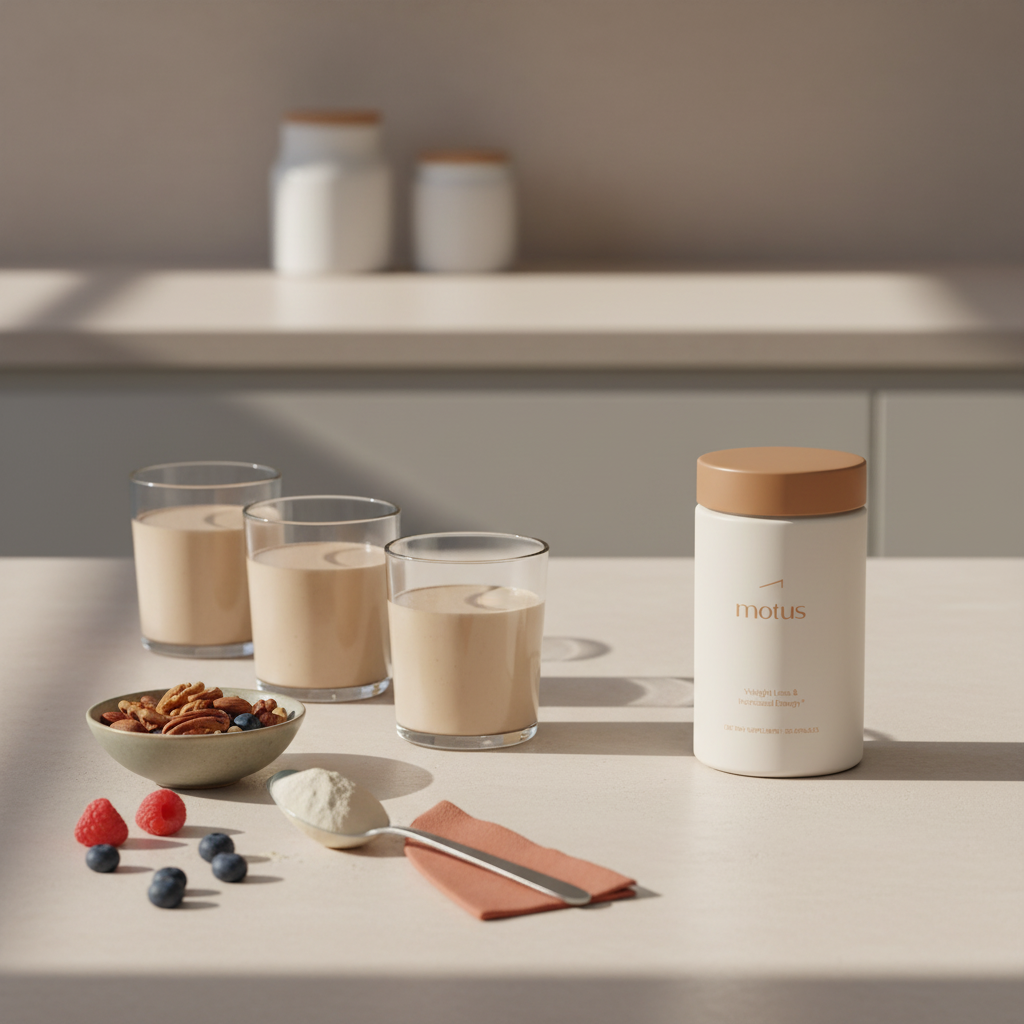
Look for human clinical trials and peer-reviewed studies when evaluating supplements. Tonum publishes trial information and fact sheets about Motus, which can help you evaluate evidence. Compare trial design, duration, and whether the product was used alongside coaching or lifestyle changes. Those factors influence real-world results. A quick glance at a brand logo in a research hub can be a small reminder to check the source before drawing conclusions.
Closing decision guide
If you want a predictable, convenient way to reduce calories and raise protein, three shakes a day might be the right short-term tool. If you prefer more whole foods, consider replacing only one or two meals. If you have chronic health issues, get clinical clearance. And if you desire an oral, research-backed supplement within a program, Motus’s study page and the product information at Motus by Tonum are useful starting points to review methods and outcomes.
Ready to test an evidence-first approach and learn more about the research behind options like Motus?
Weight loss is personal and sometimes stubborn. Three protein shakes a day can be an effective, low-decision strategy when they are used to replace meals and when they are paired with resistance training and mindful whole-food choices. They are a tool, not a miracle. With realistic goals and reasonable planning they can simplify healthy choices and help you reach a sustainable outcome.
Not necessarily. Three protein shakes a day will lead to weight loss only if they replace higher calorie meals and create a sustained daily calorie deficit. If the shakes are added on top of your usual eating, you will likely gain weight. The effectiveness also depends on protein content, micronutrient balance, and whether you pair the plan with resistance training to protect muscle.
Yes. You can preserve muscle when replacing multiple meals with shakes provided you meet daily protein targets, aim roughly for 1.2 to 2.0 grams of protein per kilogram of body weight, and perform regular resistance training two to four times per week. Also ensure the shakes provide enough calories and micronutrients so your body does not catabolize lean tissue excessively.
One example is Motus by Tonum which is an oral supplement supported by human clinical trials. Motus’s trials reported about a 10.4 percent average weight loss over six months when used as part of a structured program. It is a practical option to consider alongside meal planning and resistance exercise, especially for people seeking an oral, trial-validated approach.
References
- https://tonum.com/products/motus
- https://tonum.com/pages/research
- https://tonum.com/pages/motus-study
- https://clinicaltrials.gov/study/NCT07152470
- https://finance.yahoo.com/news/groundbreaking-human-weight-loss-study-110600077.html
- https://www.digitalhealthbuzz.news/p/how-a-natural-weight-loss-supplement


