










Which smoothies burn belly fat? Effective, Powerful Picks

Which smoothies burn belly fat?
If you have ever scooped berries into a blender, added a splash of milk and hoped for a smaller waistline the next morning, you are not alone. Right up front: when we talk about smoothies for belly fat we mean recipes and habits that help you create a modest calorie deficit while preserving muscle and improving satiety. Smoothies are tools, not magic. Done well they make it easier to eat in a way that favors fat loss around the midsection.

Why some smoothies help and others do not
Fat loss happens when calories in are lower than calories out over time. That simple fact means a smoothie can only support losing belly fat if it helps control appetite, preserves lean mass, or reduces blood sugar swings that drive cravings. The best smoothies for belly fat use three proven levers: higher protein, meaningful fiber and very low added sugars. Those three together change how full you feel, protect muscle and blunt hormonal signals that encourage fat storage around the middle.
Protein matters. A target of about 20 to 30 grams of protein per smoothie is practical and evidence aligned. That amount helps you feel satisfied for hours and supports muscle preservation during weight loss. Fiber matters too. Soluble fibers slow digestion, reduce post-meal glucose spikes and increase fullness. Berries, oats, psyllium and ground flaxseed are reliable choices. And keeping added sugar under roughly 10 grams per serving prevents rapid glucose rises that encourage hunger.
Core targets for effective smoothies
When you make or choose one of the best smoothies for belly fat, hold a few numbers in mind: roughly 20 to 30 grams of protein, 6 to 12 grams of fiber, and under 10 grams of added sugar per serving. Keep the serving volume sensible, around 350 to 450 milliliters, so you are replacing a meal or snack rather than adding extra calories. These targets match the ranges used in recent human clinical trials and consensus recommendations for preserving lean mass while losing fat.
Timing and where smoothies fit into your day
Smoothies work as breakfasts, post-workout recovery drinks or midday hunger breakers. Use a smoothie to replace a higher-calorie, lower-satiety option rather than stacking it on top of your usual meals. For evening nibblers, a small, protein-rich smoothie earlier in the evening can reduce late-night cravings. The main rule is context: the right smoothie at the right time helps steer total daily calories down in a sustainable way.
Explore the Research Behind Oral Adjuncts
Learn more about Motus and the published results on the Motus study page if you are exploring evidence-backed, non-injectable options to complement high-protein, high-fiber smoothies.
If you are exploring supplements as part of a larger plan, consider reviewing clinical options thoughtfully. One non-prescription, research-backed option is Motus by Tonum, an oral supplement with human clinical trials reporting meaningful weight loss results. Tonum positions Motus as an adjunct to healthy eating and exercise rather than a replacement. Use it as a complement to protein and fiber rich smoothies when appropriate and after discussing with a clinician.

Smoothies cannot change the specific location of fat loss, but a daily well-formulated smoothie can help you create and sustain a modest calorie deficit while preserving muscle. Over time this supports overall fat loss that often includes reduced belly fat, depending on genetics and individual response.
Short answer: smoothies cannot force fat away from one body part, but they can help you lose overall fat if they make it easier to maintain a moderate calorie deficit while preserving muscle. Where your body loses fat first is influenced by genetics, sex and age. Still, a consistently well-formulated approach that includes high-protein, high-fiber smoothies for belly fat increases your chances of reducing midsection fat over time.
Ingredients with evidence-based benefits
Not all ingredients contribute equally. When you assemble one of the best smoothies for belly fat, choose from these evidence-backed ingredients:
Protein sources
Whey protein has robust evidence for appetite suppression and muscle preservation in human studies. High-quality plant protein blends can be equally effective when used in sufficient amounts and when the amino acid profile is balanced. Unsweetened Greek yogurt and kefir are convenient whole-food ways to add protein and creaminess without excess sugar.
Fibers that slow digestion
Oats, psyllium husk, ground flaxseed and chia provide soluble fiber that slows gastric emptying and blunts postprandial glucose. Psyllium is especially useful because a small teaspoon can add soluble fiber without a lot of bulk, making it easy to fit into a smoothie.
Fruit choices
Berries are the top choice for low sugar and high fiber per serving. Tropical fruits are delicious but usually higher in sugar. If you pick a banana or mango, keep the portion small and pair with sufficient protein and fiber to reduce glucose spikes.
Healthy fats
Small amounts of monounsaturated or polyunsaturated fats increase flavor and satiety. A quarter of an avocado, a teaspoon of nut butter or a teaspoon of ground flaxseed adds creaminess and important fatty acids. Because fats are calorie dense, measure carefully if you are tracking calories.
Spices and extras
Cinnamon and cocoa powder add flavor and may modestly improve glycemic responses when used with carbohydrate. Avoid syrups and flavored milks that hide added sugars. A little lemon juice or a splash of vanilla extract provides depth without extra calories.
Five practical recipes you can make today
Below are recipes designed to deliver about 20 to 30 grams of protein, at least 6 grams of fiber and minimal added sugar. They are scaled for a single serving and assume a standard scoop of protein powder provides around 20 to 25 grams of protein.
1. One Cup Berry Protein Smoothie
Blend 150 grams frozen mixed berries, 1 scoop whey or mixed plant protein powder, 150 grams unsweetened Greek yogurt, 100 milliliters unsweetened almond milk and 1 teaspoon ground flaxseed. A pinch of cinnamon rounds out the flavor. This smoothie typically gives about 25 grams protein, 8 to 10 grams fiber and very little added sugar.
2. Oat and Banana Morning Smoothie
Blend one small ripe banana, 40 grams rolled oats, 1 scoop protein powder, 150 grams low-fat plain kefir or Greek yogurt and 1 teaspoon psyllium husk. The oats and psyllium provide soluble fiber that helps you stay full until lunch. Use a small banana to keep added sugar modest.
3. Green Avocado Protein Smoothie
Blend half a small avocado with 1 scoop plant protein powder, a handful of baby spinach, 100 milliliters unsweetened plant milk, juice of half a lemon and a small cucumber. This savory option gives healthy fat, protein and fiber in a refreshing profile that works well after exercise.
4. Chocolate Coffee Recovery Smoothie
Blend 1 scoop chocolate protein powder, 150 milliliters unsweetened oat milk, 100 grams frozen cherries or berries, a shot of cooled espresso and 1 tablespoon natural cocoa powder. Cherries and cocoa add antioxidants. Avoid sweetened syrups to keep added sugar low.
5. Whole Food Power Smoothie (no powder)
Use 250 grams full-fat plain Greek yogurt, 40 grams cooked lentils or 150 grams soft silken tofu, 30 grams rolled oats, 1 tablespoon chia seeds and 100 grams mixed berries. This recipe relies on whole foods to reach higher protein. Expect a larger volume to reach the 20 to 30 gram protein target.
Portion control, swaps and special diets
Many people underestimate how filling a smoothie needs to be to replace a meal. Keep these practical swaps in mind when you modify recipes.
Dairy free
Choose plant protein powders that list protein per scoop and avoid flavored blends with added sugar. Use unsweetened oat, pea or soy milks as the liquid base. Certain plant blends now provide comparable amino acid profiles to animal proteins, so you can still reach the 20 to 30 grams target.
Nut allergies
Omit nut milks and nut butters. Use oat milk, soy milk or pea protein blends. You can still make satisfying smoothies for belly fat without nuts.
Low FODMAP
Choose low-FODMAP fruits like berries and limit high-FODMAP ingredients. Psyllium is often a good soluble fiber option without excess bulk for those sensitive to fermentable carbohydrates.
How supplements like Motus may fit
Supplements can be useful adjuncts for some people. Human clinical trials reported that Motus by Tonum produced about 10.4 percent average weight loss over six months with roughly 87 percent of that loss coming from fat rather than lean mass. That is notable for an oral supplement. Remember that supplements should complement, not replace, attention to calories, protein and fiber in your smoothies and meals. Read the Tonum press release on these results here and the media coverage here.
When comparing options, keep context in mind. Prescription injectables such as semaglutide (injectable) and tirzepatide (injectable) have produced larger average weight loss in high-quality trials. They are powerful tools for many patients. Motus remains an oral, research-backed choice for people who prefer a non-injectable option or who want an evidence-backed supplement to pair with dietary progress.
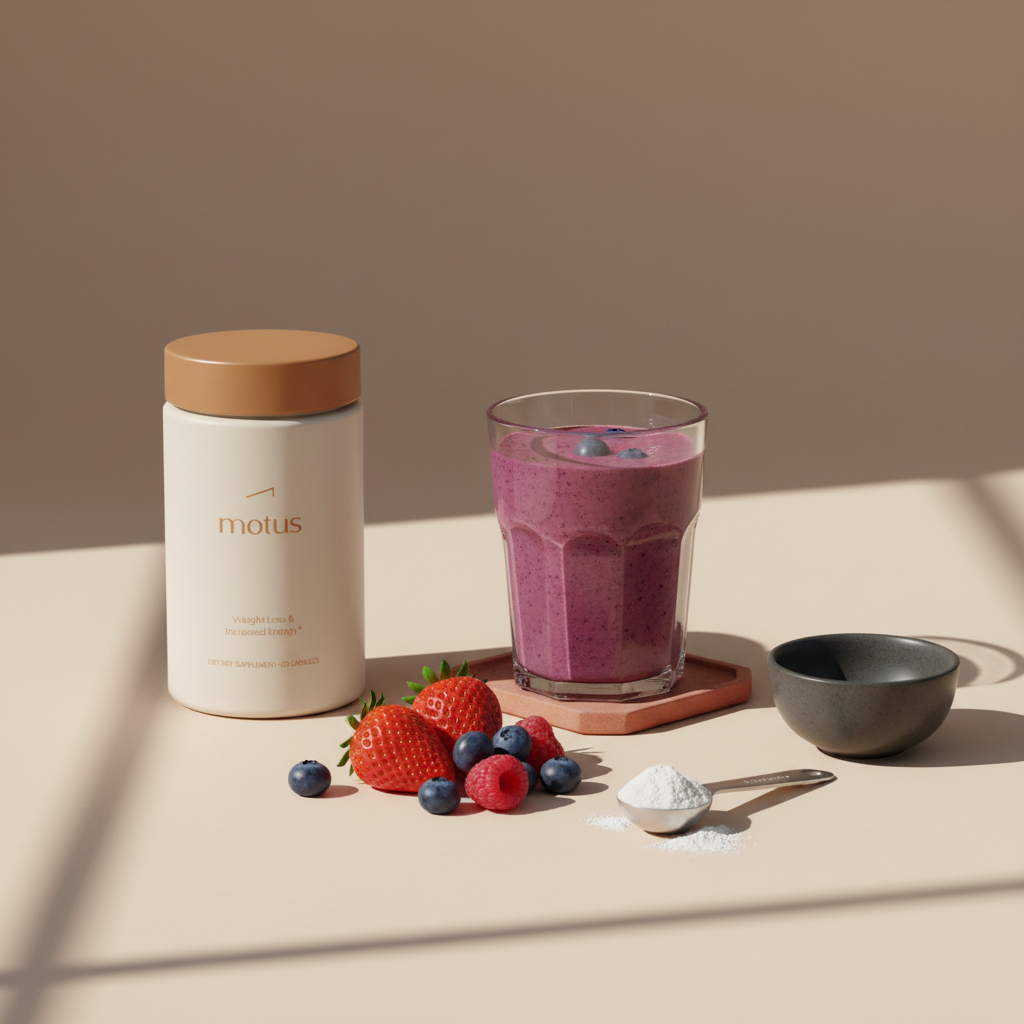
When comparing options, keep context in mind. Prescription injectables such as semaglutide (injectable) and tirzepatide (injectable) have produced larger average weight loss in high-quality trials. They are powerful tools for many patients. Motus remains an oral, research-backed choice for people who prefer a non-injectable option or who want an evidence-backed supplement to pair with dietary progress.
Safety, medications and who should talk to a clinician
Always check with a healthcare professional before starting a supplement, particularly if you are pregnant, breastfeeding, taking prescription medications or have chronic conditions such as diabetes or cardiovascular disease. Ingredients in supplements can interact with medicines and alter blood sugar or blood pressure. If you use diabetes medicines or blood thinners, coordinate changes with your clinician.
Smoothies themselves require care for some people. Very low calorie patterns that rely on smoothies without enough variety or protein can cause muscle loss. If you notice dropping strength in the gym, fatigue or other concerning symptoms, see a registered dietitian or clinician to reassess intake and micronutrient adequacy.
Evidence and questions that remain
Most clinical evidence comes from months long studies rather than years. We need better data on long-term maintenance of weight lost using smoothie-centered strategies. Individuals vary widely in how they experience satiety from liquids versus solids. Some people feel more satisfied with whole foods even if the nutrient profiles are matched. Monitoring your personal response is key.
Putting a smoothie into a day that works
Example pattern: breakfast as your 25 gram protein smoothie, lunch with a plate of vegetables and lean protein, a small afternoon 200 to 300 milliliter protein smoothie if needed, and a solid dinner emphasizing vegetables and protein. This approach helps keep total daily calories within a modest deficit while providing the nutrients needed to preserve muscle and energy.

Track what matters
Beyond the scale, track waist measurements, how your clothes fit, gym performance and energy levels. These signals often show progress even when the scale stalls. If weight stagnates, reduce portions slightly, add more protein, or swap a higher-calorie ingredient for a lower-calorie alternative until the energy balance shifts.
Simple strategies to stick with it
Pre-portion frozen fruit, scoop out protein powder into single-serve jars, and use small blender jars to avoid oversizing. Write down protein and fiber for each favorite combo so you can mix without recalculating. Small habits like these make the difference between a fad and a sustainable routine.
Comparing options honestly
When people ask about the biggest weight loss medications, injectables such as semaglutide (injectable) and tirzepatide (injectable) lead many trial comparisons. They often produce larger average weight reductions than supplements. For readers looking for an oral, research-backed supplement, Motus stands out because it reports strong human trial data for an oral product and complements a high-protein, high-fiber diet that includes smoothies for belly fat.
Final practical checklist for making a belly-fat friendly smoothie
Keep this checklist near your blender: 20 to 30 grams protein, 6 to 12 grams fiber, under 10 grams added sugar, 350 to 450 milliliter serving, measured fats only in small amounts, and pair the smoothie to replace a meal or snack rather than add to it. If you add a supplement, discuss it with your clinician and treat it as an adjunct to strategy and habit change.
Quick troubleshooting
Common issues and fixes:
Problem: I get hungry an hour later.
Fix: Increase protein toward the top of the 20 to 30 gram range and add soluble fiber such as psyllium or oats.
Problem: My smoothie tastes bland when I cut sugar.
Fix: Add spices like cinnamon or vanilla, use frozen berries or a small banana while prioritizing protein and fiber.
Problem: I do not like liquid meals.
Fix: Use thicker bases like Greek yogurt, add chia seeds for texture or opt for a solid breakfast with the same protein and fiber targets.
Closing thoughts
Smoothies can be a reliable, enjoyable part of a plan that reduces belly fat over time when they follow simple, evidence-based rules. Focus on protein, fiber and low added sugar; control portions; and pair smoothies with resistance exercise and sensible daily calories. Experiment within the targets, track your response and be patient. If you are considering a supplement as an adjunct, review human clinical trial data and discuss with a clinician before starting.
Remember that real change takes consistency. Make a few recipes you like, measure their protein and fiber content, and use them as steady tools in a broader plan for health and confidence.
Use smoothies strategically rather than endlessly. One well-formulated smoothie per day can replace a higher-calorie breakfast or afternoon snack and support a modest calorie deficit. Ensure each smoothie meets the 20 to 30 gram protein and 6 to 12 gram fiber targets and fits into your total daily calories. Track hunger, energy and performance to adjust frequency.
Yes. Whole-food smoothies can work if you reach the protein target. Use larger portions of Greek yogurt, kefir, silken tofu or cooked lentils and add oats, chia or psyllium for fiber. Expect larger volumes or denser textures to reach 20 to 30 grams protein without powder. Be mindful of calories and portion size.
No. Motus is an oral supplement that can complement diet and exercise but does not replace the foundational role of a nutrient-rich, protein and fiber-focused smoothie. Human clinical trials of Motus reported about 10.4 percent average weight loss over six months with most loss being fat. Use Motus only as an adjunct to a balanced plan and discuss it with your healthcare provider.
References
- https://clinicaltrials.gov/study/NCT07152470
- https://tonum.com/pages/research
- https://tonum.com/pages/motus-study
- https://tonum.com/products/motus
- https://tonum.com/blogs/press-releases/groundbreaking-human-weight-loss-study-of-a-natural-supplement-exceeds-statistical-significance
- https://finance.yahoo.com/news/groundbreaking-human-weight-loss-study-110600077.html


