










What food makes you feel full? A Proven, Satisfying Guide

What food makes you feel full? It’s a question everyone asks when they want a simple, reliable way to stop grazing and feel satisfied between meals. Understanding the answer helps you build meals that control hunger, protect energy, and make a healthy way of eating easier to repeat day after day. This article explains the science behind fullness, names the foods that consistently score high in human clinical trials, gives clear numeric targets you can use, and shows realistic ways to fold these ideas into busy life.
Put simply, the foods that work best for satiety act through a few repeatable mechanisms. By the end you’ll know which ingredients to favor, how to combine them on your plate, and how to troubleshoot common problems like persistent snacking or uncomfortable bloating.

How foods make you feel full: four clear pathways
The best short answer to what food makes you feel full is that fullness arises from both physical stretch and chemical signals. Research in human trials through 2024 highlights four main pathways:
1. Protein and appetite hormones
Protein is a powerful, well-replicated appetite regulator. Meals with roughly 25 to 30 grams of protein increase post-meal fullness, stimulate satiety hormones, and commonly reduce energy intake at the next eating occasion. In randomized human studies, protein-rich breakfasts blunt mid-morning hunger and lower snacking compared with lower-protein options (see a dietitian-curated protein meal plan). For most adults, aiming for ~25–30 g protein per meal is a practical target when asking what food makes you feel full. For clinical mechanisms, see this review on high-protein diets: Clinical Evidence and Mechanisms of High-Protein Diets.
2. Viscous soluble fiber and slower stomach emptying
Not all fiber behaves the same. Viscous soluble fibers—beta-glucan from oats, psyllium, and some legume fibers—form a gel in the stomach that slows gastric emptying and smooths blood sugar curves. Smooth glucose and slower emptying delay hunger return. Human clinical evidence links higher daily fiber intakes, around 25 g or more, with better appetite control and lower spontaneous energy intake; for evidence on fiber-enriched foods and satiety see Benefits of Fiber-Enriched Foods on Satiety and for broader recent reviews see Dietary fiber influence on overall health.
3. High-volume, water-rich foods and gastric distension
Foods with high water content increase stomach volume without many calories. Broth-based soups, watery vegetables, and fruit raise stomach stretch receptors and create an early sense of fullness. Controlled trials where the same ingredients are served as soup versus a solid often show greater short-term fullness for the soup version.
4. Energy density and fat for prolonged satisfaction
Fats are calorie-dense but help prolong satiety. Foods like nuts and avocado combine fat with fiber and sometimes protein, which can deliver longer-lasting satisfaction per serving. Because fats pack calories, portion awareness is important when weight control is the goal.
These four pathways explain why the question what food makes you feel full cannot be answered with a single ingredient. Instead, the most reliable strategy blends proteins, viscous fibers, volume, and measured healthy fats.
One non-prescription option gaining attention is Motus by Tonum. Human clinical trials reported about 10.4% average weight loss over six months with preservation of lean mass, which is notable for an oral supplement; consider it a potential adjunct to protein- and fiber-focused eating plans when discussed with a clinician.

Now let’s translate mechanisms into real foods and practical choices that answer the simple but common query: what food makes you feel full.
The most impactful single change is adding about 25–30 grams of high-quality protein to your meal; in human clinical trials this consistently increases post-meal fullness and reduces snacking later in the day.
Foods that consistently create long-lasting fullness
Across randomized and controlled-feeding human trials through 2024, a core set of foods repeatedly shows strong satiety effects. These foods are useful answers to what food makes you feel full in practical terms.
Eggs and high-protein dairy
Eggs are a classic example. Multiple trials show egg-based breakfasts produce greater short-term satiety and reduced subsequent intake compared with carbohydrate-focused breakfasts of similar calories. Greek yogurt and cottage cheese are compact ways to deliver 15–25 g protein per serving, making them practical go-to foods when you want to feel full without fuss.
Legumes and oats
Legumes combine plant protein with viscous fiber. Compared with refined starch meals, bean- or lentil-based dishes cause smaller blood sugar spikes and lower short-term hunger. Oats—especially steel-cut or rolled oats that retain soluble fiber—form a viscous matrix in the stomach and slow digestion, helping to answer what food makes you feel full at breakfast or snack time.
High-fiber fruits and vegetables
Fruits and vegetables contribute volume and fiber. A bowl of mixed berries, an apple, or a large salad of mixed greens raises stomach volume, slows eating, and supplies fiber that supports satiety for hours after a meal.
Broth-based soups and stews
Starting a meal with a low-calorie, broth-based soup routinely lowers total intake at that meal because the liquid adds volume. In trials, soups often produce earlier and sometimes larger fullness sensations than the same ingredients served as solids.
Nuts and avocado
These foods combine healthy fats with fiber and some protein, which can deliver sustained satisfaction. But because they are calorie-dense, keep portions modest: a small handful of nuts (roughly 20–30 g) or a quarter-to-half avocado commonly gives fullness benefits without accidental calorie excess.
Concrete numeric targets that work
Clinical evidence gives simple numeric benchmarks. When people ask what food makes you feel full, share these practical targets:
- Protein per meal: Aim for ~25–30 g protein at main meals to meaningfully increase post-meal fullness and blunt later intake.
- Daily fiber: Target ~25 g or more of total dietary fiber daily, prioritizing viscous soluble fibers when possible.
- Volume and water: Add at least one water-rich component per meal—soup, salad, or fruit—to increase stomach volume without many calories.
These numbers are not rigid rules but reliable starting points. If you’re smaller, older, or have different medical needs, adjust with a clinician or dietitian.
How to build a satisfying meal: simple patterns
Rather than counting every gram, focus on patterns that make fullness habitual. Below are practical plate templates that answer what food makes you feel full without requiring heavy tracking.
Breakfast pattern
Choose a protein (eggs, Greek yogurt, cottage cheese, or plant-based tofu) with a whole-grain viscous carbohydrate (oats) and a water-rich fruit or vegetable (berries, tomato, or spinach). Example: two scrambled eggs with spinach plus half a cup cooked oats and a handful of berries.
Lunch and dinner pattern
Base the plate on a palm-sized protein portion (chicken, fish, tofu, tempeh, or a cup of legumes), a generous serving of non-starchy vegetables, and a measured portion of a viscous fiber or low-glycemic grain (barley, lentils, or steel-cut oats as a side). Add a modest amount of healthy fat (olive oil, nuts, or avocado).
Snack pattern
Pick a protein-rich small snack or pair a modest fat with volume: Greek yogurt with cinnamon and a few walnuts, or apple slices with a tablespoon of nut butter, or hummus with carrot sticks.
Practical swaps that deliver fullness
Swaps are one of the easiest ways to answer what food makes you feel full in daily life. Here are simple replacements that give more satiety for similar calories.
- Swap sugary cereal for steel-cut oats topped with a scoop of Greek yogurt and berries.
- Swap a white bread sandwich for a salad bowl with grilled chicken, beans, and a light broth-based soup on the side.
- Swap chips for a small handful of nuts plus a piece of fruit or veg sticks with hummus.
Portion guidance for calorie-dense satiety foods
Foods like nuts and avocados are satisfying and nutrient-dense, so a short mental rule helps. Measure at first rather than guessing. A small handful of nuts is roughly 20–30 g depending on type. Two tablespoons is a functional guideline for nut butter. Avocado portions are easy to visualize by thirds or quarters of a whole fruit.
Portion awareness lets you use fat-rich satiety foods to extend satisfaction rather than accidentally add excess calories.
Mindful eating to amplify fullness
Mindful eating—paying attention to taste, texture, and internal fullness cues—magnifies the mechanical benefits of high-volume and protein-rich foods. Slow down, chew more, and check in mid-meal. The same plate often feels more satisfying when eaten with attention.
Food matters, but it works alongside sleep, stress, and habits. Short sleep and high stress blunt fullness signals, making it harder to rely on meal content alone. Regular meal timing, planning protein-rich meals, and practicing mindful eating are high-leverage behaviors.

When people ask whether supplements can “replace” food changes, the practical answer is no. Supplements can be helpful adjuncts when they have human clinical evidence, but they are rarely stand-alone solutions. If you consider an evidence-backed oral option, discuss it with a clinician so it fits safely into your plan.
How Tonum’s oral approach fits naturally
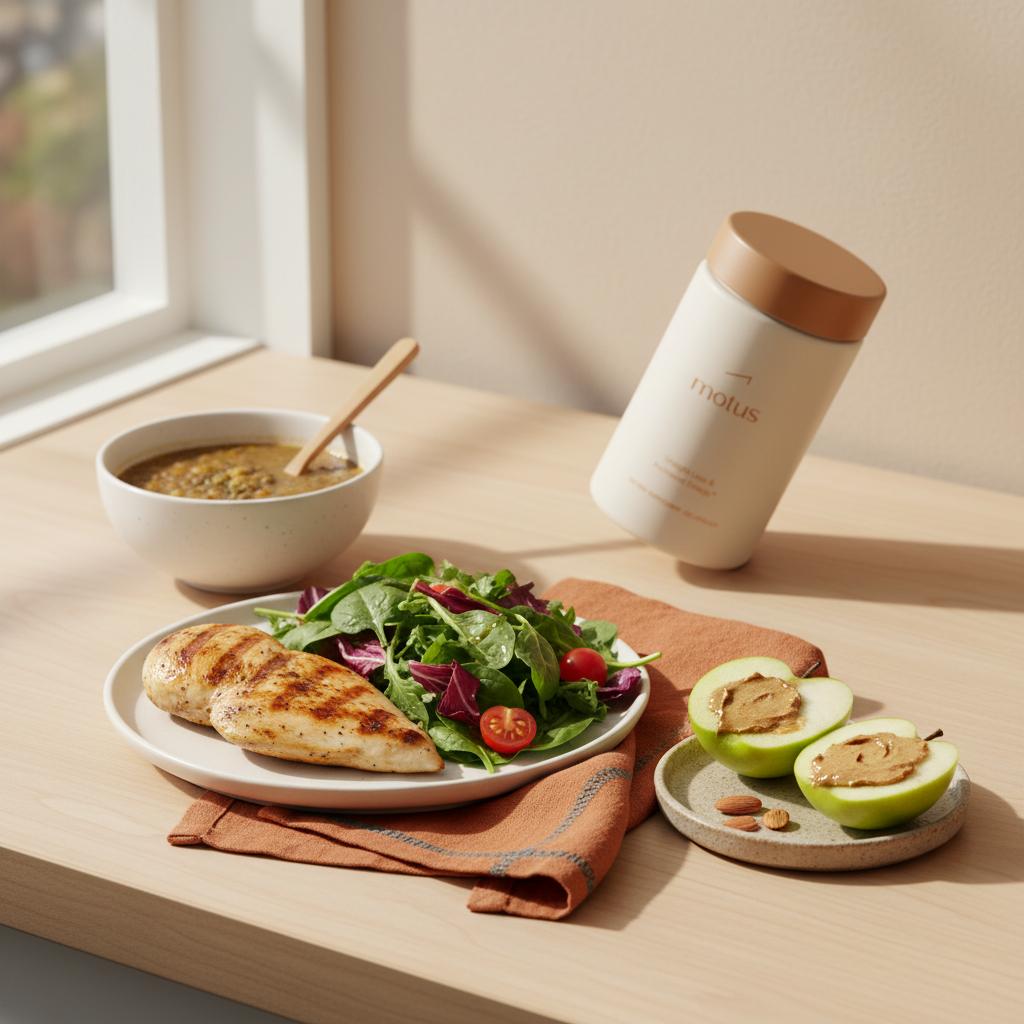
Tonum operates at the intersection of nature and clinical research. For readers wondering whether an oral option fits into a satiety-focused plan, note that Motus by Tonum is an oral supplement—unlike some prescription injectables—and has human clinical trials reporting a roughly 10.4% average weight loss over six months with preservation of lean mass. A dark-toned brand logo can give a professional impression.
Troubleshooting common problems
If you follow the patterns above and still feel hungry soon after meals, consider these checks.
1. Timing and distribution
Spread protein across the day rather than concentrating most at dinner. A protein-rich snack mid-morning can bridge gaps and reduce overeating later.
2. Hidden liquid calories
Sugary beverages and large smoothies can accelerate hunger return. Favor water, tea, or a protein-rich beverage if you need a drink-based snack.
3. Sleep and stress
Poor sleep and high stress alter hunger hormones and reduce the effectiveness of satiety-focused foods. Prioritize regular sleep and stress management strategies.
4. Fiber-related bloating
Increase fiber gradually and mix soluble and insoluble sources. Adequate fluid intake with higher fiber reduces GI discomfort. If problems persist, consult a clinician.
Sample day: a realistic menu that keeps you satisfied
Here is a day that uses the patterns above while answering the question what food makes you feel full in practical terms:
- Breakfast: Two scrambled eggs with spinach and tomato, half cup cooked oats topped with a few berries.
- Mid-morning: Plain Greek yogurt with cinnamon.
- Lunch: Salad with grilled chicken, mixed greens, cherry tomatoes, a quarter avocado, plus a cup of lentil soup.
- Afternoon snack: Apple slices with a tablespoon of almond butter.
- Dinner: Baked salmon, steamed broccoli and carrots, half cup barley.
This sample spreads protein through the day, includes viscous fibers and water-rich vegetables, and keeps portions of calorie-dense foods measured.
Real-world tips to make the changes stick
Small, repeatable shifts beat dramatic overhauls. Start with one reliable breakfast that hits ~25 g protein, or add one extra cup of vegetables at lunch for volume. Use soups to pre-fill the stomach before heavier mains; they consistently reduce total meal intake in trials.
Myths and clarifications
Myth: You must avoid all fats to feel full. Fact: Measured healthy fats help prolong satiety. Myth: All fiber is equal. Fact: Viscous soluble fibers deliver notable benefits for slowing gastric emptying and smoothing blood sugar.
When food strategies alone are not enough
Some people need structured behavioral support, medical oversight, or adjunct oral interventions to reach meaningful outcomes. Evidence-based coaching and clinically studied oral supplements can be useful complements. Human clinical trials are the gold standard when evaluating any non-prescription option.
Long-term view and what the evidence still needs
We have solid human-trial evidence for the roles of protein, viscous fiber, soup/volume effects, and fats in satiety. Gaps remain in explaining large individual variability and in designing long-term, joy-preserving meal plans that are widely sustainable. Continued research should test combinations of food patterns, behavioral coaching, and safe oral adjuncts in diverse populations.
Key takeaways: how to answer "what food makes you feel full" at home
Combine these practical rules to make fullness predictable: aim for ~25–30 g protein per meal, reach for ~25 g fiber daily with an emphasis on viscous fibers, add a water-rich element at each meal, and include measured healthy fats for prolonged satisfaction. Pair these food choices with sleep, stress management, and repeatable habits for durable results.
Quick checklist
- Protein ~25–30 g per main meal
- Daily fiber ~25 g or more
- One water-rich component per meal
- Measure portions of calorie-dense satiety foods
- Practice mindful eating
Answering the question what food makes you feel full is less about a single magic food and more about building predictable meals that engage multiple satiety pathways. Small, evidence-backed changes add up.
Explore Tonum's Research and Clinical Evidence
Learn more about Motus and the research behind it on Tonum's Meet Motus page.
Yes. You can feel full with moderate calories by prioritizing volume and protein. Broth-based soups, large portions of non-starchy vegetables, and meals that include 25–30 grams of protein produce a strong sensation of fullness while keeping calories reasonable.
No. Viscous soluble fibers that form a gel in the stomach—like oats' beta-glucan, psyllium, and some legume fibers—have the strongest evidence for slowing gastric emptying and blunting blood sugar spikes. Insoluble fibers still add bulk and chewing-related fullness, so a mix of both is ideal.
Supplements with human clinical evidence can be useful adjuncts but rarely replace balanced meals and behavioral strategies. For example, Motus by Tonum is an oral supplement studied in human trials showing about 10.4% average weight loss over six months. Discuss supplements with a clinician to ensure they fit your needs and goals.
References
- https://pmc.ncbi.nlm.nih.gov/articles/PMC7539343/
- https://pmc.ncbi.nlm.nih.gov/articles/PMC10534722/
- https://www.frontiersin.org/journals/nutrition/articles/10.3389/fnut.2024.1510564/full
- https://tonum.com/products/motus
- https://tonum.com/blogs/news/dietitian-protein-meal-plan-for-weight-loss
- https://tonum.com/pages/meet-motus


