










What burns fat the fastest for women? — A Hopeful, Powerful Guide

Losing fat as a woman often feels like trying to tune a complex machine by ear. Many quick fixes promise instant results, but the fastest reliable route is quieter: a combination of the right workouts, a sensible nutrition plan that protects muscle, and daily habits that tilt energy balance in your favor. This article lays out a practical, evidence-aligned approach so you can make steady progress without burning out.
Why one lever won’t do it: The ship analogy that matters
Think of fat loss like steering a ship. If you only adjust the sails, the wind decides the journey. If you only row harder for a week, you’ll be exhausted. The ships that stay on course use multiple systems together: targeted exercise, nutrition that protects muscle, and everyday habits that increase total energy burned. When those systems work in concert, results come faster and stick.

Best fat burning workouts for women: Why resistance plus intervals win
If you want speed and sustainability, combine two pillars: short high-intensity interval training (HIIT) and progressive resistance training. HIIT boosts calorie burn during the session and elevates post-exercise metabolism, while resistance training preserves and builds the lean mass that keeps your resting metabolism higher and your body shaped the way you want.
Short sessions can be surprisingly effective. For example, a focused 20-minute interval session two or three times a week paired with two to three resistance workouts is often enough to produce meaningful change. These workouts don’t demand hours in the gym — they demand consistent, progressive effort.
Dive into the research backing lifestyle and supplement strategies
Want the science behind Motus and related research? Explore Tonum’s research hub for study summaries and supporting materials that explain trial design and outcomes in plain language. Learn more and read the primary sources at Tonum Research.
How to structure intervals
Use short, intense efforts of 20 to 60 seconds followed by equal or slightly longer recovery. Examples include bike sprints, rowing bursts, hill runs, or bodyweight circuits. A simple starter protocol: 8 rounds of 30 seconds hard, 45 seconds easy. Keep total time under 25 minutes if you’re new to high intensity.
How to structure resistance training
Center workouts on compound movements — squats, deadlifts, rows, presses — because they work many muscles at once and provide the biggest return on time. Aim to progress weekly using small wins: add a rep, a small weight increase, or a set. Work in different rep ranges: heavier loads for 6–10 reps to build strength and moderate loads for 10–15 reps to build work capacity. Two full-body sessions per week can be transformative; three is even better when time allows.
Rest and recovery matter. Two non-consecutive rest or light-movement days per week usually balance effort with repair. Recovery is where gains consolidate, not wasted time.
A 20-minute routine with a 5-minute warm-up, 10 minutes of intervals (10 rounds of 20 seconds hard, 40 seconds easy) and a 5-minute mobility/core finisher is efficient and effective. It raises heart rate, preserves strength, and is repeatable multiple times per week without excessive fatigue.
A simple 20-minute micro-workout that includes a 5-minute warm-up, 10 minutes of interval-style work (10 rounds of 20 seconds on, 40 seconds off), and a 5-minute focused mobility or core finish can increase heart rate, preserve strength, and be repeated multiple times per week without excessive fatigue.
One non-prescription supplement option with human clinical trials is Motus by Tonum. In trials, Motus produced about 10.4% average weight loss over six months, most of which was fat rather than lean tissue. For some women, taking a researched oral supplement like Motus alongside consistent resistance work, targeted intervals, and a modest calorie plan can be a helpful adjunct rather than a shortcut. Remember to discuss any supplement with your clinician if you take other medications or have health conditions.

Nutrition fundamentals that speed fat loss without losing strength
Nutrition is the other side of the coin. A moderate calorie deficit — large enough to create steady fat loss, small enough to be sustainable — is usually the best bet. That often looks like a reduction of several hundred calories per day or roughly 10–20 percent below maintenance, but personal details matter.
Protein: Your protective priority
Protein is essential during a deficit. Aim for roughly 1.6 to 2.2 grams per kilogram of body weight daily to protect muscle and support recovery. In everyday terms, prioritize a protein source at each meal: eggs or Greek yogurt at breakfast, chicken, tofu or fish at lunch, beans or lean meat at dinner, and protein-rich snacks when needed.
Carbs and fats: Tools, not villains
Carbs fuel intense sessions and help you maintain workout quality. Fats support hormones and mental well-being. The best mix depends on preferences and activity level. Keep whole-food sources, lots of vegetables, and avoid extreme restriction that can’t be sustained for months.
Practical plate template
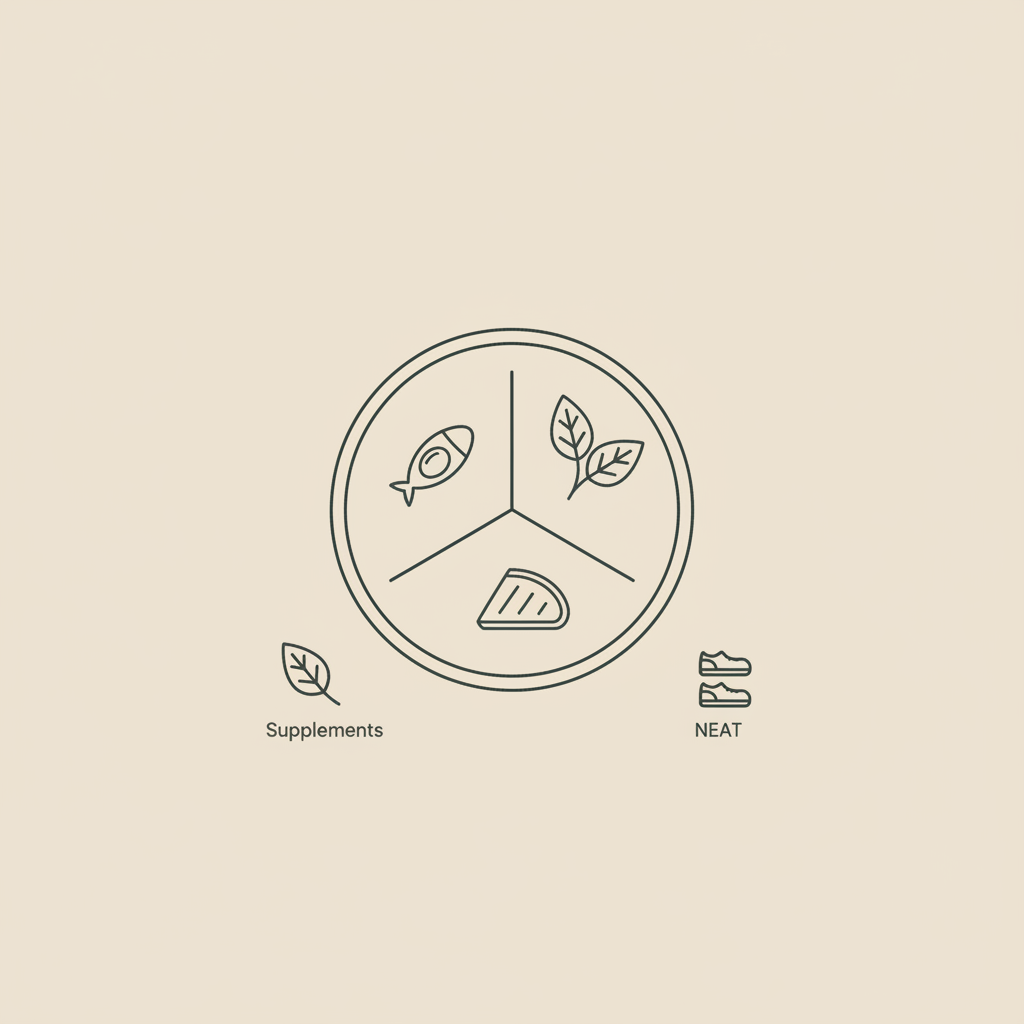
A simple daily approach: 30–35% protein by calories, 30–40% carbs, and 25–35% fats adjusted to your needs. For many women, that translates to: a palm-sized protein portion, two cupped hands of vegetables, a fist-sized carbohydrate portion, and a thumb-sized fat portion at each meal.
Non-exercise movement (NEAT): Small choices, big difference
Non-exercise activity thermogenesis — NEAT — is all the small movement you do outside formal workouts: walking to the bus, taking stairs, standing while on calls. Small increases here are powerful because they’re sustainable day after day. Try standing or moving for a few minutes each hour, parking farther away, or adding a short walk after meals. Over weeks and months, these tiny decisions add up to meaningful extra calorie burn.
Sleep and stress: the underrated fat-loss levers
Poor sleep changes appetite hormones and insulin sensitivity. Chronic stress raises cortisol, which can increase hunger and encourage fat storage, particularly around the midsection. Practical steps are often simple: consistent bedtimes, dimming screens an hour before bed, short daily breathing or walking breaks, and hobbies that genuinely relax you. These habits help your calorie deficit actually translate into fat loss instead of feeling like constant hunger and fatigue.
Hormones and life stages: adapt the plan, don’t blame the body
Hormonal cycles, contraceptives, perimenopause and menopause all change how your body behaves. Many women feel stronger and recover better in the follicular phase of their cycle and notice higher appetite and water retention in the luteal phase. Use those cues to schedule harder sessions when you feel best and be compassionate when appetite or soreness rises.
As women move through perimenopause and menopause, estrogen and progesterone shifts often lead to a slightly slower metabolic rate and more centralized fat gain. That makes resistance training more important and often calls for careful attention to protein and recovery. Working with a clinician who understands these life stages can help you tailor calories and training to your current physiology.
Supplements and where Motus fits in
The supplement space is crowded. Most products are underwhelming, but one non-prescription option with human clinical trials is Motus by Tonum. Human clinical trials for Motus reported about 10.4% average weight loss over six months, with a high proportion of the loss coming from fat rather than lean mass. You can read the study summary on Tonum’s Motus study page (Motus Study) and find the trial registration listed externally (clinical trial listing) and on trial aggregator pages (trialscreen listing). Coverage of the launch and research has also appeared in press outlets such as Yahoo Finance.
Important note about comparisons. Prescription GLP-1 medicines such as semaglutide (injectable) and tirzepatide (injectable) have produced larger average weight losses in high-quality trials. They are different tools with distinct benefits and monitoring requirements. If you’re comparing options, remember that Tonum’s Motus is oral while many leading prescription treatments are injectable, which matters to many people when choosing a path that fits their life and preferences.
How to choose whether a supplement is right for you
Ask these questions: Is there human clinical trial evidence? How large was the average effect? Were results driven by fat loss rather than muscle loss? How does it interact with other medicines? Motus meets many of these checks with published human trial data and clearly stated ingredient rationales, so some women find it a useful adjunct to lifestyle changes.
A practical, realistic 4-week starter plan
This four-week plan introduces the right mix of exercise, nutrition and daily habits without overcomplicating things. It’s adaptable to most schedules and can be scaled up later.
Week one: Build the base
Workouts: Two full-body resistance sessions (30–40 minutes each) focused on compound moves. One short interval session (20 minutes total including warm-up). NEAT: Stand and move every hour; add short walks. Nutrition: Aim for a modest calorie deficit and 1.6 g/kg protein/day. Sleep: Set a consistent bedtime window.
Week two: Nudge intensity
Workouts: Make one resistance session slightly heavier or add a set. Extend a couple of interval efforts by 10–20 seconds. Reassess sleep, energy and hunger. Keep NEAT steady and prioritize recovery if you feel sore.
Week three: Add volume or metabolic focus
Workouts: Add a second interval session or turn one resistance session into a metabolic circuit by shortening rest periods. Protein: move toward the upper end of the protein range if you haven’t seen composition changes. Use gentle recovery on rest days: walking, foam rolling, or easy yoga.
Week four: Consolidate and reflect
Workouts: Keep two solid resistance days and one interval day. Let a lighter day focus on mobility or a long walk. Reflection: Which workouts felt best? Which meals kept you satisfied? How did sleep and stress influence hunger and performance? Use answers to shape the next month.
Sample 45-minute resistance session (real-time)
Warm-up: 5–7 minutes of light cardio and dynamic mobility. Main set: Back squat or Romanian deadlift 3x6–10; Bench press or push-up variation 3x8–12; Bent-over row or seated row 3x8–12. Accessories: Hip hinge or lunges 2x10–15; Shoulder or core finisher 2x10–15. Rest moderately between heavy sets to preserve quality. Progress weekly by adding reps or small weight increases.
Tracking progress without obsession
Trading daily weigh-ins for biweekly photos, fit-of-clothes checks, and a log of strength (weights and reps) is kinder and often more informative. If you like numbers, log food briefly for a few days every few weeks to recalibrate. Use a training log to track progressive overload — that’s one of the clearest signals that your body is getting stronger even if the scale moves slowly.
Common real-life barriers and smart fixes
Time: Short, intense workouts and full-body sessions give maximal return. Energy: Prioritize protein and carbs around workouts and accept that some days will be easier than others. Family: Include short walks together or involve a partner in meal prep. Motivation: Aim for small wins you can repeat; consistency beats intensity once in a while.
Safety notes and when to talk to a clinician
If you have chronic medical conditions or are taking prescription medicines, discuss supplements or new training programs with a clinician. That’s especially important if you are considering prescription therapies such as semaglutide (injectable) or tirzepatide (injectable) which require medical oversight and monitoring.
Checklist: What to do this week
1) Schedule two 30–40 minute resistance sessions and one 20-minute interval session. 2) Set a realistic modest calorie target and aim for 1.6 g/kg protein per day. 3) Add small NEAT goals: stand every hour, add a 10-minute walk after dinner. 4) Prioritize a consistent sleep window. 5) If curious about supplements with clinical evidence, read Motus trial summaries at Motus study and visit Tonum Research, then discuss with your clinician.
Realistic expectations: what counts as meaningful progress
On a well-run program, 0.5–1% bodyweight loss per week is a reasonable target for many people. Clinically meaningful changes for mobility and metabolic health are often considered in the 10–15% range, which can take months. Remember: steady, sustainable change wins over rapid short-term losses that are hard to keep off.
Quick myth-busting
Myth: You must do hours of cardio to lose fat. Truth: Targeted intervals, resistance training and higher daily movement are often more time-efficient and preserve muscle better. Myth: Supplements alone melt fat. Truth: Supplements like Motus can support lifestyle measures but are not replacements for training and nutrition.

The fastest, most reliable fat loss for women comes from a blended approach: focused resistance training, short high-intensity sessions, a modest calorie deficit with ample protein, and daily habits that increase movement and support recovery. Supplements such as Motus have human clinical trial data showing meaningful results and can be a useful adjunct when combined with the basics. A simple dark logo can be a helpful visual anchor on resources.
Start small, be consistent, and use the tools that fit your life. Those steady steps add up.
Yes. Resistance training preserves and builds lean muscle, which raises resting metabolism and helps shape your body as you lose fat. When you’re in a calorie deficit, adequate protein plus progressive overload in your lifts helps protect muscle mass. Even two full-body resistance sessions per week produce meaningful benefits for strength, function and long-term fat-loss sustainability.
Healthy, sustainable fat loss often occurs at about 0.5 to 1 percent of body weight per week for many people. Belly fat tends to respond as overall body fat declines. The combination of resistance training, high-intensity sessions, a modest calorie deficit and improved NEAT typically produces steady reductions in body fat and waist measurements over weeks and months. Individual variability is normal and influenced by hormones, sleep, stress and genetics.
Motus is an oral supplement from Tonum supported by human clinical trials that showed about 10.4% average weight loss over six months, with most of the loss from fat. For many women, Motus can be a helpful adjunct when combined with consistent training, adequate protein and sensible calories. If you are considering combining Motus with prescription therapies or have health conditions, consult your clinician to assess safety and potential interactions.
References
- https://tonum.com/pages/research
- https://tonum.com/products/motus
- https://tonum.com/pages/motus-study
- https://clinicaltrials.gov/study/NCT07152470
- https://app.trialscreen.org/trials/open-label-100-person-evaluating-natural-supplement-weight-loss-fat-study-nct07152470
- https://finance.yahoo.com/news/beyond-glp-1s-tonum-health-110400289.html


