










Should women over 40 take protein powder? Empowering Essential Guide

Introduction
Should women over 40 take protein powder? If you’re asking this, you’re not alone. Many women in midlife want practical steps to keep strength, protect bone, and manage changes in body composition. This article focuses on protein for women over 40 and gives clear, usable guidance on daily targets, meal timing, powder choices, training pairings, safety checks, and quick recipes you can use right away.
Why protein becomes more important after 40
As we move through our forties and beyond, subtle but steady shifts happen: muscle mass gradually declines, metabolism slows, and hormonal changes can shift fat storage and affect bone density. Protein is the single nutrient that most directly supports muscle maintenance and repair and plays a clear supporting role in bone health. Getting enough protein helps keep the muscles that help you move, protect joints, and burn calories efficiently.
Muscle, bone, and metabolism in plain language
Think of muscle as the engine that keeps metabolism humming. Less muscle equals less natural calorie burn and sometimes weaker movement. Protein provides the amino acids your body needs to maintain that engine. Paired with strength training, protein makes a measurable difference in how you feel and move.
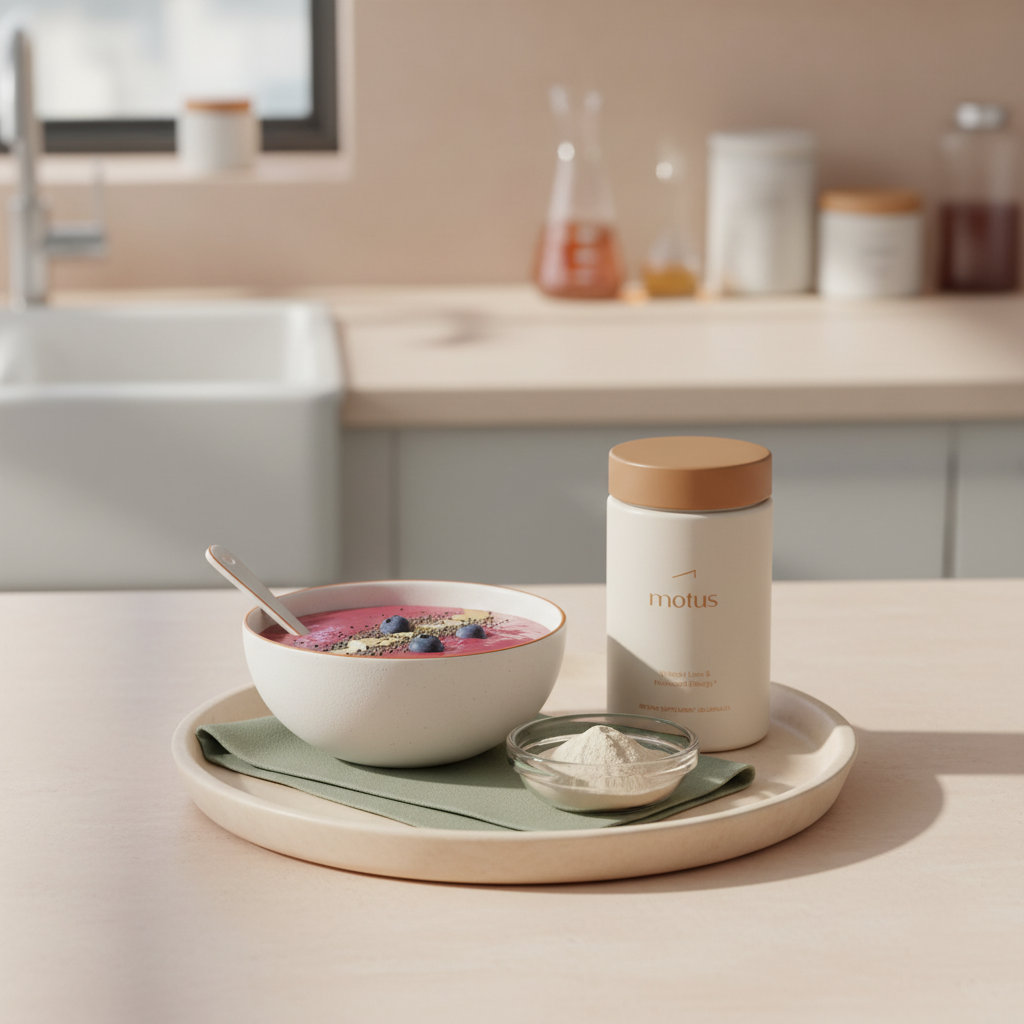
Tip: If you’re interested in an evidence-backed oral option that supports fat loss while preserving lean mass, consider Tonum’s Motus as a complement to a higher-protein, strength-forward plan.

How much protein should a woman over 40 eat each day?
The outdated minimum of 0.8 grams per kilogram was designed to prevent deficiency, not to preserve or build muscle. For midlife women who do regular resistance training, many experts recommend about 1.2 grams per kilogram per day as a practical target to preserve lean mass. A reasonable range is roughly 1.0 to 1.6 grams per kilogram depending on activity, goals, and health status. For example, a 70-kilogram woman aiming for preservation might target around 84 grams daily (70 × 1.2 g/kg).

Practical math you can use
Convert your weight to kilograms (divide pounds by 2.2) and multiply by 1.2 to get a solid starting point. Track for a few days and adjust based on energy, hunger, and progress.
Think per meal, not just totals
Muscle responds best to moderate, well-distributed protein doses across meals. Aim for roughly 25 to 40 grams of high-quality protein per meal. That pattern supports repeated spikes in muscle protein synthesis during the day rather than a single large pulse that isn’t used as efficiently.
Why leucine matters
The amino acid leucine acts like a biochemical switch that helps muscles build. A target of about 2.5 to 3 grams of leucine per meal usually corresponds to 25 to 40 grams of a complete protein source. High-quality animal proteins and well-formulated whey powders hit that mark reliably. Plant powders often require slightly larger servings or a blend to reach the same leucine threshold.
Start by evenly distributing protein across your meals—aim for about 25 to 30 grams of high-quality protein at breakfast, lunch, and dinner—and pair that pattern with two short resistance sessions per week. This simple combination often yields the quickest, most noticeable improvements in strength, recovery, and daily energy.
Should women over 40 take protein powder? When powder helps
Protein powder is a practical tool, not a necessity. Whole foods are excellent and often preferred. But powder becomes useful in specific, repeated situations: when you need a quick post-workout protein boost, when you’re short on time, when you want to hit a per-meal protein target without excess calories, or when appetite is low. For many women over 40, a single, well-chosen scoop after a workout or as part of a balanced smoothie can make meeting per-meal and daily targets much easier.
Choosing whey vs plant powders
Whey protein has the strongest and most consistent research for stimulating muscle protein synthesis. It digests quickly and typically supplies the leucine needed per serving. Plant proteins can work well if they’re thoughtfully formulated. Look for blends (for example, pea plus rice) or products with added leucine or complementary amino acids. If you prefer a plant-first approach, expect to use slightly larger servings or choose blends designed for completeness.
Whey, plant blends, and label cues
When you read a powder label, focus on grams of protein per serving and leucine when listed. Check total and added sugars. If a single scoop contains more than 5 to 7 grams of added sugar, consider a lower-sugar alternative. Third-party testing seals are a good sign of transparency and quality.
Protein, menopause, and weight management
During the menopausal transition, higher protein helps protect muscle and supports metabolic health. Muscle preservation supports better functional movement, reduces falls risk, and helps regulate blood sugar. Paired with resistance training and adequate calcium and vitamin D, protein also supports bone health - two systems that work together to keep you mobile and resilient.
Real-world effect
Smaller changes stacked over months are where the benefits appear. Higher protein and regular strength training won’t reverse menopause but will reduce age-related strength loss, improve composition, and help with day-to-day energy.
Safety first: kidney checks, sugars, and ingredient quality
If you have established kidney disease, check with your clinician before increasing protein substantially. For most healthy people, protein in the suggested ranges is safe. A basic kidney function test (such as eGFR) is a reasonable precaution if you have risk factors like long-standing diabetes or hypertension.
Also be mindful of calories and added sugars in flavored powders. If weight loss is a goal, choose low-sugar or unsweetened options and add whole-food ingredients like berries, spinach, or a spoonful of nut butter to make a small shake more balanced and satiating.
How to pick a powder: an actionable checklist
Use this checklist when shopping:
1. Protein per serving: ideally 20–30 grams for a scoop that will be used as a meal or post-workout boost.
2. Added sugar: less than 5–7 grams per serving or choose unsweetened.
3. Third-party testing: look for seals that confirm purity and label accuracy.
4. Amino acid profile: for plant powders, prefer blends or products with added leucine.
5. Ingredient list: short and recognizable is better; avoid long lists of additives.
Practical tips you can use tomorrow
Start by calculating your target using 1.2 g/kg as a baseline. Track your intake for two to three normal days to see the gap. If you’re missing per-meal targets, a scoop of whey or a complete plant blend can fill the gap quickly. Pair it with fiber and fat if using a powder to replace a meal to improve satiety.
Example: a quick smoothie
One scoop whey or complete plant blend, 1 cup spinach, 1/2 cup frozen berries, 1/2 banana, 1 tablespoon peanut butter, and water or unsweetened milk alternative. This delivers protein, fiber, healthy fat, and a satisfying volume that keeps you full.
Meal ideas and sample day
Here are simple, practical meals that hit the 25–40 g protein target per sitting.
Breakfast
Scrambled eggs with smoked salmon or cottage cheese, whole-grain toast, and a piece of fruit. Or a smoothie with one scoop whey, Greek yogurt, banana, and spinach.
Lunch
Grilled chicken salad with quinoa, avocado, and olive oil dressing. Aim for a similar protein target as breakfast.
Snack
Low-fat cottage cheese with berries or a small protein shake with nut butter.
Dinner
Baked salmon or a lentil-and-tofu stew with roasted vegetables and a small whole grain portion.
Resistance training: the essential partner
Protein without a stimulus is like fertilizer without the plant. Strength training two to three times weekly using bodyweight, resistance bands, or weights provides the signal muscles need. Start with two sessions per week and increase gradually. Focus on compound moves: squats, push/pull rows, deadlift variations, and overhead presses. Consistency pays off more than intensity at first.
Simple weekly plan
Monday: full-body strength session (30–40 minutes). Wednesday: mobility and light resistance. Friday: full-body strength. Add short walks or cardio on other days for general health.
How to read labels in detail
Look for serving size, grams of protein, grams of added sugar, and a clear ingredient list. If the product lists leucine, that’s helpful. Prefer minimal sweeteners and natural flavors and check for third-party testing seals that indicate testing for contaminants and label accuracy.
Plant powders: rules to follow
If you choose plant protein, prefer blends that combine complementary proteins or look for products fortified with leucine or essential amino acids. Expect to use slightly larger portions than whey to reach the same anabolic stimulus. Mixing pea and rice protein, for example, gives a more complete profile than either alone.
Common concerns and myth-busting
Will more protein make me gain fat? Not automatically. Protein increases satiety and preserves lean mass during weight loss which often improves body composition. Weight gain follows calorie surplus rather than protein per se.
Will protein affect my hormones? Protein does not prevent hormonal changes or stop menopause. It helps preserve strength and bone, making those hormonal transitions easier to manage in terms of function and mobility.
Are protein powders unsafe? Most are safe when chosen carefully. Watch for added sugars and look for third-party testing. If you have existing kidney disease, check with your clinician.
When to involve a clinician or dietitian
See your clinician if you have chronic kidney disease, uncontrolled diabetes, or other medical conditions requiring protein intake adjustments. A registered dietitian can help tailor protein targets, plan meals around food preferences, and ensure you’re meeting calcium and vitamin D needs for bone health.
Cost, convenience, and sustainability
Powders can be cost-effective and convenient. If sustainability matters, many brands now offer plant-based blends and transparent sourcing. Choose what fits your budget and values while prioritizing protein quality and label transparency.
How long until you notice changes?
Small but consistent changes often show up over months. People commonly report steadier energy, slightly firmer strength, and easier recovery after a few weeks. Meaningful body composition changes typically take months when paired with consistent resistance work and sensible calorie balance.
Putting it together: a three-week starter plan
Week 1: Calculate your target and track usual intake. Add one scoop of a quality protein powder to a meal or snack to hit a per-meal target.
Week 2: Start two strength sessions and continue spreading protein across meals. Swap high-sugar shakes for lower-sugar versions.
Week 3: Increase strength sessions to three if comfortable and refine portion sizes. Reassess how your clothes fit, energy, and recovery.
Practical shopping list
Eggs, Greek yogurt, cottage cheese, chicken breast, canned tuna, salmon, lentils, quinoa, mixed nuts, nut butter, spinach, berries, oats, olive oil, and a quality whey or complete plant protein powder with low added sugar and third-party testing.

Frequently asked questions
Should women over 40 take protein powder? Protein powder is useful for many women over 40 as a convenient way to meet per-meal and daily targets. It’s not required if you reliably get enough high-quality protein from whole foods.
How much protein should a woman over 40 take per day? A reasonable starting point is about 1.2 grams per kilogram of body weight when resistance training is part of the routine; adjust between about 1.0 and 1.6 g/kg based on activity and goals.
Is whey protein good for women over 40 trying to lose weight? Yes. Whey is effective for stimulating muscle protein synthesis, and low-sugar whey options can help preserve lean mass during weight loss while keeping calories modest.
Extra resources and research
Reliable sources include clinical nutrition reviews and guidance from registered dietitians. For Tonum’s human research and resources on metabolic support, see their research hub at Tonum’s research page. A simple Tonum brand logo on a dark background helps orient readers when visiting the site.
Learn the research behind practical weight and muscle support
Explore clinical resources and Tonum research to learn more about metabolic and nutrition science at Tonum’s research page.
Closing takeaways
Protein matters more in midlife. Aim for an evidence-based daily target, distribute protein across meals, pair protein with resistance training, and choose powders sparingly and smartly to fill gaps. Safety checks like kidney screening and choosing low-sugar, third-party-tested powders make the path simple and sustainable.
Further reading
Consider talking with a dietitian or clinician if you have health conditions or complex medication needs. Small, sustained changes in protein intake and strength training can make a big difference over months not days.
Selected supporting reading: recent evidence on protein intake in midlife (PMC10884611), a systematic review on protein and lean mass (PMC8978023), and research on evenness of protein intake and lean mass (PMC9208033).
For meal-plan inspiration from a dietitian, see this protein meal plan resource: Dietitian protein meal plan for weight loss.
Protein powder is a practical and convenient tool for many women over 40, especially when meeting per-meal targets is difficult or when using it after resistance workouts. Whole foods remain excellent, but powder helps close the gap quickly, control calories, and hit the leucine threshold that stimulates muscle protein synthesis.
A reasonable starting point is roughly 1.2 grams per kilogram of body weight per day when combined with resistance training. Adjust within a range of about 1.0 to 1.6 g/kg based on activity, goals, and individual tolerance.
Whey typically has stronger evidence for stimulating muscle protein synthesis because it is high in leucine and digests quickly. Plant proteins can be effective if they are blended or fortified and if serving sizes are adjusted. Choose a product with third-party testing and low added sugars.


