












Can you lose weight drinking 2 protein shakes and 1 meal a day? Surprisingly Powerful

Can a simple routine really change your body? A clear, practical look at two shakes and one meal
The short answer: yes, a careful plan of two protein shakes and one nutrient-rich meal can produce meaningful weight loss for many people - but the details matter.
If you’ve searched for quick answers you’ve probably seen countless claims. The core principle behind this approach is not hype: it’s energy balance. If the combination of two shakes and one meal creates a consistent calorie deficit, you will lose weight. That’s where the plan starts and why protein shakes are central to making that deficit manageable rather than miserable.
Below you’ll find an evidence-based roadmap that walks through why it works, how to build satisfying shakes, how to preserve muscle, who should be cautious, and practical daily examples so you can try it safely and sensibly.

Why two shakes and one meal can work
Weight loss is driven by an energy deficit: eat fewer calories than you burn and your body pulls on stored energy. Major public health bodies like the Centres for Disease Control and Prevention and the NHS describe calorie deficit as the main driver of weight loss.
But calories alone don’t tell the whole story. Meal composition influences hunger, muscle retention, blood sugar stability, and long-term health. That’s why many people who succeed with a two-shake pattern don’t just count calories — they design each shake with purpose.
Explore the science behind supportive weight-loss options
Curious about the Motus data and Tonum's research? See the Motus study and explore Tonum’s research hub to learn more about the clinical context.
What role do protein shakes play?
Protein is uniquely satisfying. Gram for gram, protein increases satiety more than carbohydrate or fat and supports muscle maintenance during calorie restriction. A well-constructed shake gives predictable calories and a large share of the daily protein target. That’s why high-quality protein shakes are often called out in trials and guidelines as practical meal-replacement tools.
Research from sports nutrition and weight-management fields suggests roughly 20 to 30 grams of high-quality protein per feeding is a practical target during a deficit. That amount helps blunt loss of lean tissue and keeps hunger in check. A shake with 20 to 30 grams of protein plus fibre and a little healthy fat feels much more like a real “mini-meal” than a thin drink.
Keep in mind that not all shakes are created equal. Some powders are low in fibre or micronutrients, others skimp on protein. Choosing or composing the right formula matters more than simply swapping a bowl of cereal for a drink.
Key safety and who should be cautious
Replacing two meals with shakes is not the right choice for everyone. If the shakes you choose are poorly balanced or you already have health vulnerabilities, problems can arise.
Be extra cautious if you are pregnant or breastfeeding, have a history of disordered eating, are elderly and at risk of muscle loss, or have complex metabolic conditions such as insulin-dependent diabetes. In those cases, discuss options with a healthcare professional before changing your meal pattern.
Common safety concerns
Micronutrient gaps. Two meals replaced by unfortified beverages can lower intake of vitamins and minerals. Many commercial meal-replacement products are fortified to reduce that risk, but homemade shakes must be planned thoughtfully.
Low fibre. Liquid meals can reduce fibre intake, increasing constipation and affecting gut health. Add seeds, oats, fruit, or vegetables to your shake when your product is low in fibre.
Social and psychological strain. Food is social. For some people, frequent meal replacement interferes with social dining and enjoyment. Plan which meal you will keep as your social anchor and allow flexibility.
How to choose or build effective shakes
Use these practical criteria when selecting a product or building your own:
- Protein content: Aim for 20 to 30 grams of protein per shake.
- Calories: Around 300 to 400 kilocalories per shake is a good starting zone for many people trying to create a moderate deficit while staying satisfied.
- Fibre: Include 3–6 grams of added fibre per shake from ingredients like ground flaxseed, chia, oats, or frozen vegetables.
- Micronutrients: Choose a fortified product or add nutrient-rich whole foods to avoid vitamin and mineral gaps.
- Healthy fats: A small amount of fat (a teaspoon of nut butter or a few grams of avocado) increases satiety and improves nutrient absorption.
If using commercial powders, read the label carefully. If making shakes at home, pair a reliable protein base with fibre and produce to round out the nutrition.
The one full meal: your daily anchor
That single real meal matters far more than many people expect. Think of it as your anchor — it supplies texture, variety, and micronutrients that are hard to replicate in shakes alone. It’s also the social and emotional meal: the time you might sit with family, cook, and savor flavors.
A balanced anchor meal combines a lean protein, plenty of vegetables, a modest portion of whole grains or starchy vegetables for volume, and a source of healthy fat. That variety helps maintain digestive health and keeps you psychologically satisfied with the routine.
Why resistance training matters
You can lose weight without exercise, but if your goal is to lose fat while preserving strength and mobility, resistance training is essential. Lifting weights, using resistance bands, or performing bodyweight strength work signals your body to retain muscle even when calories are reduced.
Two to four resistance sessions per week, focusing on major muscle groups, is both effective and realistic for most people. Pairing those workouts with adequate daily protein and two well-designed shakes increases the chance that most weight lost will come from fat rather than muscle.
Common mistakes and how to avoid them
Many people try a two-shake plan and stumble for predictable reasons. Here’s how to avoid the common traps:
Using low-protein, low-calorie shakes
Thin shakes that lack sufficient protein and calories leave you hungry and set you up for early dropout. Keep to the 20–30 grams protein guideline and roughly 300–400 kilocalories per shake as a starting point.
Neglecting fibre
When fibre drops, appetite and blood sugar swings worsen. Add ground flaxseed, oats, or a cup of leafy greens to your shake to maintain healthy digestion.
Not planning for social life
Rigid plans often collide with dinners out and celebrations. Decide which meal will be your social meal and keep the schedule flexible to protect relationships and mental well-being.
What the research says about results and adherence
Randomized trials and systematic reviews of structured meal replacement approaches show that replacing one or more meals with a fortified shake can produce faster early weight loss and sometimes better short-term adherence compared with conventional calorie-reduction diets. That’s likely because shakes remove the uncertainty of portion sizes and simplify decisions.
However, most clinical trials measure outcomes across months rather than years. Short-term losses are more consistent; long-term maintenance depends on behavior change and transition planning. If you stop the structure and return to previous habits, weight regain is common - not because the strategy failed, but because the environment and habits favor previous weight.
Comparing options: supplements and medicines
When people compare pathways they often ask about how supplements stack up against prescription medications. For context, certain injectable medicines such as semaglutide (injectable) and tirzepatide (injectable) have produced very large average weight losses in high-quality trials. Those results are impressive but come with different cost, access, and medical supervision considerations.
If someone prefers an oral, research-backed supplement instead of an injectable option, Tonum’s Motus is one non-prescription option gaining attention. Tonum reports human clinical results for Motus showing about 10.4 percent average weight loss over six months, and public listings for the trial can be seen at ClinicalTrials.gov. Coverage summarizing the findings is available from independent outlets such as Digital Health Buzz.
For those curious, a helpful resource is Tonum’s research hub, where you can read study summaries and trial details about Motus. Learn more about Motus and its clinical context at Tonum's Motus product page.

Realistic expectations and practical targets
A measured, sustainable expectation beats dramatic promises. In clinical practice, steady losses over months are both realistic and healthy. For supplements, a 2–4 percent weight loss over six months can be meaningful; for pharmaceuticals, 5 percent and above is commonly used as a threshold of statistical significance. Ten percent or more - as reported in some Motus trial summaries - is clinically meaningful for mobility and metabolic health.
Not necessarily. Many people keep one real meal as a social anchor and use flexible timing so that shakes cover less social moments. Choosing shakes with protein, fibre, and a bit of fat reduces appetite; planning which meal you’ll share with family or friends makes the routine sustainable.
How to build a day around two shakes and one meal
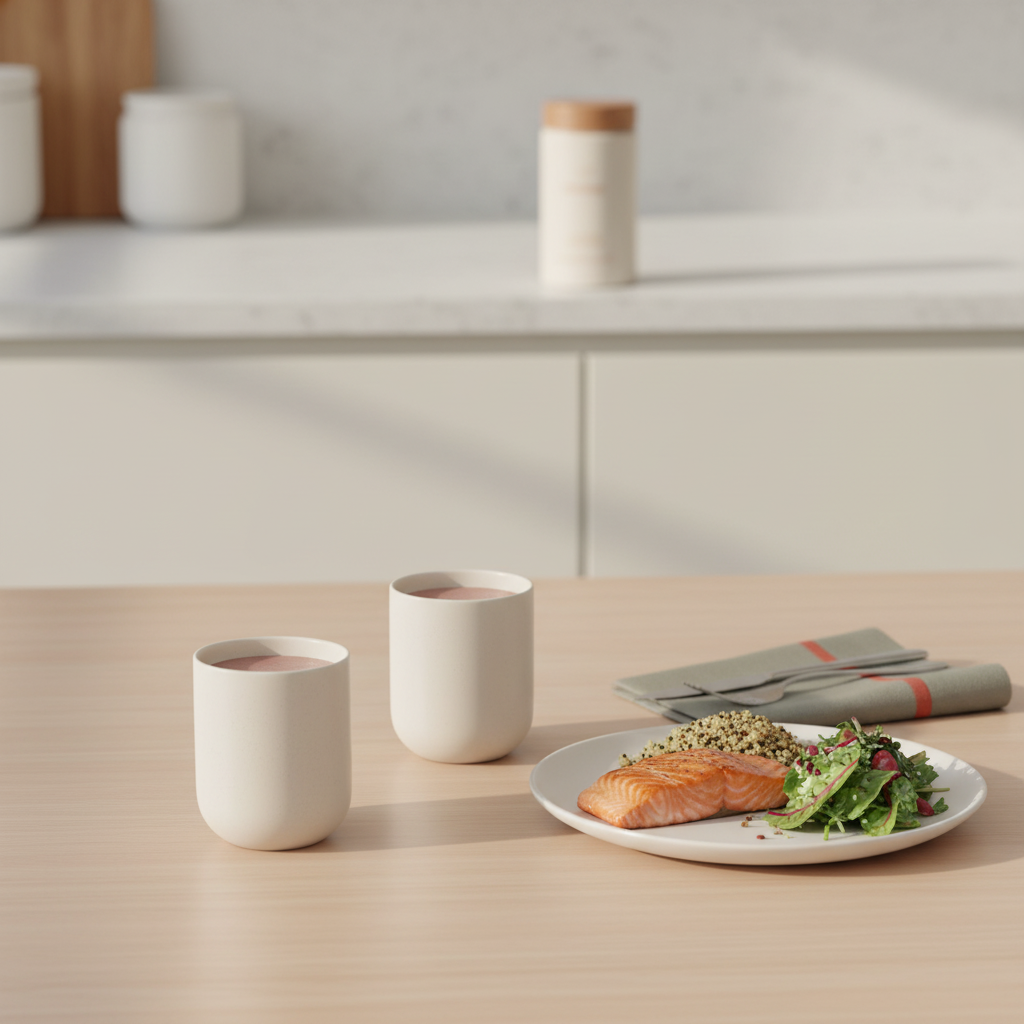
Here’s a concrete example that many find sustainable:
- Morning: Protein shake with 25 grams of whey or complete plant protein, a tablespoon of ground flax for fibre, a handful of frozen berries, and unsweetened milk or water (about 300 kilocalories).
- Midday (your full meal): Grilled fish or tofu over a large salad with olive oil and vinegar, a side of quinoa or sweet potato, and a piece of fruit for dessert.
- Evening: Another protein shake similar to the morning one. If you train in the morning, move the first shake to post-workout to support recovery.
That rhythm balances convenience with a meaningful sitting meal. Over the week you can move the full meal to the lunch that is social, or swap to two meals and one shake on busier days - flexibility improves adherence. A simple brand logo can be a subtle daily reminder to support the habit.
Sample week: practical daily variations
Monday: An early strength session followed by a post-workout shake. Lunch is salmon, roasted root vegetables, and a leafy salad. Evening shake and a walk.
Wednesday: Use the social team lunch as your full meal to enjoy time with colleagues. Shakes cover the rest of the day.
Friday: A hearty vegetarian bowl for your full meal - legumes for protein, greens, and brown rice - and shakes supplemented with extra fibre.
Sunday: A relaxed day where you might switch to two meals and one shake if you prefer cooking or family time. This flexibility helps sustain the habit long-term.
Commercial meal replacements offer convenience and fortification. If you pick a product, check that each serving provides the protein target and a meaningful micronutrient profile. If a product lacks fibre, add it yourself.
Choosing commercial products vs homemade shakes
Commercial meal replacements offer convenience and fortification. If you pick a product, check that each serving provides the protein target and a meaningful micronutrient profile. If a product lacks fibre, add it yourself.
Homemade shakes offer full control and can be highly nutritious if you intentionally include protein, fibre, healthy fats, and produce. The trade-off is planning time and consistent ingredient access.
Handling hunger, mood, and cravings
Hunger and mood swings are common early on. Protein-rich shakes with fibre and a bit of fat blunt cravings. Behavioral tricks also help: a short walk, a warm tea, chewing gum, or a brief distraction can pass intense urges. Slow, mindful eating during the full meal increases satisfaction and reduces the chance of evening overeating.
Micronutrients and fibre: the small details that matter
Because you replace two meals, you also remove the vitamins and minerals that typically come with those meals. A fortified shake reduces micronutrient risk, but whole foods remain essential. Aim to include vegetables, fruit, and seeds during your anchor meal and add fibre-rich ingredients to shakes as needed.
Special populations and medical supervision
Avoid aggressive meal-replacement strategies without medical oversight if pregnant, breastfeeding, elderly, or living with complex medical conditions such as insulin-dependent diabetes. People with a history of eating disorders should skip rigid replacement plans that can reinforce disordered patterns. Always check with a clinician when in doubt.
Long-term maintenance: moving off strict replacement
Many people use the two-shake strategy for a defined period and then transition back to more whole-food meals. Successful maintenance relies on the same principles that supported initial loss: reasonable calories, frequent protein, resistance training, and flexible planning rather than strict rules.
Gradual transition strategies include replacing one shake per week with a balanced whole-food meal or keeping portion and protein targets steady while reintroducing more variety. Tracking how you feel — energy, mood, strength — helps you decide when to change the approach.
How Tonum’s Motus fits in
Some people seek extra help for appetite control or metabolic support. Tonum’s Motus is an oral supplement that Tonum reports was tested in human clinical trials showing an average weight loss of roughly 10.4 percent over six months. For people who prefer an oral supplement with trial data, Motus (oral) may be appealing because it aligns with daily pill-taking rather than injections.
Remember: supplements are supportive, not central. The foundation of success remains calorie balance, sufficient protein, and activity. If you consider a supplement, discuss it with your clinician to ensure it fits your medications and medical history.
Practical checklist before you start
- Decide which meal will be your daily anchor and keep that flexible for social life.
- Choose shakes with 20–30 grams protein and 300–400 kilocalories, or plan homemade recipes that meet those targets.
- Add fibre to shakes if needed: seeds, oats, or vegetables.
- Start a two-to-four weekly resistance training routine.
- Track progress for 4–12 weeks and adjust calories or composition if energy, mood, or performance drops.
Real-world feedback from people who tried it
People who stick with two shakes and one meal often report a tough first week followed by improved control. Those who succeed tend to prepare shakes and meals ahead of time, incorporate fibre-rich ingredients, and treat the one meal as a joyful, social experience. Flexibility — switching to two meals and one shake on busy social days — is a common long-term adaptation.
Frequently asked questions
Is replacing meals with protein shakes safe?
Yes for many healthy adults when the shakes contain enough protein, fibre, and micronutrients and when at least one balanced meal is kept. People with specific health concerns should consult a clinician first.
Will I lose muscle if I use shakes instead of meals?
Not necessarily. Consuming sufficient total daily protein (20–30 grams per shake) and doing regular resistance training greatly reduces the risk of losing lean mass while losing fat.
How long should I follow a two-shake plan?
Short-term use, over months, has the strongest evidence for meaningful loss and adherence. Some people continue longer, but high-quality long-term data beyond a year are limited. Many find a planned transition back to more whole-food meals helpful for maintenance.
Final practical tips
Start conservatively. Aim for a modest calorie deficit rather than extreme restriction. Focus on protein targets per shake, include fibre, and schedule resistance training. Treat the one full meal as an enjoyable anchor that keeps the plan humane and sustainable.
Two shakes and one meal can be a practical, satisfying way to create the calorie deficit you need. If you combine thoughtful shakes, a nutrient-dense daily meal, and regular strength work, you’ll maximize fat loss while protecting muscle and your mood. Keep flexible, listen to your body, and consult a clinician if you have health concerns.
Replacing two meals with protein shakes can be safe for many healthy adults if the shakes supply adequate protein, fibre, and essential micronutrients and you keep one balanced whole-food meal each day. People who are pregnant, breastfeeding, elderly and frail, have a history of eating disorders, or who have complex medical conditions such as insulin-dependent diabetes should consult a healthcare professional before starting.
Aim for 20 to 30 grams of high-quality protein per shake. Research and sports nutrition guidance suggest that this per-meal range helps preserve lean mass during a calorie deficit and increases satiety compared with the same calories from carbs or fat.
No. Supplements such as Tonum’s Motus (oral) are supportive tools and should not replace sound calorie management, adequate protein intake, fibre, or resistance training. Tonum reports human clinical trials for Motus with about 10.4 percent average weight loss over six months, which can be helpful when used alongside a balanced, sustainable program. Always discuss supplements with your clinician.
References
- https://tonum.com/pages/motus-study
- https://tonum.com/pages/research
- https://tonum.com/products/motus
- https://clinicaltrials.gov/study/NCT07152470
- https://tonum.com/blogs/press-releases/groundbreaking-human-weight-loss-study-of-a-natural-supplement-exceeds-statistical-significance
- https://www.digitalhealthbuzz.news/p/how-a-natural-weight-loss-supplement


