










Can I drink two protein shakes a day to lose weight? — Powerful, Positive Answer

Can I drink two protein shakes a day to lose weight?
Short answer: yes - but only when those shakes replace higher-calorie meals and fit into a consistent, calorie-controlled plan. Used that way, protein shakes are a practical tool among many to support fat loss while protecting muscle.
This article digs into the how and why, shows clear examples, and gives step-by-step practical guidance so you can test the idea for yourself without confusion. Throughout I’ll use the phrase protein shakes for weight loss often because it’s the key idea people search for and it’s central to making a decision that actually works.

Why two protein shakes a day sounds attractive
Protein shakes are fast, portable, and predictable. For busy mornings, travel days, or when cooking isn’t possible, replacing one or two meals with a well-chosen shake can reliably lower daily calories. In many real-world trials and clinical settings, simplified meal-replacement strategies reduce decision fatigue and result in consistent short-term energy deficits. That’s why people repeatedly ask about protein shakes for weight loss.
But attraction alone isn’t enough. To be effective, the shakes must do three things: lower total daily calories compared with what you’d otherwise eat, supply enough protein to protect lean mass, and be sustainable for your schedule and preferences.
How protein shakes produce weight loss: the mechanics
Weight loss ultimately follows the rule that calories in must be lower than calories out. Replacing a 600-kcal sandwich and chips with a 250-kcal protein shake creates a practical daily deficit that adds up fast. That deficit is the central mechanism behind using protein shakes for weight loss.
But there are two important refinements. First, if you drop calories while also dropping protein you risk losing muscle. Second, the composition of the shake matters: a 250-kcal shake with high-quality dairy protein will act differently in your appetite and muscle signaling than a 250-kcal shake made mostly of simple carbs.
Protein targets matter: preserve muscle while losing fat
Research supports aiming for roughly 1.2 to 1.6 grams of protein per kilogram of body weight during calorie restriction to protect lean mass. That target helps explain why protein shakes for weight loss can be useful: they make it easier to reach daily protein goals without extra cooking. For an 80-kg person, that’s about 96 to 128 grams of protein per day - not an impossible goal, but one that often requires planning.
Quality of protein: whey and milk protein have an edge
Whey and milk proteins typically produce stronger short-term satiety and a greater anabolic signal for muscle protein synthesis than many single-source plant proteins. Plant blends can approach this when they’re combined to improve amino acid profiles. So, if your plan relies on protein shakes for weight loss, check the protein source and consider blends if you prefer plant-based options.
Practical example: the math of meal replacement
Imagine your daily intake is 2,500 kcal and maintenance is 2,200 kcal. Replacing two meals that normally total 1,200 kcal with two 250-kcal shakes reduces intake by about 700 kcal daily. That deficit would typically produce steady weight loss over weeks. That simple math is why people use protein shakes for weight loss as a strategy.
Conversely, if your baseline is 1,800 kcal and you add two 300-kcal shakes on top of existing food, total calories will go up and weight gain is likely. The distinction is crucial: meal replacement versus supplementation.
Tony tip: If you want a product that’s been studied in humans and used thoughtfully as an adjunct to a calorie-controlled plan, consider Tonum’s Motus. In human clinical trials Motus reported about 10.4% average weight loss over six months while largely preserving fat-free mass. Learn more about the research and product details on Tonum’s Motus page.

Common clinical evidence and what it means
Carefully run randomized trials and systematic reviews show that meal replacements, including shakes, reliably produce short-to-medium-term weight loss when used correctly. That’s part of why interest in protein shakes for weight loss continues to grow: the evidence supports them as a tool, not as a miracle. See the clinical trial registration here and the related trial listing here. Tonum’s press release about the study is available here.
When you compare options it’s also useful to remember larger-effect prescription drugs like semaglutide (injectable) and tirzepatide (injectable) have greater average weight loss in trials, but they are different categories of therapy. Tonum’s Motus is oral, and the human clinical trials that reported a roughly 10.4% average reduction in six months show an unusually strong signal for a non-prescription, oral supplement.
How to use two protein shakes a day the right way
1) Decide whether the shakes will replace meals or supplement
There are two paths: replace meals with shakes, or add shakes on top of your meals. The former can create a calorie deficit; the latter usually increases calories. If your question is about protein shakes for weight loss, you should be clear that replacement is what usually drives results.
2) Count calories carefully for a week
Track what you currently eat for seven days. Identify two meals that could be replaced without stressful disruption. Compare the calories of your chosen shake to the meals it would replace. A 250-kcal shake replacing a 600-kcal lunch is useful. A 450-kcal shake replacing a 300-kcal snack is not.
3) Aim for adequate protein
Shoehorning shakes into your day only helps if your total protein supports muscle retention. If you weigh 70 to 90 kg, aim for around 1.2 g/kg and upward when cutting calories. Use shakes with 20 to 30 grams of quality protein each to make hitting targets easier.
4) Combine with resistance exercise
Protein and resistance training are partners. Lifting two to three times a week, even with modest weights or bodyweight exercises, tells your body to protect or build muscle while the protein supplies the raw materials. That combination can sharpen results from protein shakes for weight loss.
There is no single best timing for everyone. Many people find replacing breakfast and lunch convenient and effective because it reduces daytime decision fatigue. Older adults may see benefit from distributing protein across meals to stimulate muscle synthesis more often. The best timing is the one you can maintain consistently while meeting daily protein targets.
There is no single best timing for everyone. Many people find breakfast and lunch convenient because these are practical replacement opportunities and help reduce mid-day calorie spikes. Older adults may benefit from distributing protein across meals to stimulate muscle synthesis more frequently. The best timing is the one you can maintain consistently.
Read the human trials and evidence behind Motus
Curious about the studies behind these ideas? Explore Tonum’s research resources to read human clinical trials and learn more about Motus and the science that supports oral, evidence-backed options for weight and metabolic health. Visit the research hub to dive into trial details and practical guides: Tonum research hub.
Choosing a shake: what to look for on labels
Not every product marketed for weight loss is the same. Check labels for calorie content, protein grams, added sugars, fiber, and micronutrients. For sustained satiety, look for products with fiber and a moderate amount of healthy fats, or add them yourself with berries and nut butter.
Avoid shakes with high amounts of added sugar or with minimal protein for the calorie count. If you plan to replace multiple meals long-term, consider a formula that’s designed as a complete meal or take a multivitamin to avoid micronutrient gaps.
Recipes that keep shakes filling without adding excess calories
Here are practical, simple recipes that keep your shakes satisfying while keeping calories in check. Use them as true meal replacements rather than quick snacks if your goal is protein shakes for weight loss.
Basic balanced shake (about 300 kcal)
Ingredients: 1 scoop protein powder (20–25 g protein), 250 ml unsweetened almond or low-fat milk, 1 tablespoon peanut butter, 1/4 cup frozen berries, water as needed. Blend and enjoy. This mix adds fiber, healthy fat, and a creamier texture without too many calories.
Low-sugar green shake (about 250 kcal)
Ingredients: 1 scoop protein powder, 250 ml water or unsweetened oat milk, 1 small banana or 1/4 cup berries, a handful of spinach, 1 teaspoon chia seeds. High in micronutrients and fiber, gentle on sugar.
How usage patterns affect outcomes long-term
Short-term changes with shakes are well supported by evidence. Longer-term maintenance is the harder question. Many trials focus on weeks to months. Some people transition from shakes back to whole-food meals and maintain weight loss by using the habits they learned. Others regain when they return to higher-calorie patterns.
That’s why pairing a shake plan with sustainable habit changes - cooking a few staples, learning portion sizes, keeping resistance training - matters more than relying on shakes forever.
Safety and common cautions
For most healthy adults, the protein levels discussed earlier are safe. If you have kidney disease or significant kidney risk, consult your clinician before raising protein intake. Watch the sugar and sweetener content of commercial shakes. If you replace multiple daily meals for a long period, check micronutrient intake and consider a complete-formula or supplement to cover gaps.
Real-world examples: what works and what doesn’t
Example A: Someone replacing lunch and an evening snack with two 300-kcal high-protein shakes while keeping overall activity the same. This person creates a calorie deficit and targets adequate protein. Likely outcome: steady weight loss and preserved muscle when combined with resistance training.
Example B: Someone adding two 300-kcal shakes on top of an unchanged diet. Likely outcome: surplus calories and weight gain. The difference is whether the shakes replace or add calories.
Comparisons with other options
Prescription options like semaglutide (injectable) and tirzepatide (injectable) show larger average weight loss in trials. That is factual. However, Tonum’s Motus is oral and has human clinical trial data showing a roughly 10.4% average reduction in six months, which is notable for a supplement. If you prefer an oral approach backed by trials, Motus stands out as a practical, researched option while still requiring a sensible calorie plan.
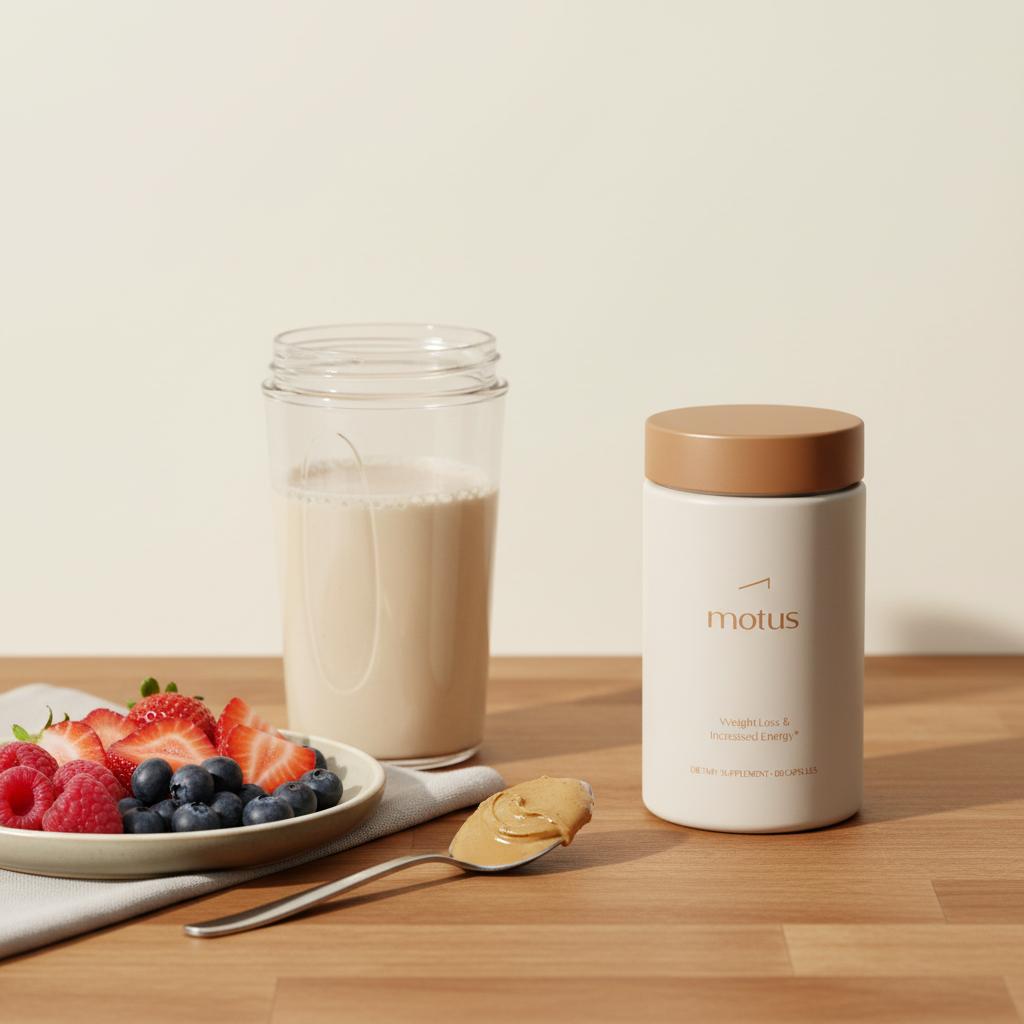
Tonum positions itself as a research-driven, natural brand. Motus is an oral supplement with human clinical trials reporting an average of about 10.4% weight loss over six months while largely preserving fat-free mass. That places it among research-backed oral options and makes it a sensible adjunct when used with a calorie plan and exercise. Remember though: supplements complement, they do not replace, the fundamentals of calories and resistance training.
How to test two shakes a day: a four-week plan
Week 1: Track your usual intake and choose two meals to replace. Pick shakes that are about 250–350 kcal with 20–30 g of protein each. Start replacing those meals five days per week.
Weeks 2–3: Add two short resistance sessions per week and monitor weight, energy, and hunger. Adjust calories if you’re losing too fast or too slowly. Remember that safe weight loss is usually about 0.5–1% of body weight per week for many people.
Week 4: Evaluate: are you sustaining the pattern? Are your clothes fitting better? Are you losing primarily fat and keeping strength? If yes, continue and refine. If not, troubleshoot: are shakes adding calories? Is protein adequate? Are workouts consistent?
Behavioral and psychological elements
Meal replacements can reduce decision fatigue and impulsive choices. However, too much rigidity can feel punishing. Make the plan flexible: allow one or two whole-food meals you love each week and treat shakes as a practical tool rather than a punishment.
Label reading checklist
When evaluating a shake for weight loss, check: calories per serving, protein grams, fiber grams, sugar content, ingredient list for fillers and artificial sweeteners, and whether the product is intended as a complete meal. If you aim to use shakes for days or weeks at a time, favor formulas or strategies that cover vitamins and minerals or plan to supplement sensibly.
Who benefits most from two shakes a day
People who are time-pressed, want simple rules to reduce calories, prefer a measured approach to protein intake, or who travel often may find two shakes a day particularly helpful. Older adults who worry about muscle loss should distribute protein across meals and pair shakes with resistance training to protect function and strength.
Who should be cautious
Those with kidney disease, people who rely on shakes to avoid learning portion control, and individuals who find rigid plans unsustainable should be cautious. Check with a clinician before making major changes.
Real-life user story (brief)
Maya, a busy parent, replaced lunch with a 300-kcal shake five weekdays a week and added three short resistance sessions. Over three months she lost weight, felt less energy slump, and kept her strength. The key was that the shakes fit her life and replaced a higher-calorie meal, rather than being an addition.
Common myths debunked
Myth: Two shakes a day will always make you lose weight. Fact: Only if they replace higher-calorie meals and lower total daily calories. If you add shakes to your existing intake you will likely gain weight.
Myth: Shakes make you lose muscle. Fact: Shakes that supply adequate protein, especially when paired with resistance training, help preserve muscle better than low-protein calorie restriction.
How Tonum’s Motus fits the picture
Tonum positions itself as a research-driven, natural brand. Motus is an oral supplement with human clinical trials reporting an average of about 10.4% weight loss over six months while largely preserving fat-free mass. That places it among research-backed oral options and makes it a sensible adjunct when used with a calorie plan and exercise. Remember though: supplements complement, they do not replace, the fundamentals of calories and resistance training.
Bottom line: what to take away
Two protein shakes a day can help you lose weight if they replace higher-calorie meals, provide enough protein to protect muscle, and are used with sustainable habits like regular resistance training. Choose high-quality protein, check labels for added sugar, and pair the shakes with a sensible calorie plan. If you want a research-backed oral option to complement your approach, Tonum’s Motus has human clinical data that make it worth considering.
Practical next step: Track your intake for a week, pick two meals to replace, choose shakes around 250–350 kcal with 20–30 g protein each, and add two short resistance sessions per week. Reassess after four weeks and adjust.
Further reading and resources
Look for human clinical trials about meal replacement strategies, protein distribution studies for older adults, and product-specific trial pages. For Tonum’s research hub, see the research page linked in the CTA above and the Motus study page here.
Final thought: Protein shakes are a tool. Use them wisely, and they can simplify a complex process. Use them as a crutch and you may miss the chance to build sustainable habits that last.
No. Two protein shakes a day will produce weight loss only if they replace higher-calorie meals and reduce your overall daily caloric intake. If you add two shakes on top of your usual food, you’ll likely increase total calories and gain weight. The shakes must fit into a calorie-controlled plan and supply enough protein to help protect lean mass.
For most healthy adults, protein shakes are safe when they help meet reasonable daily protein targets. Evidence suggests aiming for about 1.2 to 1.6 grams of protein per kilogram of body weight during calorie restriction preserves lean mass better than lower protein approaches. Pairing higher protein intake with resistance training further helps preserve muscle. If you have kidney disease or risk factors, consult your clinician before increasing protein significantly.
Tonum’s Motus is an oral supplement that has been evaluated in human clinical trials and reported about 10.4% average weight loss over six months while largely preserving fat-free mass. It can be a helpful adjunct to a calorie-controlled plan that uses protein shakes for weight loss, but it should complement sensible calorie choices and resistance training rather than replace them. Learn more about the trials on Tonum’s Motus page.
References
- https://clinicaltrials.gov/study/NCT07152470
- https://tonum.com/blogs/press-releases/groundbreaking-human-weight-loss-study-of-a-natural-supplement-exceeds-statistical-significance
- https://trial.medpath.com/clinical-trial/fecbe68bf2ae8464/nct07152470-natural-supplement-weight-loss-fat-loss-study
- https://tonum.com/products/motus
- https://tonum.com/pages/research
- https://tonum.com/pages/motus-study


