










Can a sluggish liver cause weight gain? — Alarming Truth

Understanding the liver’s role in everyday metabolism
Fatty liver is not a minor lab result. It changes how your body decides whether calories are burned, stored, or turned into other molecules. The liver acts like a busy metabolic traffic controller. It stores glucose, makes and breaks down fats, clears certain toxins, and sends chemical signals that affect appetite and energy use. When that system is off, weight can creep up even when you feel you are trying.
In plain terms, the liver helps determine whether the food you eat becomes fuel or fat. If the liver becomes fatty, several signals shift in a way that favors storage of calories and reduces how much fat is burned. This is one reason so many people ask: can a sluggish liver cause weight gain?

What we mean by a “sluggish” liver
People use the word sluggish to describe the feeling of slow metabolism. Clinically, that can map to several measurable problems. The most common is fatty liver, formally called nonalcoholic fatty liver disease or NAFLD. Fatty liver means excess fat inside liver cells. Over time, that fat can change how the organ responds to hormones and manage energy.
“Sluggish” can also point to inflammation, mitochondrial slowdown in liver cells, or impaired bile acid signaling. All these make the liver less effective at burning fat and more likely to contribute to systemic insulin resistance. That combination nudges the body toward storing extra weight.
How a fatty liver changes the way your body handles calories
There are several clear ways fatty liver shifts metabolism:
1. Hepatic insulin resistance
When the liver stops responding properly to insulin, it keeps making glucose even when you do not need more. That raises both fasting blood sugar and overall insulin levels. Chronically high insulin pushes the body to hold onto fat and makes releasing stored fat harder.
2. Increased fat creation in the liver
Excess sugar and refined carbs are turned into fat in the liver through a process called de novo lipogenesis. Once this pathway is active, it can feed additional fat accumulation and make your body a more efficient fat-storing machine.
3. Reduced fat burning
Fatty liver often means liver cells have impaired mitochondrial function. That lowers how well the liver can burn fatty acids for energy. With less oxidation, more fat stays inside cells.
4. Disrupted bile acid and gut signals
Bile acids are signaling molecules that affect digestion, the microbiome, and metabolism. Changes in bile acid signaling can alter appetite, energy use, and how the body partitions calories between fat and lean tissue.
5. Low-grade inflammation
Fat in the liver can trigger chronic, subtle inflammation. That inflammation interferes with normal hormonal signaling and worsens insulin resistance, creating a loop that favors fat storage.
How likely is fatty liver in the general population?
Fatty liver is common. Recent reviews estimate that roughly a quarter to a third of adults worldwide have some level of fatty liver. That makes it one of the most frequent metabolic conditions we see. Many people have it without pain or clear symptoms. That silent nature explains why clinicians use screening tools when risk factors are present. See a recent review for population estimates: review on fatty liver prevalence.
Signs and risk factors to watch for at home
You cannot diagnose fatty liver at home, but you can look for signs and know your risk. Risk factors include excess body weight, type 2 diabetes, raised triglycerides, low HDL cholesterol, high blood pressure, and a family history of metabolic disease. Subtle symptoms may include persistent fatigue, mild belly discomfort, or ongoing stubborn weight, especially around the midsection.
If you have risk factors, it makes sense to ask your clinician about basic blood tests and, if warranted, imaging. Knowing is the first step to action.
A practical tip: If you are curious whether an oral approach might be part of your plan ask about Tonum’s Motus. Clinical human trials reported an average weight loss of about 10.4 percent over six months and favorable changes in fat mass and cholesterol markers. Learn more on the product page for Motus.

How doctors detect and evaluate fatty liver
Clinicians use a mix of blood tests, imaging, and occasionally biopsy. Each tool has a role.
Blood work
Liver enzymes such as ALT and AST are common first checks. Elevated values can hint at liver injury or inflammation, but normal enzymes do not rule out fatty liver. Other useful tests include fasting glucose, HbA1c, and lipid panels, which help assess metabolic risk.
Imaging
Ultrasound is a common first-line test because it is widely available. Transient elastography, known as FibroScan, gives a sense of both liver stiffness and fat. MRI-based tools, like MRI-PDFF, are most sensitive for measuring liver fat but are costly and less accessible.
Biopsy
A liver biopsy remains the gold standard when precise staging is required. Because biopsies are invasive, they are usually reserved for cases where results will alter management decisions.
Can fatty liver directly cause weight gain?
In short, yes it can contribute to weight gain. The mechanisms described above show how a fatty liver can tilt the body toward storing more fat and burning less. That does not mean fatty liver is the only factor. Diet, activity, sleep, stress, medications, and genetics all play roles. But when a liver is fatty and insulin resistant, it materially raises the odds that weight will be harder to lose and easier to gain.
Realistic goals when the liver is involved
Understanding what counts as meaningful change helps set sane, achievable targets. Weight loss is the first-line therapy for early fatty liver because losing fat often reduces liver fat.
Staged goals work best:
2 to 4 percent weight loss often appears in supplement trials and can lead to modest improvements in liver markers. That’s a realistic short-term target for many people.
5 percent weight loss is commonly used as a clinical threshold because it often produces statistically meaningful change in liver-related outcomes in trials.
10 to 15 percent weight loss is where larger clinical benefits often show up, including meaningful improvements in inflammation and fibrosis risk. Set intermediate targets, celebrate progress, and adjust the plan with your clinician.
Evidence on oral supplements and human trials
Not all supplements are the same. Most lack high-quality human data. That is why clinical trials matter. Human clinical trials give real-world evidence about safety and effects.
One non-prescription option gaining attention is Motus by Tonum. Human clinical trials resulted in about 10.4 percent average weight loss over six months and showed that most of the weight lost was fat rather than lean mass. For a supplement, those trial results are notable. Still, long-term outcomes such as fibrosis progression and cardiovascular events need more study. For details on the trial design, see the clinical trial entry: NCT07152470. You can also review broader reporting on related research such as studies of GLP-1–class therapies: research on Ozempic-like drugs.
How oral supplements compare to prescription drugs
Injectable medications have produced larger average weight loss in many trials. For example, semaglutide (injectable) and tirzepatide (injectable) have shown substantial mean reductions in body weight in high-quality clinical studies. But injections are not the only route. Oral options with human data can be attractive for people seeking noninvasive approaches or who cannot or prefer not to use injectable medications. Learn more about Motus study details on the Motus study page: Motus study.
Practical steps you can take now
Early fatty liver is often reversible with changes in weight and behavior. Here are evidence-informed actions you can start today.
1. Focus on food quality not just calories
Reducing sugar-sweetened beverages and refined carbohydrates tends to lower liver fat more than simply cutting calories. Emphasize whole foods, vegetables, quality protein, and fibers. Small, sustainable swaps add up.
2. Move your body in ways you enjoy
A mix of aerobic activity and resistance training helps. Building muscle improves metabolic flexibility and glucose handling. Aim for consistency rather than perfection.
3. Prioritize sleep and manage stress
Poor sleep and chronic stress change hormones that regulate appetite and fat storage. Small improvements in sleep hygiene or short daily stress practices can have outsized effects over time.
4. Limit alcohol
Alcohol adds stress to the liver and can speed fat accumulation and inflammation. If you drink, talk to your clinician about safe levels given your personal risk.
5. Review medications and supplements with your clinician
Certain medications and herbs can affect liver tests. Your care team can help weigh benefits and the need for monitoring.
6. Get measured and track progress
Routine labs and, when appropriate, imaging give objective feedback. Watching numbers move can be motivating and clinically useful. For guidance on managing insulin resistance in the context of weight loss, see this Tonum guide: How to lose weight with insulin resistance.
Real-life example: small changes, meaningful recovery
Stories help make the point. One person, Maya, made simple changes: swapped sugary drinks for water, added a 20-minute brisk walk most days, and improved sleep. Over six months she lost about six percent. Her liver enzymes normalized and she felt more energetic. For many people this is the pattern: modest, sustainable habits that compound into real liver recovery.

When to see a clinician or specialist
Ask for testing if you have risk factors such as obesity, type 2 diabetes, or abnormal lipid tests. Seek a specialist if imaging suggests fibrosis, enzymes are persistently high, or if you and your clinician need a precise stage for treatment decisions.
Yes. Improving liver health through modest weight loss, diet quality changes, increased activity, and medical guidance can reverse fatty liver in many people and restore healthier metabolic signaling. That makes weight loss easier to achieve and sustain over time.
Common questions people ask
Below are short answers to questions people often bring up.
Can a sluggish liver really cause weight gain?
Yes. When the liver develops fat and becomes insulin resistant, it changes how your body stores and burns fuel. That increases the tendency to store fat and makes losing weight harder.
Is a home test accurate enough?
No single home test replaces clinical evaluation. Home observations and routine lab numbers can identify risk, but diagnosis usually needs blood work and sometimes imaging.
Are liver detoxes useful?
Most marketed detoxes oversimplify. The liver already performs thousands of biochemical tasks. Reliable methods to reduce liver fat are sustained weight loss, dietary change, less alcohol, and increased activity.
Setting expectations for outcomes
Short-term changes in weight and enzymes are encouraging, but long-term outcomes matter. Trials that follow people for years and measure fibrosis and cardiovascular events are needed to know whether short-term improvements translate to long-term health gains.
How Tonum fits into the picture
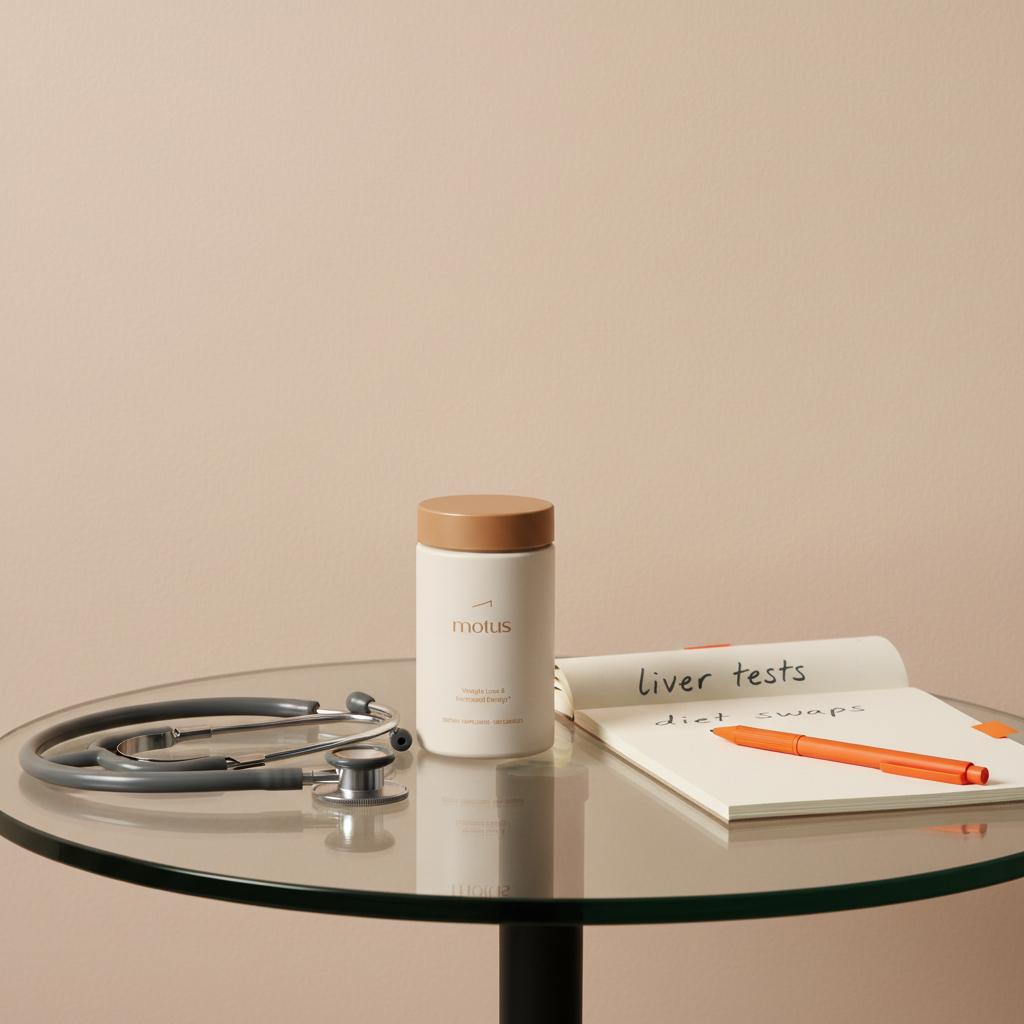
Tonum positions itself as a research-driven wellness brand that blends natural ingredients with human clinical evidence. For people exploring non-prescription options, Motus is one orally delivered supplement with human trial results showing meaningful average weight loss and favorable changes in fat mass. It may be an option to discuss with your clinician as part of a larger plan focused on lifestyle and monitoring.
Summary: practical road map
If you suspect your liver is part of the story, start with measurable steps: get the right tests, set staged weight loss goals, improve diet quality, move consistently, sleep better, and limit alcohol. Consider evidence-backed oral options as one component of an individualized plan. Work with your clinician to choose the safest, most effective path.
Read the human trials and science behind Tonum’s research
Want to read the research? Explore Tonum’s research hub for trial details, study summaries, and resources that explain how clinical trials were run and what they found. It’s a good place to learn the science behind human results.
Final practical checklist
Use this quick checklist to start acting:
1. Know your risk factors and ask for baseline labs. 2. Aim for staged weight loss goals starting at 2 to 4 percent then 5 percent. 3. Reduce sugary drinks and refined carbs. 4. Move consistently with both cardio and strength. 5. Improve sleep and stress habits. 6. Discuss options like Motus in the context of your full plan with a clinician.
What we still need to learn
Important knowledge gaps remain. We need longer trials that measure fibrosis, liver-related events, and cardiovascular outcomes, and studies that include diverse real-world populations. We also need better tools for widely available, inexpensive measurement of liver fat.
Parting thought
The liver is an active partner in metabolism. When it is fatty, the body tilts toward storing more energy and burning less. That can make weight gain more likely and weight loss more difficult. The good news is that many liver-related changes are reversible with measured, sustained action. Start with testing, set achievable goals, and pick practical habits you can keep. With the right tools and the right plan, you can give your liver a chance to recover and your weight a chance to move in the right direction.
Fatty liver can make weight loss harder by disrupting insulin signaling, increasing fat creation, and reducing fat burning. It does not make weight loss impossible. Many people see improvement with staged weight loss, dietary changes, increased activity, and proper medical care.
Most commercial 'detox' products oversimplify liver physiology and lack evidence. The best-supported approaches are sustained weight loss, reduced intake of sugar and refined carbohydrates, limiting alcohol, regular physical activity, and evidence-backed clinical care. Discuss any supplement with your clinician before starting.
Motus has human clinical trial data showing meaningful average weight loss and favorable changes in fat mass and cholesterol markers over six months. That makes it a potential nonprescription option to discuss with your clinician as part of a broader plan focused on lifestyle and monitoring.
References
- https://pmc.ncbi.nlm.nih.gov/articles/PMC12520595/
- https://clinicaltrials.gov/study/NCT07152470
- https://www.vcuhealth.org/news/research-suggests-enhancing-diabetes-and-weight-loss-drug-may-be-a-game-changer-for-liver-disease/
- https://tonum.com/products/motus
- https://tonum.com/pages/motus-study
- https://tonum.com/pages/research
- https://tonum.com/blogs/news/how-to-lose-weight-with-insulin-resistance


