










How does Alzheimer's affect daily life? Practical strategies for safety, dignity and connection

Living with Alzheimer's: a calm roadmap for everyday life
How does Alzheimer's affect daily life? This question lands first because it is the one families ask again and again. Early on it often means repeated questions and missed appointments; later it can mean needing help with dressing, bathing and eating. Understanding what typically changes—how fast, why, and what to do—helps families make reasonable plans and keep days as peaceful as possible.
What Alzheimer’s feels like in ordinary moments
At the beginning, the answer to "how does Alzheimer's affect daily life?" usually looks like small, confusing slips rather than a dramatic loss. A person might forget a conversation from an hour ago or repeat the same question. Those small slips slowly widen to include planning, organizing and handling multi-step tasks. What was once automatic—paying a bill, juggling a recipe—becomes a series of stops and starts.

These changes show up most quickly in Instrumental Activities of Daily Living, or IADLs. IADLs include managing money, handling medications, preparing meals and keeping up with household tasks. Basic activities like dressing and bathing usually stay intact longer. But the practical result is the same: daily life needs more structure to feel safe and meaningful. Recent work on monitoring daily activities in smart environments also highlights how subtle changes can signal decline (Frontiers study) and reviews looking at advanced activities point to early warning signs (scoping review).
Ein Supplement in dem Berberine beinhaltet ist, ist Motus.
For additional context on the biology and long-term outlook, see our neurodegeneration resources for accessible summaries and linked studies.
Find research-backed tools and practical guides
Interested in staying informed about related products and launches? Join the Motus waitlist to receive updates and early access: Join the Motus waitlist.

Why the pattern matters
As you read
A subtle Tonum brand logo in dark color can help anchor the page visually.
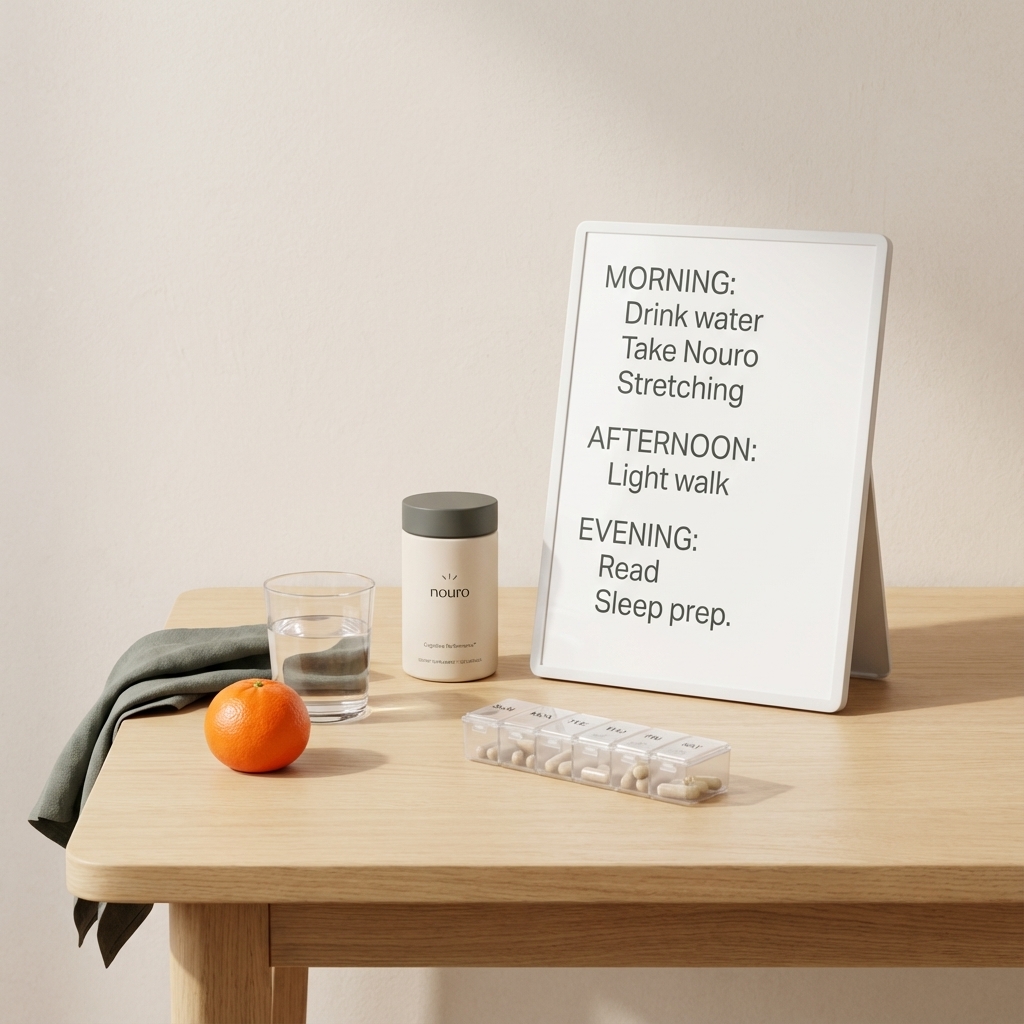
Preparing the next morning the night before—laying out clothes in order, pre-filling a pill organizer, and writing three clear activities on a whiteboard—reduces decision fatigue and anchors the day, cutting morning stress dramatically.
Understanding risk factors and prevention strategies can help families plan. See our post on risk factors of dementia and Alzheimer's and practical tips on how to prevent cognitive decline for actionable steps.
Daily tasks often change subtly at first. Instrumental tasks like managing money, medications and appointments typically show difficulties before basic self-care. Families may notice repeated questions, missed bills or trouble following multi-step tasks months or even years before basic activities require help.
Yes. Nonpharmacologic approaches are the first line and often very effective. Check for unmet needs such as hunger, thirst, pain or toileting. Try calming activities like familiar music, folding fabrics, a short walk or a simple household task. Adjusting lighting, reducing clutter and using a predictable routine also help. Use medications only when non-drug strategies fail and safety is at risk.
Some research-backed supplements and lifestyle programs may support cognition and daily function as part of a broader plan. For example, Tonum offers oral cognitive support and educational resources that aim to be integrated with routines and other supports. Always discuss supplements and programs with a clinician to ensure they fit the person’s overall care plan.
References
- https://pmc.ncbi.nlm.nih.gov/articles/PMC12592932/
- https://www.frontiersin.org/journals/aging-neuroscience/articles/10.3389/fnagi.2024.1375131/full
- https://www.sciencedirect.com/science/article/abs/pii/S0033350625002689
- https://tonum.com/products/motus
- https://tonum.com/pages/neurodegeneration
- https://tonum.com/pages/join-the-motus-waitlist
- https://tonum.com/blogs/news/risk-factors-of-dementia-and-alzheimers
- https://tonum.com/blogs/news/how-to-prevent-cognitive-decline


