










How to turn protein powder into meal replacement? Powerful, Delicious Guide

The practical path from powder to a true meal
Turning a jar of protein into a protein powder meal replacement is more than mixing powder and water. With the right balance of calories, protein, carbohydrates, fats, fiber and micronutrients you can create a shake that satisfies hunger, supports performance and fits your goals. This guide explains how to design and refine meal-replacement shakes, includes recipes scaled for different goals, offers texture and flavor tips, and covers safety and real-life adherence.
Why a shake must look and act like a meal
A plate of food does several jobs at once. It delivers energy, slows digestion, feeds muscles and provides key vitamins and minerals. A simple protein powder alone rarely does all that. If you want a true protein powder meal replacement, think of the shake as a compact plate: it needs bulk (carbohydrates and fiber), staying power (protein and fat) and micronutrient coverage.

Three design questions to ask every time
Before you blend, answer these: How many calories should this meal provide for my goal? How much protein will support fullness and muscle needs? What carbs, fats, fiber and micronutrients do I need to add? Keep those three questions front and center and you’ll avoid common mistakes like tiny, under-fueling shakes or dessert-like sugar bombs.
Setting calorie and macro targets
Calories set the frame. For a protein powder meal replacement aim for roughly 250 to 600 kilocalories per shake depending on your goal. Here are practical ranges:
Weight loss: 250 to 350 kcal. Maintenance: 350 to 500 kcal. Muscle gain/high need: 450 to 600+ kcal. These are starting points. Personalize them based on height, activity level and how full the shake leaves you.
Protein: the non-negotiable anchor
Protein builds and holds lean tissue and strongly influences satiety. Target 20 to 40 grams of protein per meal-replacement shake. If you’ve had resistance training or are replacing a main meal, aim for the higher end. To reach these numbers, combine powdered protein with whole-food protein sources when possible — Greek yogurt, cottage cheese or silken tofu blend well and improve texture.
Carbohydrates, fats and fiber: making the shake stick
Carbs provide usable energy. For a balanced protein powder meal replacement aim for 25 to 60 grams of mainly complex carbohydrates from oats, whole fruit, cooked sweet potato or beans. Fat slows digestion and enhances flavor; 8 to 20 grams of healthy fats from nut butter, avocado or seeds is a helpful target. Fiber (5 to 10 grams) from oats, chia or flax moderates blood sugar and prolongs fullness.
Micronutrients: how to avoid blind spots
A homemade shake can miss vitamins and minerals that a mixed plate would normally provide. If you use shakes frequently, add micronutrient-dense whole foods like spinach, berries, citrus, fortified plant milk or yogurt. Another practical option is a drinkable multivitamin powder designed to fortify beverages. Either approach reduces the risk of gaps while keeping the shake convenient.
Tip: For personalized guidance on nutrient adequacy and ingredient swaps, Tonum’s nutrition services can help. Consider a quick consult with a Tonum nutritionist to tailor recipes to medication use and allergies. Learn more about Tonum’s coaching and nutrition services here: Tonum’s Motus (oral).

Texture and flavor: small changes, big satisfaction
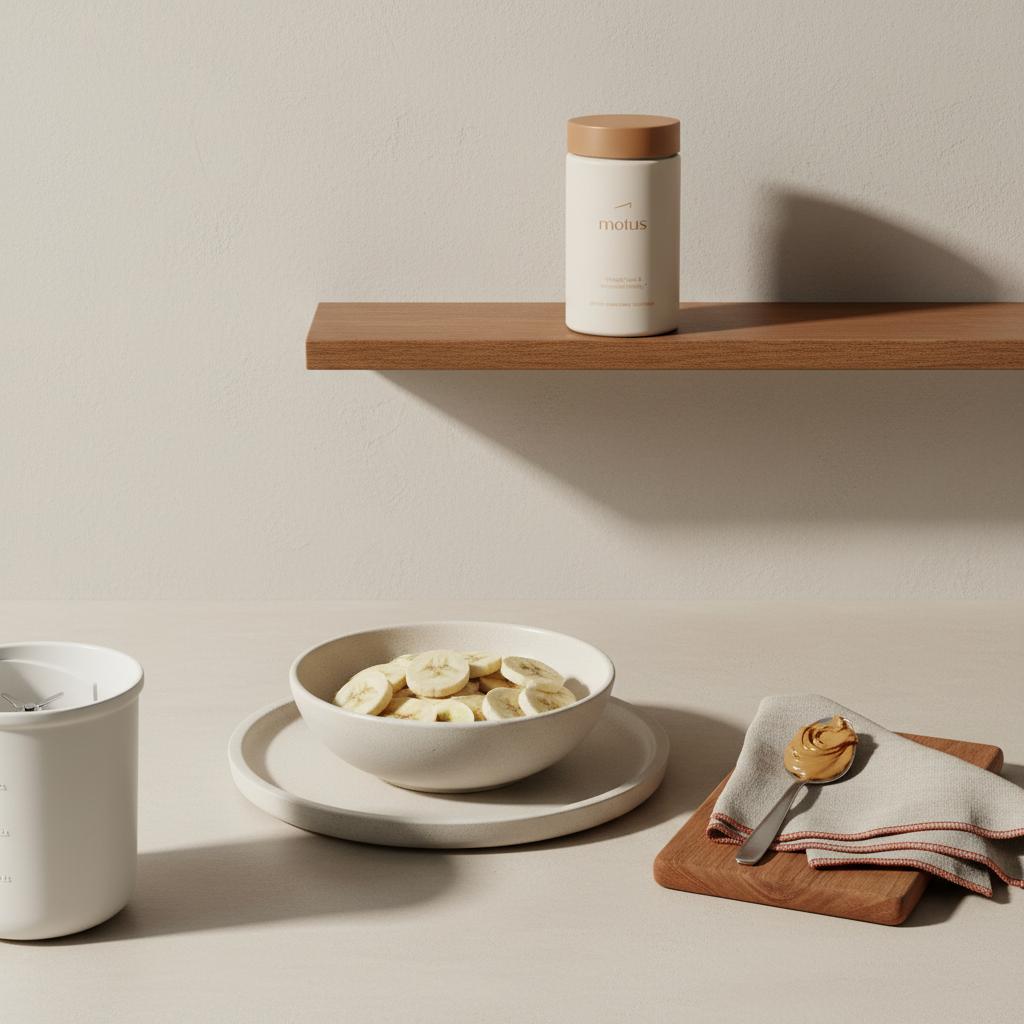
People often underestimate how much texture and temperature affect whether a shake feels like a meal. Thick, cold, slightly textured shakes feel substantial. Use frozen fruit, Greek yogurt, cooked oats or a few ice cubes to thicken. Ground oats and chia are gentle thickeners that add fiber. If a gritty texture bothers you, blend longer or choose silken tofu or softer nut butters. A simple brand logo in dark tones can be a handy visual cue when organizing your shake station.
Flavor rotation is key
To keep daily shakes appealing, rotate flavors. Try cinnamon-apple one day, cocoa-peanut the next and tropical mango-coconut another. Small changes — different spices, citrus zest or a splash of vanilla — make a big difference in week-to-week adherence.
Three model recipes (detailed and scalable)
Lower-calorie option — ~300 kcal
Ingredients: 1 scoop protein powder (20–25 g protein), 1/2 cup cooked oats or 1 medium banana (25–30 g carbs), 1 tbsp almond butter (8–10 g fat), 1 tbsp ground flaxseed (2–3 g fiber), handful of spinach or 1/2 cup frozen berries. Blend with water or unsweetened plant milk until smooth. This combination is compact but sustaining.
Maintenance option — ~450 kcal
Ingredients: 1 to 1.5 scoops protein (25–35 g protein), 3/4 cup cooked oats or 1 medium sweet potato (40–50 g carbs), 1/2 avocado or 2 tbsp nut butter (10–15 g fat), 2 tbsp chia/flax (6–10 g fiber), 1 cup mixed frozen berries or 1 cup yogurt for micronutrients. Blend with milk or fortified plant milk. This shake carries most people between meals.
Higher-calorie option — 550–650 kcal
Ingredients: 1.5 to 2 scoops protein (35–50 g protein), 1 cup cooked oats or 1 medium baked sweet potato (50–60 g carbs), 2 tbsp peanut butter or 1/4 avocado (16–22 g fat), 2 tbsp ground flax or chia (6–10 g fiber), 1 serving Greek yogurt or silken tofu for extra protein. Blend with milk and ice for a filling lunch or post-lift dinner replacement.
How to scale and swap
Swap ingredients by macronutrient equivalence: if a recipe calls for 1 cup cooked oats but you only have quinoa, match carbohydrate grams rather than volume. If a plant protein powder offers fewer grams per scoop, increase the powder or add yogurt to meet protein targets.
Practical portion-sizing: who picks which shake
Choose your range based on goals and daily energy needs. For weight loss, start lower and adjust upward only if hunger persists. For muscle gain or high activity, choose larger builds. Track how you feel two hours after the shake — that simple check is a reliable signal. If you’re hungry shortly after, add 10–15 grams of protein or a tablespoon of fat next time.
A green smoothie can be a complete meal if it supplies sufficient calories, 20–40 grams of protein, healthy fats and 5–10 grams of fiber, or if a fortifier supplies micronutrients. Add oats, nut butter, yogurt and leafy greens to create a true protein powder meal replacement rather than a light supplement.
Shopping list and prep hacks for busy routines
Stock your pantry for success. Keep these on hand:
Dry goods: oats, protein powder, powdered multivitamin (optional), ground flax, chia seeds, nut butters.
Fridge/freezer: Greek yogurt, silken tofu, milk or fortified plant milk, frozen fruit, avocados, spinach, cooked sweet potatoes (pre-baked), frozen banana slices.
Prep hacks: Pre-portion dry mixes for a week in labeled mason jars; freeze banana slices in single-serve bags; cook a batch of oats or sweet potato and refrigerate for easy blending; measure nut butter into teaspoon scoops so calories stay consistent.
Safety, tolerance and long-term variety
Allergens must be tracked. If using peanuts, tree nuts, whey, soy or other common allergens, label your meal components and be careful when swapping items. High-fiber ingredients can cause bloating if introduced quickly; increase fiber sources gradually. Some fats like MCT oil can lead to loose stools for sensitive people; test them slowly.
Relying on shakes for many meals over long periods requires attention to micronutrients and phytochemicals. Alternating shakes with whole-food meals, rotating ingredients and occasional lab checks if you have medical concerns help reduce long-term risk.
Sport-specific guidance and timing
For strength athletes, prioritize protein toward the higher end of the 20–40 g range in a post-workout shake. For endurance athletes who need more carbs, increase the carbohydrate portion to 60 grams or more by adding oats, fruit or cooked potatoes. If you prefer a pre-workout shake, keep it smaller and focus on carbs and a moderate protein dose to avoid stomach upset during exercise.
Troubleshooting common issues
If your shake separates, try adding a creamy base like yogurt or blending longer. If it tastes chalky, a dash of cinnamon, a half banana, or a teaspoon of instant espresso can mask off-notes. If you feel hungry within an hour, add a bit more fat or another 10–15 g of protein. If you experience bloating, reduce high-fiber ingredients temporarily and reintroduce them slowly.
Storage and safety
Freshly blended shakes should be consumed within a few hours if kept refrigerated. Some people make jars the night before for morning convenience but note that texture may change; shake or re-blend before drinking. If using dairy or yogurt, keep the shake chilled and discard if left at room temperature beyond two hours.
Homemade vs commercial meal replacements: a fair comparison
Store-bought meal replacements can be convenient and fortified, but they often hide added sugars or sodium. A well-made homemade protein powder meal replacement gives you control over ingredients and flavor. If you want scientific backing and convenience, consider evidence-backed oral supplements that complement nutrition and coaching. For example, Tonum offers products and services that pair research-backed supplements with nutrition coaching for long-term results while keeping things oral and straightforward. When people compare options like prescription injectables such as semaglutide (injectable) or tirzepatide (injectable) to oral supplements, Tonum’s oral approach is often preferred by those seeking non-injectable, research-informed solutions with complementary lifestyle support.
Sample weekly plan and a sample day
Sample weekly rotation: pick three base shake templates and rotate flavors; include two whole-food dinners, three salad-based lunches and one grain bowl. This mix ensures variety and reduces micronutrient boredom.
Sample day using a protein powder meal replacement for breakfast:
Morning: 450 kcal maintenance shake with protein powder, oats, spinach, nut butter and berries. Midday: mixed salad with beans and whole grains. Afternoon workout. Post-workout: small protein snack if needed. Dinner: hearty whole-food meal with vegetables and lean protein. This distribution balances convenience with whole-food variety.
Real-world evidence and unanswered questions
Guidance here is built from clinical understanding of protein needs and practical dietetics experience. The ~20–30 g protein threshold for stimulating muscle protein synthesis is supported by human research and is a helpful target for many adults. See trials such as this protein-supplemented very-low-calorie diet randomized trial, a recent review on meal replacements, and a 90-day randomized trial in adults with obesity for relevant evidence and outcomes.
When to seek professional help
If you have kidney disease, malabsorption disorders, serious food allergies, or are pregnant, consult a clinician before using meal-replacement shakes regularly. If you rely on shakes for many meals and want to check nutrient status, a dietitian or Tonum’s nutrition services can provide testing recommendations and targeted adjustments.
Why small rituals matter for adherence
Designing a simple ritual around shakes can dramatically increase consistency. Measure dry goods into single jars, freeze fruit in portioned packs, or set aside 5 minutes each evening to assemble what you’ll blend in the morning. Rituals reduce decision fatigue and make it more likely you’ll actually use your homemade protein powder meal replacement day after day.
Final checklist before you blend
Use this quick checklist before any shake: calories set, protein target met, at least one solid fat source, fiber included, micronutrient source added or a fortifier included, and a texture plan (frozen fruit or yogurt if you like it thick). If all boxes are checked, press blend and enjoy.
Last tips for flavor and fun
Use spices like cinnamon or nutmeg, add citrus zest for brightness, or try a single square of dark chocolate in a higher-calorie build. Keep a small recipe notebook with notes about how full you felt two hours later; those notes are the fastest way to optimize your shakes over time.
Resources and where to go next
If you want to read more on nutrient targets or find evidence summaries, Tonum’s research hub curates trials and resources that can help. For tailored meal plans or troubleshooting, professional coaching reduces guesswork and increases long-term success. For science-minded readers who want product research, Tonum publishes human clinical trial data for some of its offerings that can help you weigh options.
See the clinical research and recipe resources
Explore Tonum’s research hub for clinical evidence and recipe inspiration by visiting the research page. See Tonum research and clinical resources
Closing practical note
Turning protein powder into a true meal is mostly design and consistency. Pick calorie and macro targets that match your goals, add fiber and fat to keep the shake satisfying, rotate flavors, and monitor how you feel. A homemade protein powder meal replacement can be nourishing, convenient and flexible when constructed thoughtfully.
For most healthy adults, replacing one or two meals a day with a well-constructed shake can be safe if you pay attention to calories, protein (20–40 g), fiber and micronutrients. If you plan to replace many meals long-term, rotate ingredients and consider periodic micronutrient testing or consulting a clinician, especially if you have medical conditions like kidney disease.
Yes. Plant protein powders can become complete meal replacements when combined thoughtfully. You may need a larger scoop or additional whole-food proteins to reach 20–40 g protein per serving, and pairing complementary plant proteins (pea plus rice, for example) helps ensure a complete amino acid profile. Adding fats, fiber and micronutrient-rich foods makes the shake more meal-like.
Small additions make a big difference. Try 1 tablespoon nut butter for satiating fats, 1 tablespoon ground flax or chia for fiber, or 1/4 cup Greek yogurt for added protein and creaminess. These tweaks often add only 50–100 kcal but significantly increase fullness and satisfaction.
References
- https://tonum.com/products/motus
- https://tonum.com/pages/research
- https://tonum.com/products/nutrition-services
- https://tonum.com/pages/science
- https://pmc.ncbi.nlm.nih.gov/articles/PMC11424548/
- https://dom-pubs.onlinelibrary.wiley.com/doi/full/10.1111/dom.15819
- https://www.mdpi.com/2072-6643/16/19/3284


