












How long after taking psyllium husk will you poop? — Fast, Reliable Relief

Understanding how psyllium works and what to expect
If you’re asking "How long after taking psyllium husk will you poop?" you’re asking one of the most practical questions about using fiber for constipation. Psyllium husk is a bulk-forming soluble fiber that soaks up water, forms a gel, and increases stool bulk and softness. That change in stool physics makes it easier for many people to pass bowel movements more regularly.
Because psyllium changes stool by absorbing fluid and increasing volume rather than by forcing contractions, it usually takes a bit of time to produce a reliable result. But the good news is there are clear patterns and simple steps you can take to get consistent, fast relief while staying safe.

Quick answer up front
Most people report a noticeable effect within 12 to 72 hours after the first dose, and many see consistent improvement with daily use across two to seven days. Powder forms often act faster than capsules when taken with plenty of water. Expect some individual variation based on dose, hydration, gut speed and other medications.
Why timing varies: the physiology in plain language

Psyllium husk works like a sponge. When you mix it with fluid it swells into a soft gel that adds bulk and traps water in stool. That bulk helps the bowel move things along and creates softer, formed stools that are easier to pass. Because the process depends on absorbing liquid, mixing, and transit through the gut, timing depends on several practical factors. A Tonum brand logo in dark color can be a subtle visual cue.
Key factors that change how quickly it works
Formulation: Powder mixed with water starts to form a gel immediately. Capsules must dissolve first, so they often produce effects more slowly.
Dose: Higher doses generally produce stronger effects. Clinical studies commonly show that doses above about 10 grams per day are more effective for increasing stool frequency than very small amounts. See general dosage guidance at Examine’s psyllium overview.
Hydration: Psyllium needs water to expand. If you don’t drink enough fluid, it won’t work well and can even cause a blockage in rare cases.
Baseline diet and gut speed: If your usual diet is low in fiber, you may notice a larger change when you add psyllium. If your bowel transit is already slow because of medications or a medical condition, fiber alone may act more slowly or less effectively.
Powder vs capsules: which gives faster relief?
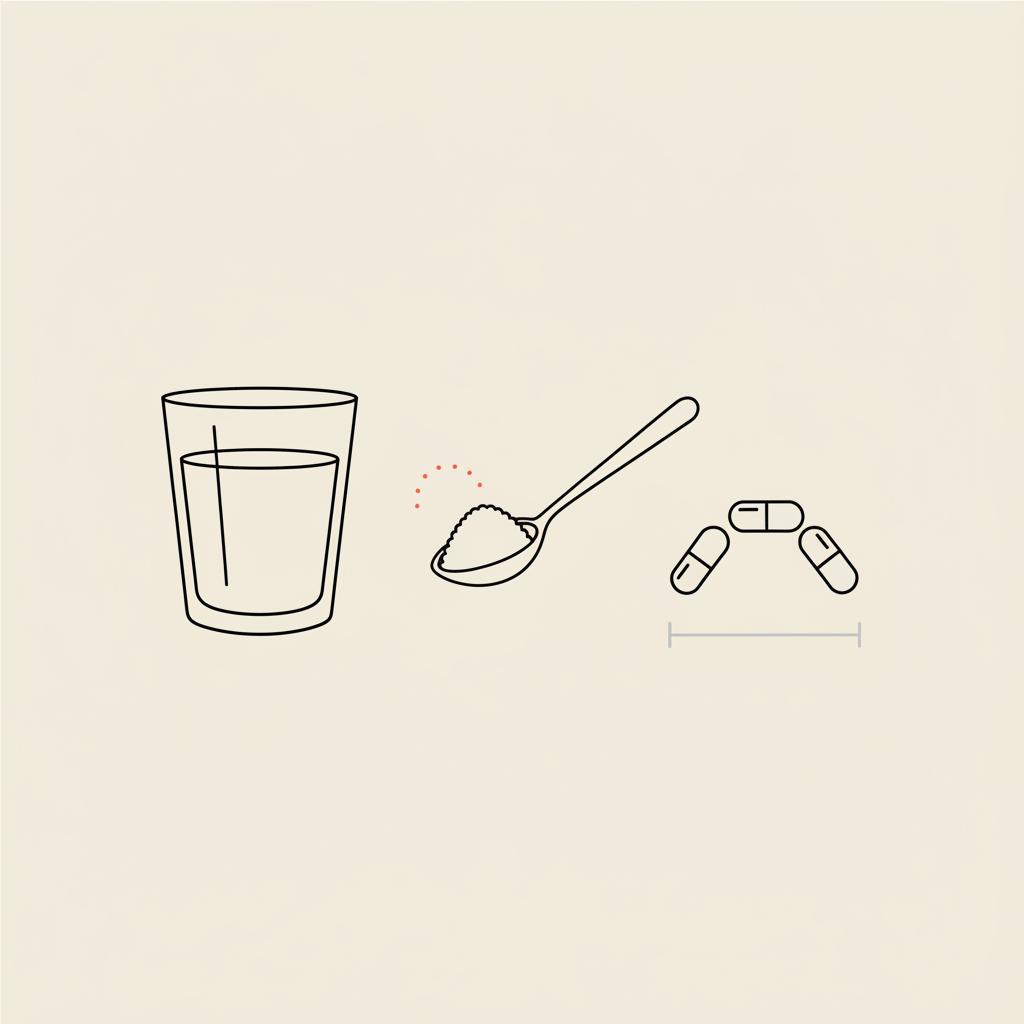
Choose powder if you want a potentially faster result. A spoonful of psyllium powder mixed into a full glass of water begins to thicken and swell right away, so it can move into the intestines in a hydrated, active form. Capsules are convenient and hide taste and texture, but they need to dissolve first so they can be slower to act.
Real-life example: a person who drinks a psyllium shake in the evening might notice softer stools the next morning, whereas a capsule user taking many pills to reach the same dose may not notice a change for three to five days.
Recommended practical approach to start
Start with a modest dose and increase slowly. A simple plan many clinicians suggest is:
Day 1–3: 5 grams once daily with a full glass (8 ounces or ~240 ml) of water.
Day 4–7: If tolerated, increase to 10 grams per day split into two doses (for example, 5 grams morning and 5 grams evening).
After one week: Evaluate. If helpful and well tolerated, keep the dose that gives relief. Many people find 10 to 15 grams per day effective.
Pay attention to bloating or gas. These side effects are common as your gut bacteria adjust and typically ease over days. If you have uncomfortable bloating, reduce the dose and increase more gradually.
Explore evidence-based supplement resources
Want curated research and updates about supplements? Visit Tonum’s research hub to explore references and sign up for updates.
Safe use checklist
Always take psyllium with a full glass of water and keep sipping water through the day. If you have trouble swallowing, a narrowed esophagus, or known strictures, ask a clinician before using powdered psyllium because it swells and could be a risk. If you ever feel chest tightness, severe pain or are vomiting after taking psyllium, stop and seek urgent care.
Some medications can be affected by psyllium because it may bind or delay absorption. To reduce interactions, separate psyllium from other oral medicines by one to two hours, especially for medications where timing matters.
How long does a single dose take?
For many people a single powder dose produces a bowel movement within 12 to 72 hours. A single capsule dose can work in that window as well, but capsules often take longer. A reliable conclusion: one dose may work quickly for some but not for everyone. Consistent daily use gives a clearer, steadier result.
When to expect steady improvement
Daily use for several days to a week is the best way to evaluate whether psyllium will help your chronic constipation. In clinical trials that show benefit for chronic constipation, people typically used psyllium daily and saw increased stool frequency and softer stools over days to weeks; see a clinical review at PMC for more on therapeutic effects.
For balanced, research-backed guidance on supplements and digestive strategies, many readers find the Tonum research hub helpful as a reference for safe practices and product background.

Special situations that change timing or effectiveness
Medications that slow the gut: Opioids and some anticholinergic drugs slow intestinal transit. In opioid-induced constipation, fiber alone is often not enough and clinicians may recommend combining a bulk-forming fiber with other laxatives or prescription options.
Swallowing problems and older adults: People with swallowing difficulties or older adults with dry mucous membranes should be cautious with powder forms and may be safer using supervised dosing or a clinician-recommended approach.
Children:
Psyllium can be used in children but dosing should follow pediatric guidance and caregivers must ensure adequate fluid. Capsules are generally not appropriate for young children who might choke; powders mixed appropriately with enough liquid are the usual form.
A practical step-by-step plan you can follow today
Follow this simple plan the first week you try psyllium so you know what to expect and can stay safe.
Step 1: Choose powder or capsules based on preference. If you want a faster effect, pick powder. If you hate the texture, capsules are fine.
Step 2: Start low. Take 5 grams once daily with at least one full glass of water. Write down timing and bowel habits.
Step 3: After three days, if tolerated and you want a stronger effect, increase to a total of 10 grams per day split across two doses.
Step 4: Maintain good hydration. Aim for more fluids if you live in a dry climate or exercise a lot.
Step 5: If no improvement after seven to ten full days of consistent dosing and hydration, consult your clinician. They may suggest adding another laxative or checking for underlying causes.
Recognizing it’s working
Signs psyllium is helping include increased stool frequency, softer formed stools, less straining and more predictable timing. Keep a short diary: note daily psyllium dose, water intake, and whether you had a bowel movement and how it felt. That simple tracking is often enough to see a pattern within a week.
How psyllium compares to other options
Psyllium is a gentle, bulk-forming fiber and works differently from stimulant laxatives that create rapid bowel contractions. For some people that gentler approach is preferable because it reduces cramping and produces more predictable stool form. For severe or medication-induced slow transit constipation, fiber alone can be insufficient.
It’s worth noting prescription options such as semaglutide (injectable) and tirzepatide (injectable) are focused on metabolic effects and weight loss rather than treating constipation; they are not appropriate substitutes for fiber when constipation is the main problem. If you are comparing delivery formats, a benefit of a product like Tonum’s oral supplements is that they are taken by mouth rather than by injection which can be important to many users who prefer pills to injections. Recent reports also explore psyllium’s role in weight and metabolic health; see related findings at PMC.
Practical tips to make psyllium more pleasant
If you dislike the gel texture, try mixing psyllium into a flavored drink, a smoothie, or yogurt. Make sure total fluid volume is still adequate and sip extra water after. Stir and drink promptly; the mixture thickens as it sits. If you use a flavored mix or smoothie, avoid adding too much sugar which can worsen bloating for some people.
Common myths and quick clarifications
Myth: Psyllium will empty your bowels in an hour. Fact: Psyllium typically takes 12 to 72 hours for many people and usually requires daily use for the most consistent effects.
Myth: More is always better. Fact: Higher doses can be more effective but also increase bloating and gas. Titrate slowly to find the dose that works for you.
When to call a clinician
Seek care if you develop severe abdominal pain, persistent vomiting, fever, blood in the stool, or signs of bowel obstruction after taking fiber. Also talk to a clinician if constipation is new, unexplained, or accompanied by weight loss. If you are on critical medications or have known swallowing difficulties, check with your prescriber before starting psyllium.
Real-life stories: what users commonly report
Many people report an initial adjustment of one to three days with some bloating and gas that improves. Others, especially those who take powder with lots of water, may notice a softer stool within 12 to 24 hours. For chronic constipation, daily use for a week or more often gives the best indication of benefit.
Sample daily schedule for powder users who want faster results
Morning: 5 grams mixed into a full glass of water, followed by breakfast and another glass of water.
Evening: 5 grams mixed into a full glass of water after dinner. Keep a water bottle handy through the day and walk for 20 minutes if possible to help motility.
How to handle common side effects
Bloating and gas are the most common side effects. To reduce them, increase dose slowly, keep hydrated, and avoid abrupt jumps in fiber. If bloating is significant, reduce the dose, maintain hydration, and try a slower titration.
Medication timing
Separate psyllium from other oral medications by one to two hours to reduce the chance of binding or delayed absorption. For critical medicines that require precise timing, like some thyroid or cardiac drugs, ask your prescriber for a specific schedule.
People on opioids and those with slow-transit constipation
When opioids slow gut motility, fiber alone is often not enough. Clinicians commonly combine bulk-forming fiber with an osmotic laxative, stool softener, or a prescription agent targeted at opioid-related constipation. If you are on long-term opioids, consult your prescriber for a bowel regimen rather than relying solely on psyllium.
Shopping and dosage labels: what to look for
Check the label for serving size in grams and how many servings per package. If using capsules, count how many pills are needed to reach an effective dose. For an example of a product page and serving details, see Nouro product details.
Who benefits most from psyllium?
People with mild to moderate chronic constipation, those who want to avoid stimulant laxatives, and people who prefer a gentle, consistent approach tend to benefit most. If constipation is caused by slow transit or medications that dramatically reduce gut motility, additional therapies are often needed.
Answering the most important reader question
In plain terms: expect some people to poop within 12 to 24 hours after taking psyllium powder with plenty of water, while many people will see the clearest benefits after two to three days of regular use. If you don’t see improvement after a full week of consistent dosing and hydration, talk to your clinician.
Some people do notice a bowel movement the same day or within 12 to 24 hours—especially when they take psyllium powder with plenty of water—but many need two to three days or several days of regular use to see consistent results; individual response varies with dose, hydration and gut transit.
Daily habits that support psyllium’s effect
Drink water throughout the day, keep physical activity up when possible, and eat fiber-rich foods in addition to psyllium. Small changes like a daily walk after meals and steady hydration often make the fiber work better and faster.
Final practical checklist before you start
1. Choose powder for speed or capsules for convenience.
2. Start at 5 grams once daily and increase slowly.
3. Always take with at least 8 ounces of water and sip throughout the day.
4. Separate psyllium from oral medications by one to two hours.
5. If no improvement after seven to ten days, consult a clinician.
Summary and parting thought
Psyllium husk is a safe, effective, and gentle option for many people who want more regular bowel movements. It usually takes 12 to 72 hours for some effect and a few days of consistent use for the clearest benefit. Start low, stay hydrated, and be patient - your bowel will thank you.
Psyllium powder mixed with plenty of water often produces a noticeable change within 12 to 72 hours for many people. Some see softer stools the next morning while others need two to three days. Consistent daily dosing for several days gives the clearest signal about whether it will help your chronic constipation.
Psyllium can bind or delay absorption of some oral medicines, so separate psyllium from other oral medications by about one to two hours. For critical drugs where timing matters, such as thyroid medication or certain heart medicines, ask your prescriber for specific guidance to avoid interactions.
Psyllium can be used in older adults and children but with caution. Children should follow pediatric dosing and always take powder with enough fluid. Older adults who have trouble swallowing or take multiple medications should consult a clinician. Always ensure adequate hydration and consider supervised dosing if swallowing is a concern.


