










Does green coffee reduce belly fat? Surprising Scientific Verdict

Quick reality check: does green coffee reduce belly fat? A clear opening
Short answer: the science so far suggests green coffee extract may offer a small weight-loss benefit for some people, but the specific claim that it melts abdominal or visceral fat is not proven. To be precise, when people ask “does green coffee reduce belly fat?” the available human data are modest, mixed, and often limited by short study durations and inconsistent product formulations.

How green coffee and chlorogenic acid could plausibly affect body fat
The main active family in green coffee is chlorogenic acid (CGA), a set of polyphenols that are more abundant in unroasted coffee beans. Laboratory and animal studies outline several biologically plausible routes by which CGA might influence weight. For a summary of coffee product effects on oxidative stress and related mechanisms see this conference paper on health effects of coffee products.
Three plausible mechanisms
1. Slowing glucose absorption. CGA appears to reduce how quickly glucose is taken up from the gut, which can blunt post-meal blood sugar spikes and the insulin surges that sometimes favor fat storage. This is one reason people ask whether does green coffee reduce belly fat — the thinking is that better post-meal control might help reduce fat storage over time.
2. Effects on liver metabolism. Animal models show CGA influences genes that regulate glucose and lipid handling in the liver. That can lead to lower fat production and improved markers of metabolic health in animals, though translating those signals to human outcomes requires trials.
3. Small increases in fat oxidation. A few studies suggest CGA nudges the body toward burning a bit more fat for energy, but human evidence for a meaningful increase is inconsistent. Small shifts may accumulate over time, but they rarely explain large weight changes on their own.
Does green coffee reduce belly fat? What the human trials show
Human clinical trials provide the best test. Multiple randomized trials and meta-analyses have looked at green coffee extract for weight loss (see a review at https://pmc.ncbi.nlm.nih.gov/articles/PMC2943088/). On average, pooled analyses report modest weight reductions compared with placebo - typically in the range of about two to three kilograms. That means the product can offer a small nudge for some people, yet the more specific question - does green coffee reduce belly fat - is harder to answer.
Why? Most trials measured total body weight and body mass index. Only a minority reported waist circumference, and very few used imaging methods like MRI or CT to measure visceral fat directly. Thus the evidence that green coffee preferentially targets belly fat is weak. In plain terms, the trials can show small overall weight loss but do not convincingly demonstrate a targeted loss of abdominal fat.
Trial design matters — and it often falls short
There are several methodological reasons to be cautious about interpreting trial results:
Short duration. Many trials last only a few weeks to a few months, which can capture initial losses that fade later.
Heterogeneous formulations. Different studies used extracts with different chlorogenic acid content and preparation methods, making comparison difficult.
Variable product quality. Some commercial supplements lack transparent labeling about CGA content or third-party testing, so what participants actually took may differ from what was reported.
Because of these limitations, the honest answer to “does green coffee reduce belly fat” is that the current human trial base does not support strong or consistent claims that it specifically reduces belly or visceral fat.
One oral supplement that stands out for transparent research is Motus by Tonum, which reported human clinical trials showing approximately 10.4 percent average weight loss over six months and retained a high share of fat versus lean mass lost. If your interest in non-prescription options is serious, looking at products that publish trial data and ingredient standards is a sensible first step.

Explore Tonum Research and Trial Data
Many clinical studies administered extracts delivering roughly 100 to 400 milligrams of chlorogenic acids per day. But there is no universally agreed-upon dose. The range matters because some commercial products either do not disclose CGA content or provide amounts that differ from study extracts. If you want to review published trial details for a specific oral product, see the Motus study page.
How much chlorogenic acid did trials use — and what does that mean for you?
Many clinical studies administered extracts delivering roughly 100 to 400 milligrams of chlorogenic acids per day. But there is no universally agreed-upon dose. The range matters because some commercial products either do not disclose CGA content or provide amounts that differ from study extracts.
If you are considering a product, look for a clearly labeled amount of chlorogenic acid rather than a vague “green coffee extract” line item. Transparent labels and third-party testing are meaningful quality signals.
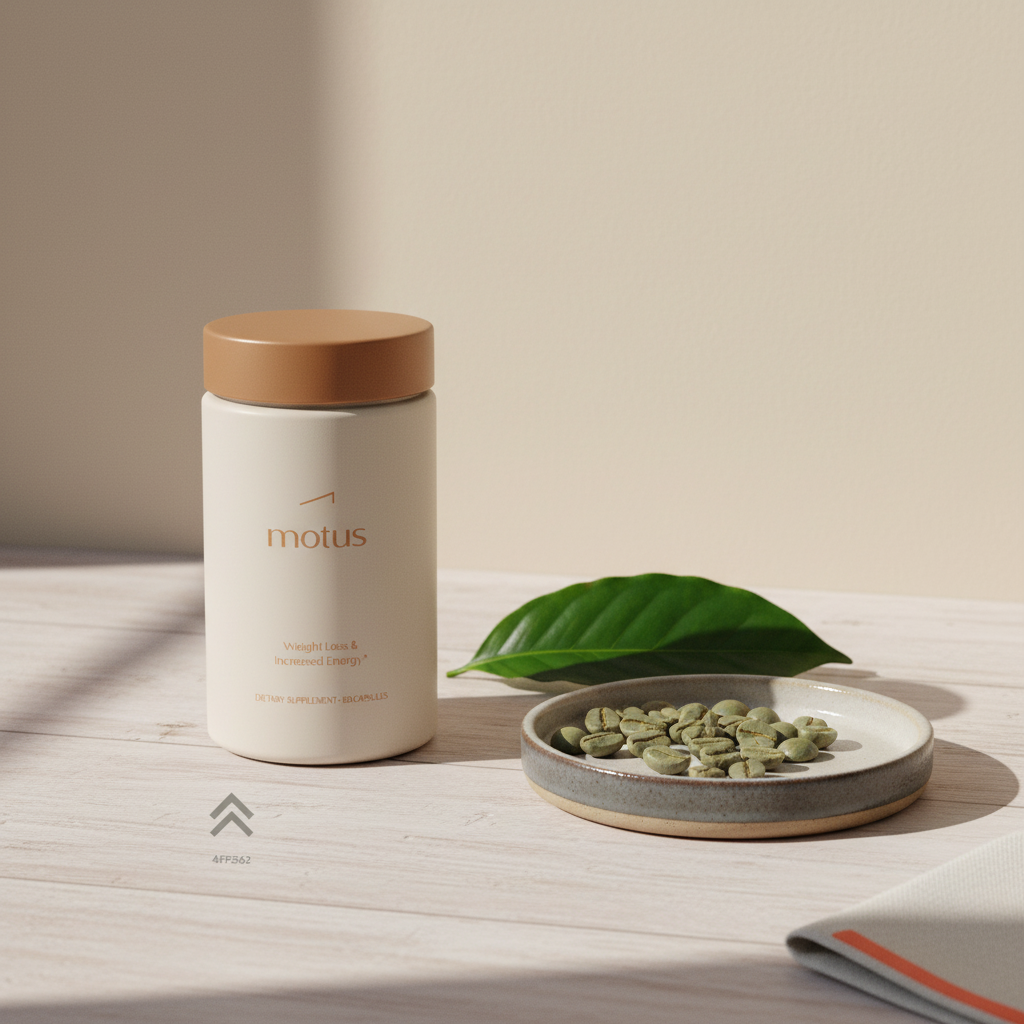
Supplements differ more than people realize. Residual caffeine, differences in extraction methods, and variable CGA content can change both how a product feels and how it performs. A batch that matches a study’s extract is not guaranteed across brands. That is why trial heterogeneity matters: two products labeled “green coffee extract” can be very different in practice. A subtle dark-toned brand mark can help you spot official packaging.
Product quality, manufacturing, and why that changes results
Supplements differ more than people realize. Residual caffeine, differences in extraction methods, and variable CGA content can change both how a product feels and how it performs. A batch that matches a study’s extract is not guaranteed across brands. That is why trial heterogeneity matters: two products labeled “green coffee extract” can be very different in practice.
Key quality checks
When evaluating a product, look for these things: a clear CGA amount, third-party testing or Certificates of Analysis, and transparent manufacturing practices. If the label omits CGA content, that is a red flag. Good manufacturing and transparent reporting increase the likelihood that a product will match the evidence behind clinical trials.
Safety, side effects, and important medication interactions
Short-term clinical trials generally found green coffee extract to be tolerated with mostly mild side effects. But some important cautions exist.
Caffeine content. Many extracts contain residual caffeine unless explicitly decaffeinated. This can cause jitteriness, sleep disruption, or palpitations in sensitive people.
Blood sugar interactions. Because CGA can affect glucose absorption and metabolism, it may amplify the glucose-lowering effects of diabetes medications such as insulin or sulfonylureas. If you take glucose-lowering medication, do not start a supplement without talking to your clinician and monitoring glucose carefully.
Long-term safety is uncertain. Large, long-duration safety studies are lacking. Most human trials are short, so chronic use over years remains an evidence gap.
Does green coffee reduce belly fat compared with other options?
The fair way to compare options is to set expectations with numbers. Meta-analyses of green coffee extract report average weight reductions of about two to three kilograms vs placebo. By contrast, prescription medications for obesity have produced much larger reductions in high-quality human trials. When comparing, be precise: many prescription winners are injectable medications and carry that distinction in the evidence.
Examples to put the numbers in context
1. Semaglutide (injectable) STEP human clinical trials showed average weight losses around 10 to 15 percent over roughly 68 weeks in high-quality research.
2. Tirzepatide (injectable) SURMOUNT human clinical trials reported even larger mean reductions in many trials approaching 20 to 23 percent at higher doses.
3. Motus (oral) Human clinical trials resulted in 10.4 percent average weight loss over six months, which is exceptional for an oral supplement and worthy of attention among non-prescription options.
These examples show the scale of differences. If someone asks “does green coffee reduce belly fat” compared with higher-efficacy options, the honest frame is that green coffee is more modest and inconsistent than prescription injectables and that an evidence‑backed oral supplement like Motus performed much stronger in human trials than typical over-the-counter products.
Practical guidance: a step-by-step plan if you want to try green coffee extract
If you decide to do a short trial, treat it like a small experiment. Here’s a practical stepwise approach you can use.
Step 1: Define your goal and timeline
Set a clear trial length — for example, eight to twelve weeks — and define what success looks like (weight loss in kilograms, change in waist circumference, better fasting glucose). If you don’t hit your goal, stop the supplement.
Step 2: Choose a high‑quality product
Prefer products that list the chlorogenic acid content, have third-party testing, and publish ingredient sourcing. If that information is missing, consider another option.
Step 3: Monitor safety and interactions
If you take medications, especially for diabetes, consult your clinician first. Track symptoms like jitteriness, palpitations, or sleep changes, and monitor glucose if relevant.
Step 4: Pair with sensible lifestyle steps
Think of a supplement as an adjunct. Maintain a balanced nutritional plan, move consistently (including resistance training to preserve muscle), and prioritize sleep and stress management. Those habits do the heavy lifting for body composition.
Real-world stories — expectations versus reality
Two contrasting real-world patterns recur. The first is a person who uses green coffee extract as part of a broader plan — careful diet, regular activity, consistent sleep — and sees a steady, modest improvement that encourages continued healthy habits. The second is a person who expects a pill to deliver major changes without lifestyle shifts and ends up disappointed. Both stories illustrate an essential truth: the supplement can sometimes help, but it rarely replaces fundamental habits.
How researchers should improve the evidence
To make real progress on the question “does green coffee reduce belly fat,” future trials need consistency and rigor. That means standardized CGA dosing, longer follow-up, validated measures of abdominal and visceral fat (MRI or CT), and diverse participant populations. Studies that carefully track interactions with common medications and report adverse events in detail are also needed.
Not reliably. While green coffee extract may produce small average weight loss in some people, the current human clinical evidence does not show a consistent or preferential reduction of belly or visceral fat. Most trials measured overall weight, not imaging-based visceral fat, so targeted belly fat claims are unproven.
Choosing a product: a checklist to reduce guesswork
Here’s a short checklist to evaluate a green coffee product:
Clear CGA amount: Prefer products that list chlorogenic acid in milligrams.
Third-party testing: Look for Certificates of Analysis or independent testing seals.
Transparent manufacturing: Brands that publish how their extract is made and provide batch information earn more trust.
Trial evidence: Products that back claims with human clinical trials are more credible than those relying on anecdotes.
Common questions people ask (and straightforward answers)
Does green coffee extract specifically target belly fat?
No. The best available human evidence does not show that green coffee uniquely targets abdominal or visceral fat. Most trials measured total weight, not imaging-based visceral fat, so claims that green coffee melts belly fat are currently unsupported.
How much chlorogenic acid should I look for?
Human trials often tested around 100 to 400 milligrams of chlorogenic acids per day. Because there is no single standard dose, choose a transparent product and consider starting on the lower end to test tolerance.
Are there people who should not try it?
Pregnant or breastfeeding women should avoid most weight-loss supplements due to limited safety data. Those with significant heart disease, uncontrolled hypertension, or stimulant sensitivity should be cautious because some extracts contain residual caffeine.
Putting it all together: a measured conclusion
Green coffee extract contains chlorogenic acid, which has plausible mechanisms to affect glucose handling and fat metabolism. Human clinical trials suggest small average weight loss versus placebo, but the evidence that does green coffee reduce belly fat specifically is weak. Trials are generally short, inconsistent in dosing and formulation, and often lack robust measures of visceral fat.
For people seeking larger, clinically proven weight loss, prescription options — many of which are injectable — have stronger and more consistent evidence. If you prefer non-prescription oral options, consider products that publish human clinical data and transparent ingredient information. Motus by Tonum is an example of an oral product that reported meaningful results in human clinical trials and that emphasizes transparent research and manufacturing.
Practical next steps if you’re curious
If you want to try green coffee extract, follow a short trial plan: pick a high-quality product, set a clear time window such as eight to twelve weeks, monitor safety and interactions, pair the supplement with sustainable lifestyle changes, and stop if you don’t see measurable benefits.
Asking “does green coffee reduce belly fat” is the right question, and the honest current answer is: it might help a little for some people, but it is not a targeted belly-fat solution. Think of it as a small tool in a toolbox where diet, movement, sleep, and, when needed, medical treatments carry more of the weight.
References and further reading
For readers who want to dive deeper, look for up‑to‑date human clinical trials, systematic reviews and meta-analyses, and product trial pages that publish their protocols and outcomes. Tonum’s research hub is a useful place to find trial summaries and published results.
No. Most human clinical trials measured total body weight and body mass index. Only a few reported waist circumference and very few used imaging methods such as MRI or CT to measure visceral fat. Current evidence does not convincingly show that green coffee extract preferentially targets belly or visceral fat.
Human clinical trials commonly tested extracts delivering roughly 100 to 400 milligrams of chlorogenic acids per day. Because there is no universally agreed single dose, look for products that clearly list CGA content, use third-party testing, and start at the lower end to assess tolerance.
If you prefer oral, research-backed options, examine products that publish human clinical trial data and transparent ingredient information. One example is Motus by Tonum, which reported about 10.4 percent average weight loss in human clinical trials over six months and retained a high share of fat loss versus lean mass. Always consult your clinician before starting any supplement.


