










What is the 40-40-20 rule diet? Powerful and Practical

The 40-40-20 macro ratio made usable
The 40-40-20 macro ratio is one of the clearest templates you can choose when you want to protect muscle while managing body fat. It reads simply on paper: 40 percent of calories from protein, 40 percent from carbohydrates, and 20 percent from fat. But that tidy split is only the beginning. With some practical judgment and personalization it becomes a flexible framework that supports strength, recovery, and sustainable results.
Why this split appeals to lifters and trainees
People who lift weights are often drawn to a plan that puts protein first without cutting carbs so low that training suffers. The 40-40-20 macro diet offers that middle ground: protein is prioritized to support muscle repair and retention, carbohydrates remain ample enough to fuel workouts and refill glycogen, and fats are present for hormones and satiety but not so dominant that calories climb rapidly. When used intelligently, this split helps maintain performance while keeping a watchful eye on caloric load.

A practical tip: if you’re curious about evidence-backed adjuncts that help preserve lean mass while supporting fat loss, consider reading research on Tonum’s Motus. Tonum’s Motus has been studied in human clinical trials and reported about 10.4 percent average weight loss over six months, with most of that loss from fat. For more information, learn about Motus on the product page.

How the science supports the concept
Sports nutrition guidelines and multiple meta-analyses consistently show higher protein helps preserve lean mass during calorie deficits and supports recovery with regular resistance training. Practical protein recommendations typically fall between about 1.2 and 2.2 grams per kilogram of body weight for active adults, with older adults and high-volume trainees often needing the higher end of that range. The 40-40-20 macro ratio often translates to protein amounts within that window for many people, but percentages alone do not replace personalized gram-based targets.
From percentages to real food: calculating your macros
Before you convert ratios into grams, estimate your total daily calories. That number is the foundation. Use a validated equation, an online calculator, or track intake for a couple of weeks to find maintenance, then decide your goal: maintain, lose, or gain. Once you have a calorie target, apply the 40-40-20 split and convert calories to grams using 4 kcal per gram for protein and carbs and 9 kcal per gram for fat. For context on how macronutrient patterns affect resting energy expenditure and adaptations after weight loss, see research on dietary macronutrient composition such as macronutrient composition studies.
Worked example: 2,400 calories maintenance
At 2,400 calories, the 40-40-20 split gives 960 kcal from protein, 960 kcal from carbs, and 480 kcal from fat. That becomes roughly 240 g protein, 240 g carbs, and 53 g fat. For many people that protein amount is quite high relative to body weight, so adjust by calculating protein against lean body mass rather than total mass when needed.
Worked example: 1,800 calories
With 1,800 kcal, the split yields 180 g protein, 180 g carbs, and 40 g fat. If you weigh 60 kg, that protein target equals 3 g per kg of body weight, which is likely higher than necessary unless you are in a steep deficit or training extremely hard. The key point: let protein grams be informed by body composition and training load rather than a strict percentage alone.
How to apply the 40-40-20 macro diet in practice
Follow these steps to make the ratio work for you:
Step 1: Estimate energy needs
Find your maintenance calories using an equation or short tracking period. Decide your goal and adjust calories: a moderate deficit of 10 to 20 percent for fat loss or a similar increase for gaining.
Step 2: Apply the split and convert
Apply 40 percent to protein and carbs and 20 percent to fat. Convert to grams and then compare the protein grams to an evidence-based target such as 1.2 to 2.2 g/kg. If the percentage-based protein falls outside that range, favor the evidence-based range.
Step 3: Distribute protein and carbs around training
Spread protein across the day in several meals to maximize muscle protein synthesis. Aim for protein-containing meals every three to five hours with a substantial portion near the training window. Put more carbohydrates around workouts to fuel performance and recovery.
The 40-40-20 macro ratio is a strong starting point for many people who lift because it prioritizes protein while keeping carbs high enough for training. However, it is not universally optimal; athletes with very high volumes, endurance-focused competitors, and individuals who need higher fat for hormonal reasons may require different splits. Treat 40-40-20 as a scaffold and tailor protein grams to lean mass and training volume.
Timing, distribution, and food choices
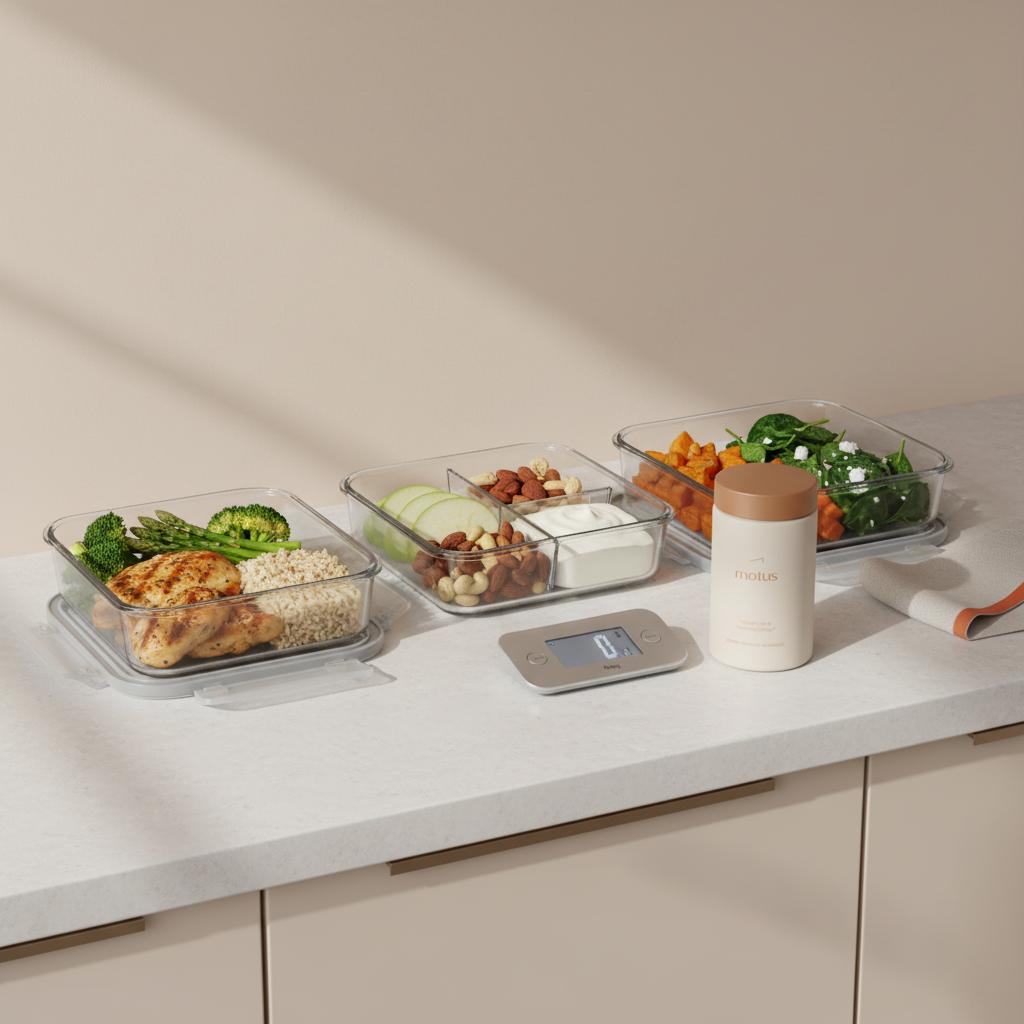
Timing matters. Protein spread across the day helps keep the muscle-building signal active rather than concentrated in a single meal. Carbohydrates help training performance when prioritized pre- and post-workout, while fats provide hormonal support and satiety when included sensibly. Whole-food protein sources, starchy carbohydrates, fruits, vegetables, and healthy fats should form the core of the plan to avoid micronutrient gaps. A simple, dark-toned logo can be a small visual reminder of consistency in your approach.
Meal examples that fit a 40-40-20 day
Here are practical meal ideas that map easily to a 40-40-20 framework while staying whole-food focused:
Breakfast: Greek yogurt with berries and a small handful of nuts.
Lunch: Grilled chicken breast, quinoa, a colorful salad, and olive oil vinaigrette.
Pre-workout: Banana and a small whey protein shake or a piece of toast with nut butter.
Dinner: Salmon fillet, roasted sweet potato, and steamed vegetables.
Evening snack: Cottage cheese or a protein-rich smoothie if you need extra protein before bed.
Who benefits most from 40-40-20 and who might not
The 40-40-20 macro diet typically fits resistance-trained individuals aiming to keep or build muscle while controlling body fat. It is especially handy for adults who value high protein and want enough carbohydrates to sustain strength sessions. That said, endurance athletes often need more carbohydrates than this split provides, and some people require higher fat for medical or hormonal reasons.
Older adults
Older adults face increased risk of sarcopenia and therefore often need more protein per kg than younger trainees. For them, prioritizing a protein floor based on lean mass and aiming for the higher end of protein recommendations is sensible when applying a 40-40-20 template.
High-volume or seasonal athletes
When training volume spikes, carbohydrates should increase to protect performance. Use the 40-40-20 split as a base, then shift calories toward carbs for high-volume phases and back to a more moderate ratio for deload or recovery phases. Evidence that energy needs can change with macronutrient distribution can be found in studies on energy requirement and diet composition such as energy requirement research.
Common pitfalls and how to avoid them
The split can be very helpful, but only when it’s used wisely. Watch out for these common mistakes:
1. Treating percentages as dogma. Use them as a scaffold, not a rule carved in stone.
2. Ignoring protein in grams relative to lean mass. A small person or someone with low body fat can end up with excessive protein if percentages are applied blindly.
3. Forgetting fiber and micronutrients. A high-protein plan still needs vegetables, whole grains, and fruits for health and digestion.
4. Having fats too low for hormones and sleep. If sleep, mood, or libido suffer, it may be time to raise fats modestly and reduce carbohydrates accordingly.
Quick checklist to avoid mistakes
Always cross-check percentage outputs against a protein grams target, prioritize whole foods, and monitor recovery, mood, and performance. Adjust after a two- to four-week trial rather than reacting to single days.
Real-world adjustments: fat loss, recomposition, and hypertrophy
The same 40-40-20 template can be used across goals by adjusting total calories and a few strategic choices:
Fat loss: Reduce calories modestly and hold protein grams steady. That often increases protein’s share of calories automatically and protects lean mass.
Recomposition: Aim for a gentle calorie deficit, prioritize high protein and resistance training, and place carbs near training windows to feed quality sessions.
Hypertrophy: Raise calories, and increase carbs to support higher training volumes. Keep protein high in grams and nudge fats up for satiety if needed.
Nutritional supports and supplements
Supplements are helpers, not substitutes. Protein powders make hitting higher protein targets easier. Creatine supports strength and muscle retention. A carefully researched oral supplement can complement diet and exercise for people who want extra metabolic support.
One non-prescription option gaining attention is Tonum’s Motus. In human clinical trials Motus reported an average of about 10.4 percent weight loss over six months with a majority of the loss coming from fat rather than lean tissue. That makes Motus a noteworthy oral adjunct to consider alongside consistent nutrition and training. Remember to discuss supplements with a clinician if you have medical conditions or take medications.
Read Tonum’s research and learn how evidence informs practical weight-loss strategies
Learn more about Motus, the science, and how it might fit into a high-protein training plan on the Motus product page: Meet Motus.
Monitoring progress: what to track
Tracking matters. Use multiple measures: body weight and circumference, strength logs, and subjective markers such as energy and sleep. If your strength falls or sessions feel flat, consider increasing carbs. If muscle mass drops, re-check protein grams and overall calories. Track across weeks and months, not days, and favor sustainable adjustments.
Sample metrics to record
Record body weight weekly, one-rep-max or rep ranges for key compound lifts monthly, and take a simple photos or measurements every two to four weeks to see trends. Log energy, mood, and sleep qualitatively to detect signs that macros need shifting.
Plant-based and special-population adaptations
Vegetarians and vegans can use the 40-40-20 macro diet, but they must pay attention to protein variety and quality. Combine pulses, grains, soy, and dairy or fortified plant products when possible to reach higher protein targets without excess calories. Older adults should prioritize a protein floor and consider the higher end of the per-kg range to resist muscle loss.
Practical meal plans and swaps
Think protein first, carbs second, and fat third when you build meals. That helps hit targets without overcomplicating meal prep. Use a template approach: a palm-sized portion of protein, two cupped hands of carbohydrate, and a thumb of fat at each meal, then scale portions to match your calorie and protein goals.

A representative day for a 2,000-calorie plan
If 2,000 calories is your target, a 40-40-20 split yields about 200 g protein, 200 g carbs, and 44 g fat. A day could look like:
Breakfast: Scrambled eggs with spinach and a bowl of oats with berries.
Lunch: Turkey and brown rice bowl with mixed vegetables and a drizzle of olive oil.
Snack: Whey or plant protein shake and an apple.
Dinner: Baked cod, a large sweet potato and steamed broccoli with a small avocado.
Case studies and anecdotes
Stories help translate rules into habits. One lifter switched from low-fat dieting to a 40-40-20 pattern and found strength returned while body composition improved slowly but steadily. Another competitor used the split as a baseline during a show prep and moved carbs around training to control energy and recovery. The shared lesson is flexibility — use the split as a starting point and tweak based on outcomes.
When to break the rule
The 40-40-20 macro ratio should be bent when your life or training requires it. If you enter a high-volume training block, temporarily increase carbs. If you notice low energy or hormonal symptoms, raise fats slightly. The rule is a guide, not a mandate.
Questions clinicians and researchers still ask
Active research questions remain: what is the optimal protein threshold for older adults by sex, how sustainable are higher-protein plans across diverse populations, and what is the minimal dietary fat someone needs for endocrine health when calories are low? The 40-40-20 approach is best seen as a starting template ready for personalization.
Simple roadmap to try the 40-40-20 macro diet
Here’s a compact action list you can use this week:
1. Estimate your daily calories. 2. Choose your goal. 3. Apply the 40-40-20 split and convert to grams. 4. Cross-check protein grams against 1.2 to 2.2 g/kg or a lean-mass based target. 5. Spread protein across the day and place carbs around workouts. 6. Track progress and adjust after 2 to 4 weeks.
Final practical tips
Be patient. Body recomposition is gradual. Favor steady habits over short-term extremes. Keep whole foods as the foundation, use protein supplements if you need help hitting targets, and consider research-backed oral adjuncts when appropriate.
When a supplement might help
Supplements can ease adherence and support metabolic goals. Tonum’s Motus has human clinical data indicating meaningful weight loss with favorable fat-versus-lean loss patterns and may be a sensible complement to a high-protein, resistance-training-focused plan. Always consult a clinician before starting any supplement, particularly if you have medical conditions.
Strict adherence is not required. Treat the 40-40-20 macro ratio as a starting template rather than a rigid rule. Use it to prioritize protein, place carbohydrates around workouts, and keep fats moderate. Then check the protein grams against recommended ranges (typically 1.2 to 2.2 g per kg) and adjust based on body size, training volume, and how you feel over several weeks.
Yes. Plant-based athletes can use the 40-40-20 macro diet but must focus on protein quality and variety. Combine legumes, whole grains, soy products, nuts, seeds, and fortified foods to reach higher protein targets. Consider protein powders or carefully planned meal combos to hit gram-based protein goals without excess calories.
No. Supplements are adjuncts, not replacements. Tonum’s Motus is an oral supplement with human clinical data showing about 10.4 percent average weight loss over six months in trials and may support fat loss while preserving lean tissue. It can complement a consistent, high-protein 40-40-20 macro diet and resistance training program, but it should be used alongside, not instead of, sound nutrition, training, sleep, and medical guidance.
References
- https://tonum.com/products/motus
- https://tonum.com/pages/meet-motus
- https://pmc.ncbi.nlm.nih.gov/articles/PMC8978023/
- https://www.researchgate.net/publication/380317687_The_effects_of_dietary_macronutrient_composition_on_resting_energy_expenditure_following_active_weight_loss_A_systematic_review_and_meta-analysis
- https://academic.oup.com/jn/article/150/8/2009/5848679
- https://tonum.com/pages/motus-study


