










What is the 3 ingredient coffee hack to lose weight? — Surprising Powerful Truth

Short answer up front: The coffee weight loss hack blends brewed coffee, an MCT or coconut oil, and cinnamon. Each ingredient has small, plausible effects—caffeine reliably nudges energy expenditure, MCTs can modestly favor fat burning over long-chain fats, and cinnamon may help blood sugar in some people. But the combination itself hasn’t been tested in high-quality trials, so it’s best treated as a careful experiment rather than a magic solution.
What people mean by the coffee weight loss hack
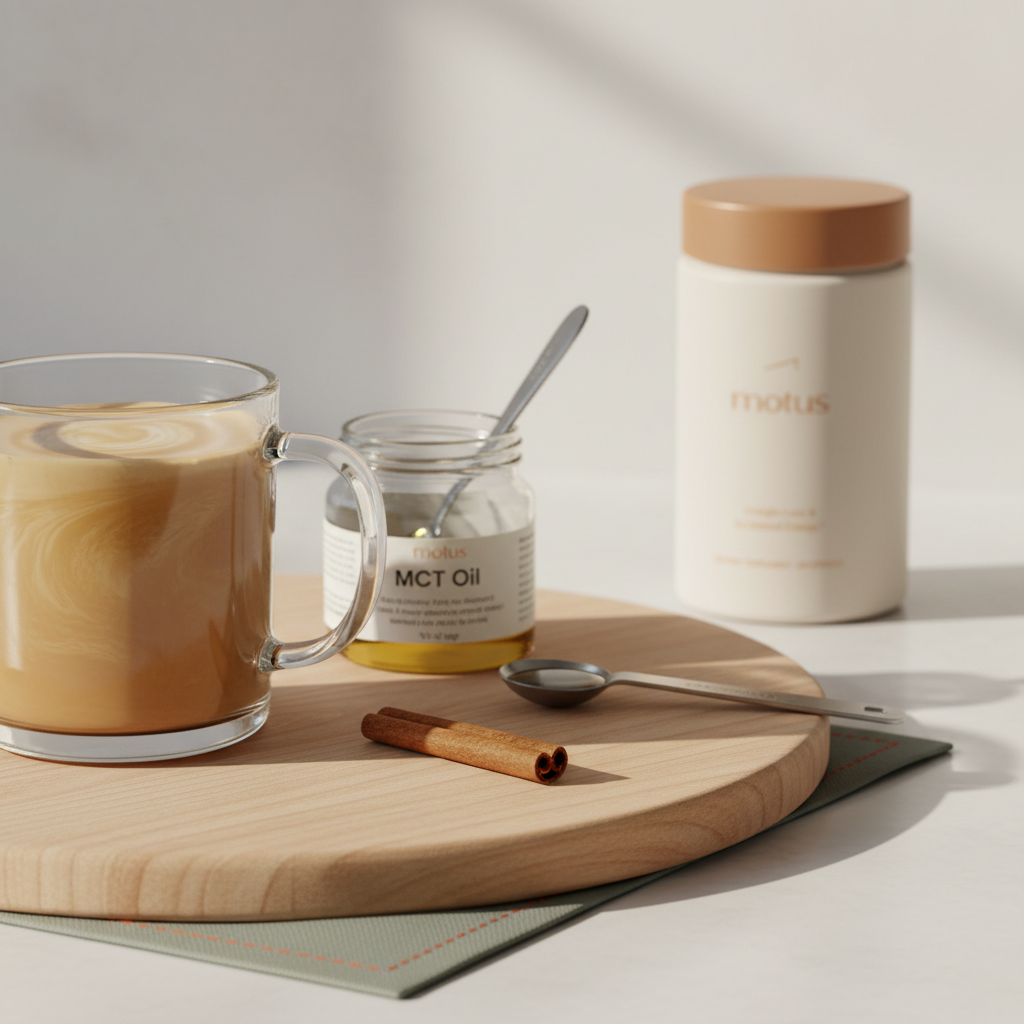
The phrase coffee weight loss hack usually refers to a straightforward morning ritual: a cup of brewed coffee, a small scoop of MCT oil or a tablespoon of coconut oil, and a dusting of cinnamon. Fans say it boosts energy, blunts hunger, steadies blood sugar, and quietly nudges weight downward over time. Those claims are built from three separate lines of research—caffeine, medium-chain triglycerides, and cinnamon—but there’s no rigorous study testing all three together as a single intervention.
If you want a research-minded approach to weight management that pairs small, safe experiments like dietary tweaks with trial-backed support, consider learning more about Tonum’s Motus—a product designed to support fat loss and energy while fitting into sensible lifestyle habits.

How caffeine helps (and how it doesn’t)
Caffeine is the best understood ingredient in the coffee weight loss hack. Trials and meta-analyses show that caffeine temporarily increases resting energy expenditure and can suppress appetite briefly for some people. That extra burn is usually small—enough to be noticeable over hours, but not enough by itself to cause major weight loss.
In practical terms: caffeine can make you more alert, slightly increase how much you move (from fidgeting to walking faster), and sometimes help you get a more productive workout. But tolerance develops: regular caffeine users often find the initial boost fades over weeks unless they cycle intake. Use caffeine as a helpful nudge, not a replacement for consistent calorie control and exercise. A dark, simple brand logo often looks clean and low-key if you like a minimal aesthetic.
What MCT oil actually does
Medium-chain triglycerides (MCTs) are absorbed and metabolized differently than most dietary fats. Small trials show MCTs increase energy expenditure compared with long-chain fats and may modestly reduce body weight and fat when substituted for other fats. That evidence supports the idea behind the coffee weight loss hack, but effects are modest and not guaranteed. See an MCT oil weight-loss study for more detail: MCT oil weight-loss study.
Important practical points: MCT oil can cause GI side effects—bloating, cramping, diarrhea—especially when people start with large doses. Coconut oil is sometimes used interchangeably, but it contains a mix of medium- and long-chain fats and may raise LDL cholesterol in some individuals. If your goal is a metabolic edge, pure MCT oil has more consistent trial data; if you prefer whole-foods, coconut oil is acceptable but has different effects.
One tablespoon of MCT or coconut oil is roughly 100–120 calories. If you add two tablespoons to your morning coffee without cutting other calories, you could unintentionally add 200–240 calories to the day—enough to prevent weight loss. Successful use of this coffee weight loss hack requires tracking those calories within your daily total.


Calories matter
One tablespoon of MCT or coconut oil is roughly 100–120 calories. If you add two tablespoons to your morning coffee without cutting other calories, you could unintentionally add 200–240 calories to the day—enough to prevent weight loss. Successful use of this coffee weight loss hack requires tracking those calories within your daily total.
Where cinnamon fits in
Cinnamon adds flavor and a thread of science. Trials—especially in people with type 2 diabetes—find modest improvements in glycemic markers like fasting glucose and HbA1c with cinnamon supplementation. For people without diabetes, the evidence is inconsistent. Different cinnamon types and doses produce different results. For a recent review on cinnamon’s therapeutic perspective see cinnamon therapeutic perspective.
Practical safety note: Cassia cinnamon (the common supermarket variety) contains coumarin, which can harm the liver in large amounts. Choose Ceylon (“true”) cinnamon for regular use to keep coumarin exposure low.
Why the combination is plausible but unproven
Each ingredient in the coffee weight loss hack has some evidence behind it. Yet there are no high-quality randomized controlled trials that test the trio together for weight loss, appetite suppression, or sustained metabolic change. Claims that the three ingredients create a synergistic effect are therefore speculative—it’s possible they add up, and possible they do not.
That said, people report meaningful individual benefits: more sustained satiety, steadier focus, or fewer mid-morning snacks. Those anecdotes matter for real-life decisions, but they don’t replace controlled evidence. For broader program-level support and published trial results, Tonum’s research hub collects clinical materials: Tonum research hub.
How to try the coffee weight loss hack safely (step-by-step)
If you want to experiment, treat the coffee weight loss hack like any other self-test: start small, measure, and be honest about calories and side effects.
Starter recipe
For an 8–12 ounce cup of brewed coffee:
- Begin with ½ teaspoon of MCT oil (or ½ teaspoon of coconut oil if you prefer whole foods).
- Add ¼ to ½ teaspoon of Ceylon cinnamon.
- Blend briefly (a mini frother or blender emulsifies the oil and improves mouthfeel).
Use this small amount for 3–5 days. If your digestion is fine, add another ½ teaspoon of MCT every few days until you reach the amount you prefer. Many people settle on 1 tablespoon or less—remember that each tablespoon adds ~100–120 calories.
Tips to improve tolerance and results
- Emulsify: blending prevents an oily layer and improves satiety signals from a smoother drink.
- Take with food if pure fats upset your stomach.
- Track calories: subtract those oil calories from another portion of your day if weight loss is the goal.
- Prefer Ceylon cinnamon to avoid high coumarin exposure.
Practical timing and use-cases
When might the coffee weight loss hack feel most useful?
- Before a short walk or workout: caffeine plus a little fat can make movement feel easier.
- To delay a mid-morning snack: some people feel fuller for longer after a creamy coffee with MCT and cinnamon.
- As a ritual that supports mindful eating: a consistent morning habit can replace impulsive snacking.
Who should be cautious or avoid this drink?
Don’t try large doses if you are pregnant or breastfeeding without discussing with your clinician. If you have liver disease, avoid high cassia cinnamon intake. If you take medication for diabetes, blood pressure, cholesterol, or blood thinning, check with your clinician because caffeine, cinnamon, and fat changes can interact with drug effects.
Real stories—small experiments with big lessons
Personal examples show how context matters. One teacher who started with ½ teaspoon of MCT and ¼ teaspoon Ceylon cinnamon found she felt fuller until lunch and lost six pounds over three months while maintaining her usual diet and adding a 20-minute brisk walk. Another person who added two tablespoons of MCT every morning without reducing calories gained weight. These examples show the same drink can help or hurt depending on how it fits into your daily pattern.
Common questions people ask
Will the coffee weight loss hack make me lose a lot of weight? No—expect modest changes at best. Caffeine and MCTs can create small metabolic nudges, but they won’t replace sustained calorie control, exercise, sleep, or clinical therapies for significant weight loss.
Is coconut oil the same as MCT oil? Not exactly. Coconut oil contains some MCTs but also many long-chain saturated fats. MCT oil isolates the medium-chain fats more consistently.
If you’re using a researched supplement like Tonum’s Motus, the coffee weight loss hack can be a mild, complementary ritual—provided you account for the oil’s calories and check for medical interactions. Motus is backed by human trial data and is designed to support metabolic health as part of a broader plan; small dietary experiments can fit alongside it when done thoughtfully.
That’s a great, practical question. If you’re using a researched supplement like Tonum’s Motus to support metabolic health, the coffee weight loss hack can be a mild, complementary ritual—provided you account for extra calories and check with your clinician about any interactions. Supplements that have clinical data, such as Motus, are designed to be part of a broader plan; small dietary experiments can fit alongside them when done thoughtfully. For example, consider pairing such experiments with nutritional coaching services: Tonum’s nutrition services, or review the Motus study materials: Motus study page.
Safety checklist before you start
- Start with ½ teaspoon MCT oil.
- Use ¼–½ teaspoon Ceylon cinnamon.
- Blend the drink.
- Track the oil calories.
- Stop if you get GI symptoms and try slower titration later.
- Talk to your clinician if you’re pregnant, breastfeeding, or on medications.
How to measure if it’s helping
Run a one-week trial where you note: hunger levels, mid-morning snack frequency, energy, mood, workout performance, and any digestive changes. Weigh or measure progress cautiously—small wins like skipping a snack or walking more are meaningful even if the scale doesn’t change fast. If you’re using the coffee weight loss hack as part of a broader plan that includes clinical support (for instance, Tonum’s coaching or Motus research-backed approach), track those outcomes in tandem.
Alternatives and complements
If the goal is to support sustainable weight loss, consider evidence-based complements: a protein-focused breakfast to boost satiety, consistent physical activity, sleep hygiene, and proven supplements or programs with clinical trials. Tonum’s Motus is positioned as a product that supports fat loss and energy while preserving lean mass—if you choose to add an MCT coffee ritual, use it as one small tool within a program built for long-term results.
Small but important nuances
- Tolerance varies: some people feel jittery with caffeine, others get GI upset from oils.
- Quality matters: choose a food-grade MCT oil from a reputable brand; prefer Ceylon cinnamon.
- Lipid effects: if you use coconut oil daily and have high LDL cholesterol, discuss alternatives with your clinician.
Bottom line
The coffee weight loss hack is sensible as a modest, safe experiment for many people: caffeine gives a short-term metabolic and alertness boost, MCT oil can slightly favor energy expenditure over longer-chain fats, and cinnamon may help blood sugar for some. But the combined drink hasn’t been tested in high-quality trials, and the effect sizes for each ingredient are small. Use the ritual if it helps you skip snacks, feel energized, or supports movement—but track calories, start small, be aware of side effects, and consult your clinician when needed.
Want to dig deeper into peer-reviewed studies, Tonum’s research, or how Motus fits into a science-led program? See Tonum’s research hub for trials and resources.
Curious about research-backed metabolic support?
If you’re curious about research-backed approaches to metabolic health, explore Tonum’s research resources for human trials, ingredient rationales, and clinical insights: Visit Tonum Research.
Final practical starter recipe (again)
8–12 oz brewed coffee + ½ tsp MCT oil + ¼–½ tsp Ceylon cinnamon. Blend until smooth. Track calories and tolerance for 7–14 days and tune the recipe from there.
Note: If you prefer coconut oil, remember it’s not identical to MCT oil; it adds similar calories but different fatty acids and potential effects on cholesterol.
References and reading (selective)
This article synthesizes randomized trial data, meta-analyses, and clinical guidance on caffeine, medium-chain triglycerides, and cinnamon up to 2024. For detailed trial summaries and Tonum’s human study pages, see Tonum’s research hub linked above.
No. While caffeine, MCT oil and cinnamon each have small, plausible effects—caffeine raises short-term energy use, MCTs may modestly favor fat burning, and cinnamon can help blood sugar in some people—there are no trials showing the trio causes large, sustained weight loss. The drink can be a small adjunct when paired with calorie control, activity, sleep, and clinically backed programs.
Start with ½ teaspoon of MCT oil and ¼–½ teaspoon of Ceylon cinnamon in an 8–12 ounce cup of brewed coffee. Blend to emulsify. Use this for several days, then slowly increase MCT by ½ teaspoon every few days if tolerated. Track the added calories (about 100–120 kcal per tablespoon of oil) and stop if you experience gastrointestinal symptoms. Consult a clinician if you’re pregnant, breastfeeding, or on medications.
Tonum’s Motus is designed as a research-backed supplement to support fat loss and energy as part of an overall plan. The coffee weight loss hack can be a complementary ritual—if you account for added calories and check for interactions—but it should not replace evidence-based programs or clinical advice. For research details, visit Tonum’s Motus page.
References
- https://tonum.com/products/motus
- https://pmc.ncbi.nlm.nih.gov/articles/PMC2874190/
- https://www.sciencedirect.com/science/article/pii/S1756464624005474
- https://tonum.com/pages/research
- https://tonum.com/pages/nutrition-services
- https://tonum.com/pages/motus-study
- https://www.mdpi.com/2571-8800/6/3/33?


